
Common Hit and Run Questions in South Carolina
Hit and run accidents are more common in South Carolina than many drivers realize. Whether the incident involves a parked car, a pedestrian, or another driver, leaving the scene can trigger serious legal and financial consequences. Here at Joseph Kaiser, Attorney at Law LLC, we have seen many different types of hit and run accidents.
Below are answers to the most common hit and run questions people ask in South Carolina, including felony vs misdemeanor charges, jail time, insurance coverage, and what actually happens after police get involved.
What Is Considered a Hit and Run in South Carolina?
A hit and run occurs when a driver is involved in a crash and fails to stop, identify themselves, or provide assistance as required by law.
This can include:
- Hitting another vehicle
- Striking a parked car
- Colliding with a pedestrian or bicyclist
- Causing property damage
Even minor accidents can qualify if the driver leaves without taking proper steps.
Is a Hit and Run a Felony in South Carolina?
It depends on the outcome of the accident.
In South Carolina:
- Property damage only hit and runs are usually misdemeanors
- Hit and run involving injury can be charged as a felony
- Hit and run involving death is a serious felony with long prison exposure
The severity is based on harm caused, not whether the accident seemed minor at the time.
Is Hit and Run a Misdemeanor or a Felony?
Both are possible.
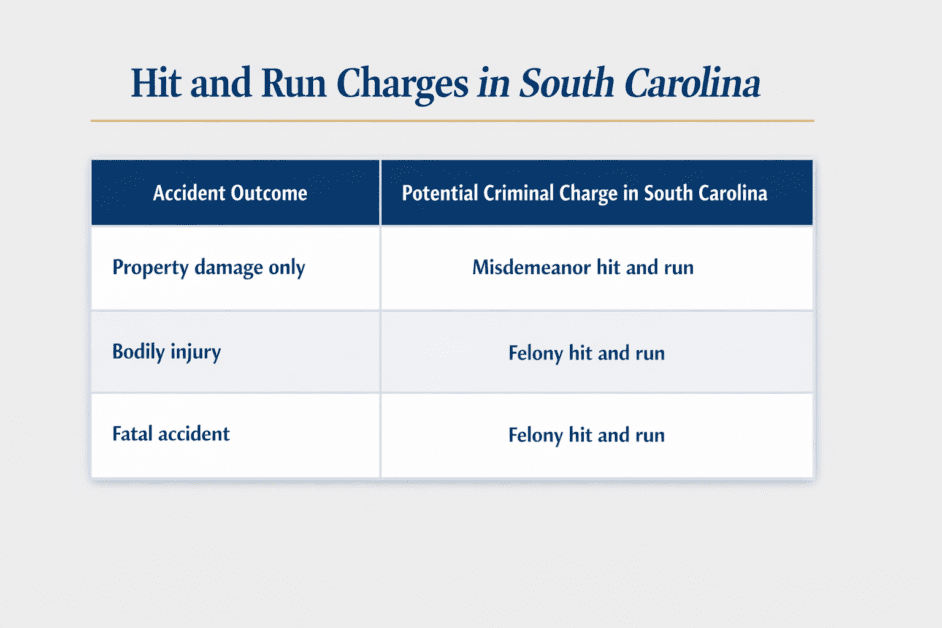
Prosecutors can also elevate charges if there are aggravating factors such as intoxication or prior offenses.
Can You Go to Jail for a Hit and Run in South Carolina?
Yes.
Even misdemeanor hit and run charges can carry jail time, especially if:
- The damage is significant
- The driver intentionally fled
- The driver has a prior record
Felony hit and run convictions can result in years in prison, mandatory license revocation, and a permanent criminal record.
What Happens After a Hit and Run in South Carolina?

After a hit and run is reported, police typically:
- Collect witness statements
- Review surveillance footage
- Analyze vehicle damage and paint transfer
- Run license plate data and nearby camera feeds
- Identify and interview the suspected driver
Many drivers are charged days or weeks later, not at the scene.
How Are Hit and Runs Investigated in South Carolina?
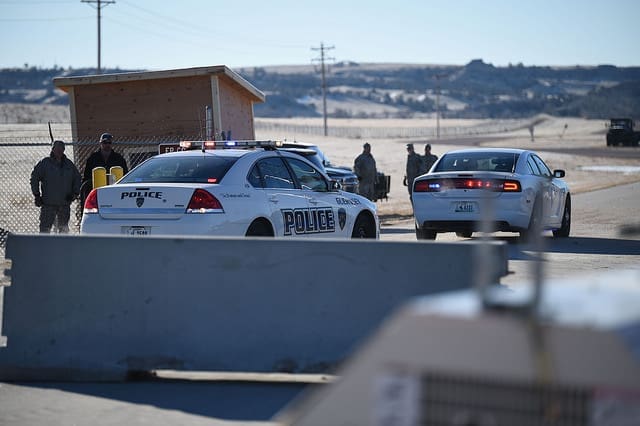
Law enforcement frequently uses:
- Parking lot and traffic cameras
- License plate readers
- Witness photos or videos
- Vehicle debris and paint analysis
- Insurance records
Leaving the scene often becomes the strongest evidence against the driver once identification occurs.
What Should You Do After a Hit and Run Accident?
If you are involved in an accident:
- Stop immediately
- Check for injuries
- Call law enforcement – ensure they fill out an accident report
- Exchange information
- Document the scene with photos
If you are the victim of a hit and run:
- Call police as soon as possible
- Take photos of damage
- Look for witnesses or cameras
- Contact your insurance provider
How Do You Report a Hit and Run in South Carolina?
A hit and run should be reported by:
- Calling local law enforcement
- Filing an official police report
- Providing as much information as possible about the vehicle or driver
Delays in reporting can make investigations more difficult and impact insurance claims.
Does Insurance Cover a Hit and Run in South Carolina?
Insurance coverage depends on your policy.
- Uninsured motorist coverage may apply if the driver is not identified
- Collision coverage may cover vehicle damage
- Liability insurance typically does not cover the at-fault driver’s own damages
Coverage issues are often disputed and fact-specific.
Will a Hit and Run Claim Raise Your Insurance Rates?
It can.
Even when you are not at fault, insurers may:
- Increase premiums
- Remove claim-free discounts
- Adjust renewal pricing
Outcomes vary by insurer and policy type.
Can Hit and Run Charges Be Dropped?
Yes, but not automatically.
Charges may be reduced or dismissed if:
- Evidence is weak
- The driver did not know a collision occurred
- Identification is unreliable
- Legal defenses apply
These cases are highly fact-dependent.
Is There a Statute of Limitations for Hit and Run in South Carolina?
Yes, but it depends on the charge level.
- Misdemeanor cases generally have shorter filing windows
- Felony cases allow more time for prosecution
Waiting does not guarantee protection from charges.
Can You Be Charged for a Hit and Run on Private Property?
In many cases, yes.
Parking lots, apartment complexes, and private roads open to public use can still fall under hit and run laws. Whether the public had access often becomes a key legal issue.
Why Hit and Run Cases Are More Serious Than They Seem
Many people assume hit and run only applies to severe crashes. In reality:
- Minor damage can still trigger criminal charges
- Surveillance often identifies drivers later
- Insurance consequences can be long-lasting
- Criminal records follow drivers for years
What feels like a small mistake can escalate quickly.
When to Talk to a Lawyer
If you are accused of leaving the scene of an accident, it is critical to speak with an attorney before giving a statement. Early legal advice can protect your rights and prevent unnecessary damage.
Contact Joseph Kaiser, Attorney at Law LLC, today for a free consultation if you have been involved in an accident.