Blog

How to Structure an Equipment Lease-to-own Agreement for Farm Machinery Under Iowa Law (and Avoid Ucc Filing Mistakes)

How to Structure an Equipment Lease-to-Own Agreement for Farm Machinery Under Iowa Law (and Avoid UCC Filing Mistakes)

Iowa lease-to-own farm equipment deals are often treated as “security interests” under UCC Article 9, meaning you usually need a UCC-1 financing statement to protect priority. In Iowa, common mistakes include misclassifying the transaction, naming the debtor incorrectly, and overlooking certificate-of-title or fixture issues. This article explains how to structure an enforceable equipment lease-to-own agreement […]
Read More
How to Challenge Ai-generated Evidence Under the Federal Rules of Evidence in 2026

How to Challenge AI-Generated Evidence Under the Federal Rules of Evidence in 2026

AI-generated evidence can be excluded or limited in federal court by applying at least five core evidentiary gates—authentication (FRE 901/902), relevance and prejudice (FRE 401–403), hearsay (FRE 801–807), expert reliability (FRE 702/Daubert), and the best evidence rule (FRE 1001–1008). As AI outputs (deepfakes, synthetic audio, LLM summaries) appear more often in 2026 litigation, courts are […]
Read More
How to Defend Against Federal Bank Fraud Charges for Zelle or Wire Transfer Scams in Florida

How to Defend Against Federal Bank Fraud Charges for Zelle or Wire Transfer Scams in Florida

Federal bank fraud carries up to 30 years in prison and a $1,000,000 fine per count under 18 U.S.C. § 1344. In Florida, Zelle and wire-transfer scam allegations often trigger parallel investigations by banks, the FBI, and U.S. Attorney’s Offices. This article explains the most effective defenses, common evidence issues, and practical steps to protect […]
Read More
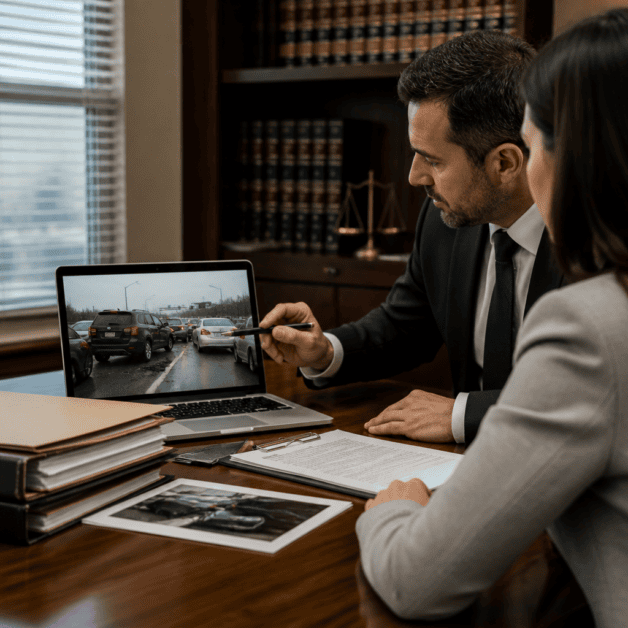
How to Prove Negligence in a Multi-car Pileup on I-95 in Florida Using Dashcam and Police Report Evidence

How to Prove Negligence in a Multi-Car Pileup on I-95 in Florida Using Dashcam and Police Report Evidence

Proving negligence in a Florida I-95 multi-car pileup typically requires 4 elements—duty, breach, causation, and damages—supported by objective evidence like dashcam video and the Florida Traffic Crash Report. I-95 pileups often involve chain-reaction impacts, conflicting accounts, and multiple insurance carriers. This article explains how Florida attorneys use dashcam footage and police-report evidence to establish liability, […]
Read More
How to Prove a Dui Was Caused by Prescription Medication Interaction (not Alcohol) in Florida Explained

How to Prove a DUI Was Caused by Prescription Medication Interaction (Not Alcohol) in Florida Explained

In Florida, you can defend a DUI by proving impairment stemmed from a prescription medication interaction—not alcohol—using toxicology results, pharmacy/medical records, and expert testimony. Florida DUI law focuses on “normal faculties” impairment and/or an unlawful alcohol level, but medication effects can mimic intoxication. This article explains the legal standards, evidence, and courtroom strategy to show […]
Read More
How to Draft an Ai Vendor Contract Under the Colorado Ai Act (sb 24-205): Required Clauses for Deployers and Developers

How to Draft an AI Vendor Contract Under the Colorado AI Act (SB 24-205): Required Clauses for Deployers and Developers

Colorado’s AI Act (SB 24-205) requires deployers and developers of “high-risk” AI systems to implement documented risk management, notice, and governance measures that should be hard-wired into vendor contracts. For Colorado businesses buying or providing AI tools, the contract is often the only practical mechanism to allocate compliance duties. This article lists contract clauses attorneys […]
Read More
How to Protect Trade Secrets when Pitching to Austin Venture Capital Firms Under Texas Law

How to Protect Trade Secrets When Pitching to Austin Venture Capital Firms Under Texas Law

Texas law can protect trade secrets even without an NDA if you can show the information was secret and you took “reasonable measures” to keep it confidential. That matters in Austin, where venture capital firms often decline to sign NDAs at the pitch stage. This article explains how founders can protect trade secrets when pitching […]
Read More
How to Trademark a Law Firm Name in Texas: Step-by-step Filing Strategy to Avoid Uspto Refusals

How to Trademark a Law Firm Name in Texas: Step-by-Step Filing Strategy to Avoid USPTO Refusals

Texas law firms typically file 1 federal trademark application with the USPTO to protect a firm name nationwide. In Texas, the biggest risk is a refusal for likelihood of confusion or a “merely descriptive” name that reads like a practice description. This guide walks Texas lawyers through a step-by-step filing strategy—from clearance to specimens—to reduce […]
Read More
How to Enforce a Non-compete Agreement in Texas After the 2023 Ftc Rule Challenges

How to Enforce a Non-Compete Agreement in Texas After the 2023 FTC Rule Challenges

Texas employers can still enforce non-compete agreements under the Texas Covenants Not to Compete Act—even as the FTC’s 2023–2024 federal rulemaking and court challenges created uncertainty nationally. The key is proving the covenant is “ancillary to or part of” an otherwise enforceable agreement and is reasonable in scope, time, and geography. This article explains enforceability […]
Read More
How to Stop a Florida Wage Garnishment with a Chapter 13 Bankruptcy Filing (and What Happens to the Garnished Funds)

How to Stop a Florida Wage Garnishment With a Chapter 13 Bankruptcy Filing (and What Happens to the Garnished Funds)

A Chapter 13 bankruptcy filing in Florida typically stops a wage garnishment immediately through the automatic stay, often the same day the case is filed. Florida wage garnishments are driven by court judgments and can keep taking a portion of paychecks until the debt is resolved or the court orders it stopped. This article explains […]
Read More
1 2 3 487
Scroll to Top