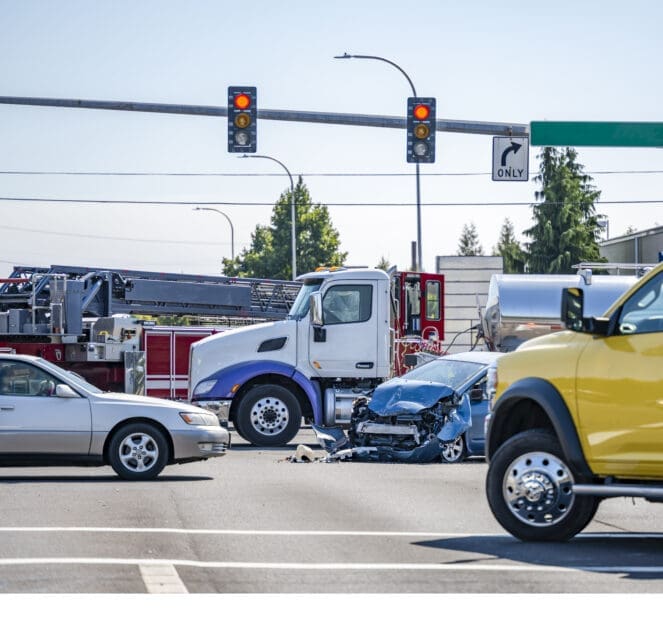
Understanding the Legal Process Behind Truck Accident Claims
Truck accident claims follow a structured legal process that involves investigating the crash, determining liability, negotiating with insurance companies, and sometimes pursuing compensation through a lawsuit. Because these accidents often involve serious injuries and multiple parties, the legal process can be more complicated than other vehicle accident claims.
Denver is a major transportation hub in the western United States. The city connects several interstate highways and sees a large number of commercial trucks moving through it every day. With busy highways, growing traffic, and constant freight transportation, truck accidents can sometimes occur in and around the city.
When these situations happen, many injured individuals look for guidance from the best Denver truck accident lawyer to help them understand the legal process and protect their rights. Truck accident claims are often influenced by safety regulations set by the Federal Motor Carrier Safety Administration, which oversees commercial trucking operations and driver compliance.
Understanding how this process works can help victims know what to expect and how their claim may move forward after a truck accident.
Step 1: Investigating the Accident
The legal process usually begins with a detailed investigation. This step helps determine how the accident occurred and who may be responsible.
Because truck accidents often involve large commercial vehicles, there may be several sources of evidence.
Important evidence may include:
- Police accident reports
- Photographs or videos from the accident scene
- Witness statements
- Truck driver logs and records
- Vehicle damage reports
In many cases, critical evidence such as driver logs and electronic data recorders may only be retained for a limited time, sometimes as little as six months, making early investigation essential. This investigation helps create a clear picture of what happened and provides the foundation for the claim.
Step 2: Identifying Responsible Parties
After the investigation, the next step is identifying who may be legally responsible for the accident. Trucking companies and drivers must follow federal safety rules outlined in the Federal Motor Carrier Safety Regulations (FMCSRs), which govern areas such as driver hours, inspections, and maintenance. Unlike regular car crashes, truck accidents can involve multiple parties.
For example, liability may involve:
- The truck driver
- The trucking company
- The company responsible for truck maintenance
- The manufacturer of defective vehicle parts
- Cargo loading companies
Because several parties may share responsibility, identifying each one is an important part of the legal process.
Step 3: Documenting Injuries and Damages
Once liability is examined, the next step focuses on documenting the victim’s injuries and financial losses.
This step is important because compensation depends on the damages caused by the accident.
Evidence used to show damages may include:
- Medical records and treatment history
- Hospital bills and rehabilitation costs
- Proof of lost wages
- Documentation of future medical care needs
- Evidence of pain and emotional distress
Accurate documentation ensures the claim reflects the full impact of the accident.
Step 4: Filing the Insurance Claim
After gathering evidence and documenting damages, the next step is filing claims with the appropriate insurance companies.
Truck accident claims often involve commercial insurance policies that may have higher coverage limits than standard vehicle policies.
During this stage, lawyers may:
- Submit evidence supporting the claim
- Communicate with insurance adjusters
- Respond to questions about the accident
- Negotiate settlement offers
This stage is often where many cases are resolved through settlement negotiations.
Step 5: Negotiating a Settlement
Once the claim is filed, insurance companies may offer a settlement to resolve the case without going to court.
However, these offers may not always reflect the full value of the damages.
Negotiations often focus on:
- The severity of injuries
- Medical expenses and future care costs
- Lost income and financial losses
- The degree of fault involved in the accident
Attorneys review these offers carefully and negotiate to reach a fair resolution.
Step 6: Filing a Lawsuit if Necessary
If settlement negotiations do not result in fair compensation, the next step may involve filing a lawsuit.
This step moves the case into the formal legal system.
The process may include:
- Filing legal documents in court
- Exchanging evidence through discovery
- Conducting depositions with witnesses
- Presenting arguments before a judge or jury
While many cases settle before trial, filing a lawsuit may sometimes be necessary to pursue full compensation. In Colorado, the statute of limitations for most motor vehicle accident claims is generally three years from the date of the accident, after which a lawsuit may no longer be filed.
Step 7: Resolution of the Case
Eventually, the claim reaches a final resolution. This can occur through a negotiated settlement or a court decision.
At this stage, the injured person may receive compensation for their damages.
Possible compensation may cover:
- Medical expenses
- Lost wages
- Property damage
- Rehabilitation costs
- Pain and suffering
The goal of the legal process is to ensure that victims receive financial recovery for the harm caused by the accident.
Key Takeaways
- Truck accident claims follow a structured legal process.
- The process begins with a detailed accident investigation.
- Multiple parties may be responsible in truck accident cases.
- Documenting injuries and financial losses are essential.
- Insurance claims and negotiations often resolve cases.
- Lawsuits may be filed if settlement offers are not fair.
- The final goal is obtaining compensation for damages caused by the accident.