When the Driver Who Hit You Disappears: What California Law Still Lets You Recover
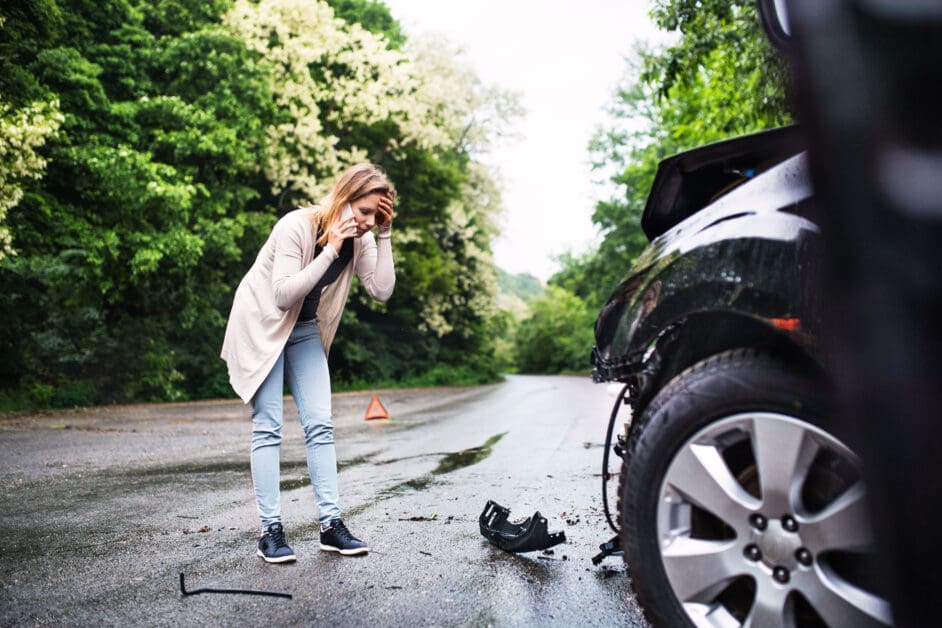
A driver runs a red light, clips your rear quarter panel, and speeds off before you can even get out of your car. There’s no exchange of information, no insurance card, nothing but a blur of taillights and maybe a partial plate number if you’re lucky. It’s a scenario that plays out often on California roads, and it leaves victims with an uncomfortable question: Who pays for this?
The instinct is to assume that without an identified driver, there’s no path to compensation. That assumption is usually wrong. California law and most standard auto policies are built with this exact scenario in mind, and understanding how those protections work can be the difference between a stalled claim and a resolved one.
The Scale of California’s Hit-and-Run Problem
Hit-and-run collisions aren’t a rare fluke. Nationally, drivers left the scene in 15 percent of all police-reported crashes in 2023, the highest share on record, and the trend has been climbing steadily for over a decade. California tracks closely with that national pattern: fleeing drivers were involved in roughly one in ten fatal crashes between 2017 and 2023, a rate that climbs even higher in dense metro corridors, where nighttime hit-and-run fatalities cluster disproportionately. Pedestrians and cyclists bear an outsized share of the risk, accounting for a much larger portion of hit-and-run injuries than their share of crashes overall.
The reasons drivers flee vary. Some have no license. Some have no insurance. Some are intoxicated and calculating that the risk of a hit-and-run charge is lower than the risk of a DUI conviction. Whatever the motive, the effect on the injured party is the same: a driver who caused real damage and simply isn’t there to answer for it.
Why the Search for the Driver Rarely Determines the Outcome
Law enforcement does investigate hit-and-run collisions, and identification happens more often than most people expect, especially where security cameras, dash cams, or witnesses capture a plate number. But in a meaningful share of cases, especially those without serious injury, the driver is never found. National research on fatal hit-and-run crashes found that fewer than half of fleeing drivers were ever identified, even in cases involving a death.
That’s precisely why California requires insurers to offer uninsured motorist coverage on every auto policy, and why most drivers carry it without realizing how central it becomes the moment a driver disappears from the scene. A hit-and-run isn’t legally different from any other uninsured-driver accident. The at-fault party simply can’t be billed, sued, or negotiated with directly, so the claim routes through a different channel entirely.
Uninsured Motorist Coverage Fills the Gap
California compounds the hit-and-run problem with one of the highest uninsured-driver rates in the country. Current insurance industry estimates put one in five drivers uninsured, well above the national average. Combine that with a state where drivers frequently flee the scene, and the odds of colliding with someone who leaves you with no recoverable liability policy are higher here than in most of the country.
Uninsured motorist coverage, often bundled with underinsured motorist protection as UM/UIM, exists specifically to close that gap. When the at-fault driver has no insurance, whether because they fled or because they never carried a policy to begin with, the claim shifts to the injured driver’s own UM coverage. The insurer effectively steps into the shoes of the missing driver for purposes of evaluating and paying the claim. Coverage limits matter here too: California insurers must offer UM limits matching the driver’s own liability limits, though drivers can select lower amounts or waive the coverage entirely in writing, a decision that looks very different after a hit-and-run than it did when the policy was first written.
What Filing a Claim Actually Looks Like
Practically speaking, filing a claim under your own coverage looks less like a straightforward liability claim and more like negotiating with an insurer that is simultaneously your carrier and, functionally, standing in for the driver who fled. That dual role shapes how these claims get handled. Insurers scrutinize hit-and-run UM claims more heavily than ordinary ones, since there’s no opposing driver’s statement or insurance file to corroborate what happened.
For a phantom-vehicle claim, meaning no physical contact occurred, and the fleeing vehicle was never identified, California generally requires independent corroboration: a witness, a police report noting the other vehicle, or physical evidence tying the collision to a vehicle that was never at the scene when police arrived. Claims involving actual vehicle contact are usually more straightforward to establish, even without a plate number, because the damage itself corroborates the story. Most policies also require prompt notice to the insurer, and disputes that can’t be resolved through negotiation often end up in arbitration rather than court, a process spelled out in the policy language itself.
Evidence Preservation Starts Before You Know Who’s Responsible
None of this happens in isolation from the broader claim. Medical records, wage documentation, and repair estimates all feed into documenting the full scope of your damages, and that record-building needs to start immediately, not after a claim gets contested. Surveillance footage from nearby businesses is often overwritten within days. Witnesses who saw a plate number move, forget details, or simply become harder to reach as time passes. The same two-year filing window that applies to ordinary injury claims applies here, but waiting anywhere near that deadline usually means the evidence needed to support the claim has already degraded.
Because UM claims put you in the unusual position of negotiating against your own insurer, many accident victims bring in outside help early rather than waiting for a claim to stall. An attorney handling a car accident claim can request the full accident report, track down surveillance footage before it disappears, and push back when an insurer tries to attribute an unidentified-driver crash to the victim’s own negligence instead of covering it.
A driver who disappears from the scene doesn’t erase what happened. California’s insurance framework was built around the reality that not every at-fault driver sticks around, and the coverage most people already carry, often without giving it much thought, is what stands between an unidentified driver and an uncovered loss. The claims that go smoothly are usually the ones where the evidence gets locked down early, before memories fade and footage gets erased.