
Public Adjuster Ohio: Why Rising Insurance Rates Are Changing the Claims Game
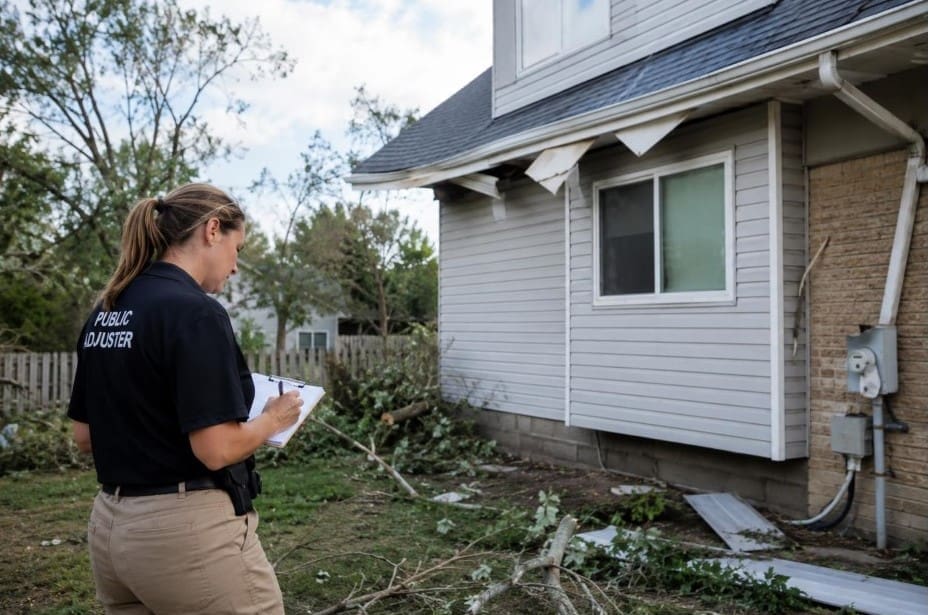
Ohio homeowners insurance rates rose 10.9% in 2024 after a 10.2% jump in 2023, while the state logged 74 tornadoes. Those pressures can lead to tighter claim payouts, and the insurer’s adjuster represents the insurer—not you. This article explains how a public adjuster in Ohio can document damage, challenge valuations, and negotiate a fair settlement.
Ohio recorded a record 74 tornadoes in 2024. That same year, homeowners insurance rates in the state climbed 10.9% – on top of a 10.2% increase the year before. Most policyholders absorbed those premium hikes without a second thought. Then, when their roof caved in or the back half of their house took a direct hail strike, many accepted whatever settlement check arrived in the mail.
That’s the gap that matters. The insurer’s adjuster works for the insurer. Full stop. Their job is to document damage and apply the policy – but their employer has a financial stake in the outcome. A public adjuster works for the policyholder instead. That distinction sounds simple, but it has real consequences when a claim is worth $80,000 and the first offer comes in at $45,000.
This article covers what public adjusters actually do, why Ohio’s current insurance market makes them more relevant than they were five years ago, when hiring one is genuinely worth it, and what the claims process looks like when an independent professional is at the table.
What a Public Adjuster Actually Does
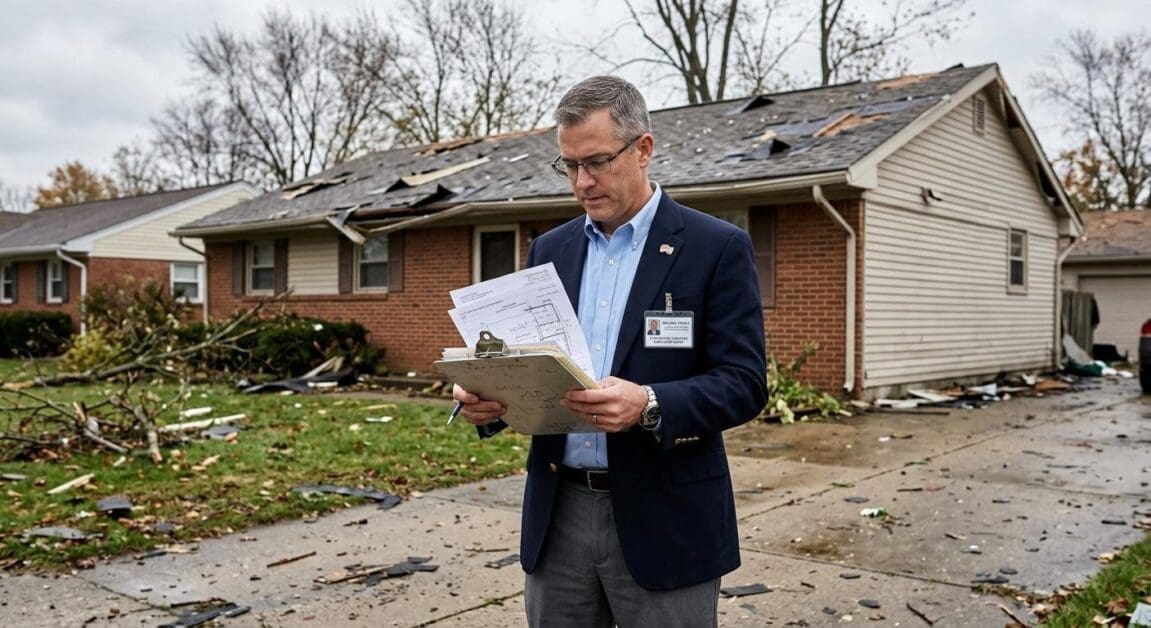
A public adjuster is a licensed professional who represents the policyholder – not the carrier – in preparing, filing, and negotiating a property insurance claim. They’re not affiliated with the insurer and don’t receive payment from them. Ohio law requires public adjusters to hold a Certificate of Authority from the Ohio Department of Insurance under ORC Chapter 3951, pass a state licensing exam, and file a surety bond.
The work itself covers the full span of the claims process: inspecting the damage in detail, reading the policy language closely for coverage that policyholders might miss, preparing Proof of Loss documentation, itemizing repair estimates, and negotiating directly with the carrier’s adjuster. For homeowners dealing with a major storm loss, fire damage, or a contested claim, that’s a significant amount of specialized work to handle alone.
Compensation is typically contingency-based – a percentage of the final settlement. If there’s no recovery, there’s no fee. That structure means a reputable public adjuster only takes cases they believe they can improve.
Ohio property owners dealing with a complex or disputed claim can review what licensed professionals in the state handle through a public adjuster Ohio service that focuses specifically on Ohio property losses.
Ohio’s Insurance Market Has Shifted
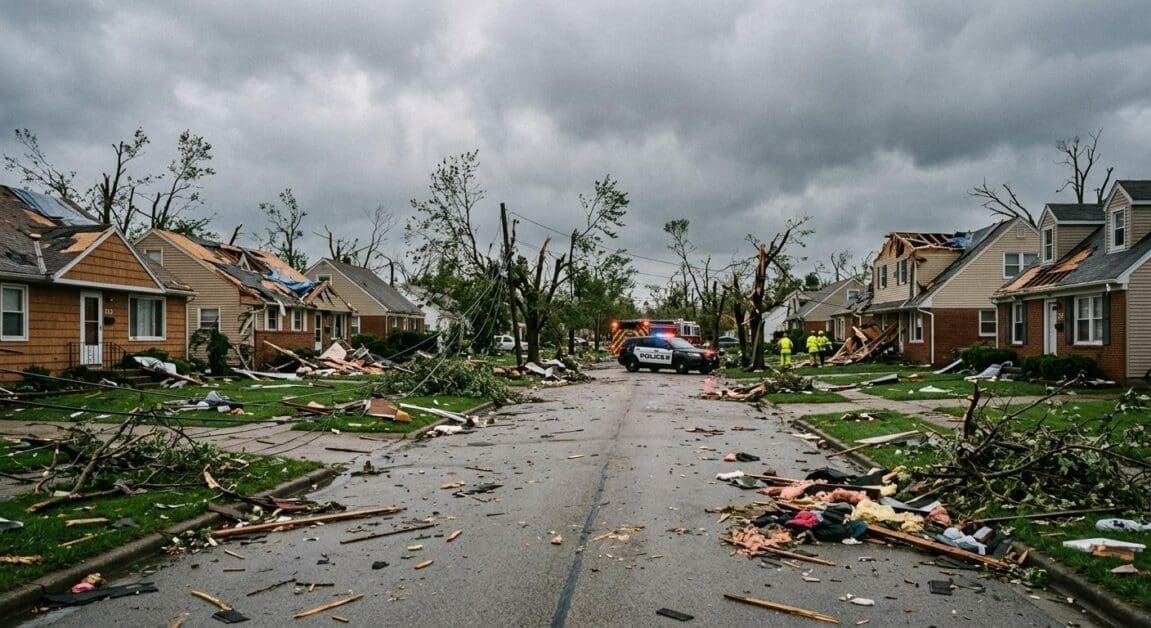
The context behind those premium increases is worth understanding, because it explains why claim disputes have become more common.
According to S&P Global’s January 2025 report, Ohio homeowners insurance rates rose 10.9% in 2024, above the national average of 10.4% and following a 10.2% increase in 2023. Over a five-year span, Ohio’s homeowners insurance written premium reached $4.7 billion in 2024 – a 33% increase from 2019, according to the Ohio Insurance Agents Association. Carriers weren’t padding margins during those years. They were trying to recover from loss ratios of 103% in 2022 and 115% in 2023, meaning they paid out more than they collected in premiums.
When insurers run those kinds of losses, they respond by tightening claims handling. Scope disputes become more frequent. Initial estimates lean toward the low end. Adjusters apply depreciation schedules that don’t reflect current material costs – and roofing materials, according to the Ohio Insurance Agents Association, more than doubled in price since 2020. That means even modest storm damage now produces claims that carriers actively push back on.
Farmers Insurance filed for a 22.4% rate increase in Ohio in mid-2024, citing $25.4 million in Ohio losses in 2023 affecting 115,700 Ohio policyholders, per the Ohio Insurance Agents Association. That’s one carrier. The market-wide pattern is the same.
For Ohio homeowners, this means the insurer’s initial settlement offer is more likely to fall short than it was before – not necessarily because of bad faith, but because carriers are under genuine financial pressure to manage costs. Understanding how insurers undervalue property damage estimates is the first step toward knowing when to push back.
When Hiring a Public Adjuster Makes Sense in Ohio
Not every claim justifies hiring a public adjuster. A straightforward windstorm that knocked off three shingles, with a clear estimate and no coverage dispute, probably doesn’t. A $200 deductible on a $400 repair is not the right situation.
The cases where a public adjuster adds real value tend to share a few characteristics. The claim is large – generally above $10,000. The damage is complex, covering multiple systems (structure, HVAC, contents, additional living expenses, code upgrade requirements). The insurer’s first estimate missed scope. Or the claim has been delayed, underpaid, or denied outright.
Fire damage claims are a good example. Even a partial fire creates overlapping categories of loss – structural damage, smoke and soot throughout the home, total content losses, temporary housing costs, and code compliance costs when rebuilding. Carriers often segment these and undervalue individual categories. A public adjuster works through the policy systematically and documents each category completely.
Ohio law sets specific deadlines that policyholders need to know. Under Rule 3901-1-54, insurers must acknowledge a claim within 15 business days. Proof of Loss must typically be filed within 60 days of the loss date. Missing those deadlines can complicate or even defeat a claim – something most homeowners don’t learn until it’s too late.
Knowing how to preserve and present your documentation from day one is just as important as the claim itself. A thorough record makes a public adjuster’s job easier and gives the policyholder more leverage. Documenting storm damage for an insurance claim is a skill that pays off regardless of whether you hire a PA.
How the Ohio Claims Process Works With a Public Adjuster
The process follows a predictable sequence, though disputes can extend any stage.
You report the loss to the insurer in writing as soon as possible, document everything visually, and mitigate further damage where you can (temporary tarping, board-ups). The insurer assigns their adjuster, who visits the property, assesses damage, and prepares an estimate reflecting the carrier’s position.
That’s when the public adjuster’s independent inspection happens. Where the insurer’s adjuster might spend an hour on a roof inspection, a public adjuster often spends considerably longer – checking for hidden moisture intrusion, structural movement, code compliance requirements, and damage the first inspection didn’t capture. The detail gap between the two reports can be substantial.
The PA then prepares Proof of Loss documentation with a complete itemized estimate. This goes to the carrier as a counter to the original assessment. Negotiations follow – and unlike a homeowner negotiating alone, an experienced PA knows what comparable repairs cost, what the policy language actually requires, and which line items carriers routinely underprice.
If negotiation doesn’t resolve the dispute, three escalation paths exist. Appraisal is a contractual process written into most Ohio homeowners policies – both sides hire an independent appraiser, and a neutral umpire decides contested items. Mediation is a less formal option. Filing a complaint with the Ohio Department of Insurance is appropriate when the carrier’s conduct crosses into delay or denial without reasonable basis. Patterns of that kind can support a finding of bad faith by an insurer, which carries separate legal consequences beyond the original claim value.
What to Look for Before You Hire
License verification is the first step. The Ohio Department of Insurance maintains a public license lookup. Any public adjuster soliciting business in Ohio without an active Certificate of Authority is operating illegally – and unlicensed solicitation after major weather events (“storm chasers”) does happen.
Read the contract before signing. Know the fee percentage, understand which claim types and losses are covered by the agreement, and check the termination terms. Reputable adjusters don’t pressure you to sign the day after a storm.
Ask specifically about experience with your type of claim. Hail damage disputes require different expertise than fire damage or flood losses. Request references from past clients if the firm is new to you.
Communication is a practical signal. A solid public adjuster provides written damage assessments, responds to questions directly, and keeps you informed at each stage. Vague verbal estimates and slow callbacks are warning signs worth heeding before you hand over the keys to your claim.
Conclusion
Ohio’s property insurance market has become far more difficult for homeowners to navigate. Rising premiums, severe weather losses, and higher construction costs have increased the likelihood of disputed or undervalued claims. While the insurer’s adjuster represents the carrier’s interests, a public adjuster works for the policyholder by documenting losses, interpreting policy language, and negotiating settlements. For large or complex Ohio property claims, that expertise can make a major financial difference. A public adjuster is not a replacement for an attorney, but in many disputed claims, they can help policyholders secure a settlement that more accurately reflects the true cost of the damage.














