Car Accident. Both Drivers Disagree. What Now?
You’re driving to work. Everything is the same as usual. And then SUDDENLY, a car runs the red light and hits you. Thankfully, they weren’t speeding, and no one ended up injured. But both cars are a wreck.
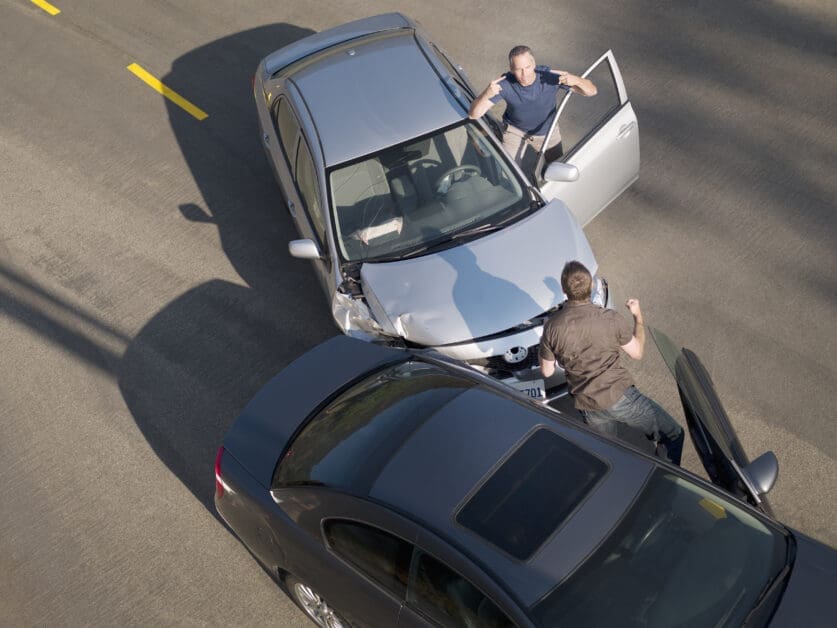
Even though – from your point of view – the situation is crystal clear, and it’s 100% the other person’s fault because they ran a red light, the other driver comes at you convinced that it was YOU who went through a red light. And while both of you are pointing fingers at one another, you’re also contemplating what happened.
What’s going on? Could it be possible they’re right?
When drivers can’t agree on who caused the crash, the accident itself isn’t that important. The only thing that matters ‘right now’ is which one of you will tell the better story. And don’t even think about waiting on your insurance to play detective because that’s not happening.
So what now?
Fault’s unclear at best, so how do insurers decide who pays and who gets dropped? And how is it even possible that a fender bender can turn into something that drags on for months before either side gets to see a dime?
What Happens When Both Drivers Say It’s Not Their Fault?
Have you ever heard of the term ‘disputed claim’? Insurers use it; the moment both drivers deny fault in an accident, the accident becomes a disputed claim. And since the fault isn’t clear, the entire process stops.
The whole thing starts with those first statements.
People have no idea how important those are, but let’s say you call your insurer, all rattled, and say you THINK the other driver came into your lane.
But the other driver confidently says you swerved into them, and that tiny little difference between hesitation and certainty can have an impact on how things go from now on.
Adjusters will look at police reports, photos, where the cars landed, etc., but they won’t play detective. You have to remember that what they’re interested in is protecting the company’s bank account, not helping you out or even finding out the truth.
The thing that surprises people is that fault isn’t always black and white.
It can be shared, meaning you could be 60% responsible and the other party could be at 40%. When that happens, your payout shrinks by the percentage of fault, and you end up paying for part of the bill out of pocket.
Insurance companies don’t care about opinions; they look at evidence and statements, which slows down everything. Disputes can drag on for what seems like forever, and the best advice anyone can give you is to look into auto accident legal representation.
What Decides Who’s at Fault
You could be the most likable person in the whole world, but if the evidence doesn’t back your story, it won’t matter.
What matters is evidence, and from that, insurance and judges will build a timeline.
Police Report – What It ACTUALLY Does (and Doesn’t) Do
The police officer who shows up at the scene writes down the basics, like where each car was, what the drivers said, if anyone got a ticket, visible damage, and so on. And since the officer is an unbiased third party, their report is important, and insurance companies take it seriously.
But the officer didn’t see the crash happen; they came after the fact.
So even though that police report is important, it’s by no means the final word.
What Car Damage Can Reveal
There’s a good deal of information you can get from the damage to your car.
For instance, if you were rear-ended, it usually means the driver behind you is the guilty party, plain and simple. However, if the damage is on the side of your car, now you’re looking at who had the right of way.
Let’s say you have a dent on the passenger side; that could mean someone turned into you. But a scrape on the driver’s side door could mean you merged into someone else.
Generally, it’s the car that has hit the other car that’s usually considered guilty, but that can also depend on a few factors.
Insurers will look at these impact points because, while people lie, physics don’t.
Witnesses – When They Help and When They Don’t
Witnesses aren’t 100% reliable. This has to do with people (sometimes) misremembering things. If they’re under stress or they are distracted, then their testimony is even more unreliable. The problem is that, regardless of all this, some witnesses are 100% sure they saw something (even though that specific thing never actually happened).
With that out of the way, witnesses are still very useful, especially if you’ve got multiple. What you can do then is connect the dots and recreate an entire event, even though you might have one witness who says what happened at the end, and two who saw the entire incident. This way you can compare details.
If the witness is impartial, insurance companies will be very happy. An impartial witness can be a lifesaver, and what they say usually means a lot to insurance companies.
Also, this goes without saying, but we’ll point it out anyway – the quality of the witness matters as well. If the witness is sound, focused, and sure of themselves, as well as consistent, this witness will hold more weight than one who’s confused/shaky/unconfident.
Conclusion
After a car accident, stress levels are high, people are shaken and afraid, and they’re also confused. So it’s not uncommon for both drivers to disagree. It’s not quite the norm, but it happens often. Usually, this has to do with person A thinking the other party is responsible (and vice versa).
It’s the insurance company’s and the judge’s job to determine fault. And this can (sometimes) take a while.
But regardless of the length of the case, all these tend to boil down to solid evidence and what you can prove in the court of law.