How Do You Know If You Have a Strong Slip and Fall Case
A slip and fall accident can look simple at first. You got hurt, the hazard seems obvious, and it may feel like the facts should speak for themselves. Still, these cases are rarely that easy. Some move forward with solid support, while others lose momentum early, even when the injury is real.
The difference usually comes down to how the facts fit together. Responsibility, documentation, timing, and the effect of the injury all shape how a claim is viewed. Looking at one piece on its own can be misleading. What matters is whether the full picture holds up.
Seeing the case in that light can help you assess your situation more clearly before deciding what to do next.
Liability Is the Starting Point
Every strong slip and fall case starts with one basic question: Who was responsible for the condition that caused the accident? An injury alone is not enough. There has to be a clear connection between the hazard and the property owner’s duty to keep the area reasonably safe.
That often depends on whether the danger could have been fixed, cleaned up, or addressed in time. A wet floor without a warning sign, poor lighting on a stairway, uneven pavement, or neglected maintenance can all point to liability. At the same time, if the hazard appeared suddenly or was not something the owner should reasonably have noticed, proving negligence becomes more difficult.
That is why this part matters so much. When responsibility is clear and supported by the facts, the case starts on stronger ground. When liability is unclear or strongly disputed, even a serious injury may not be enough to carry the claim very far.
Evidence Quality Carries More Weight Than Quantity
People often assume that more evidence automatically means a stronger case. In reality, the quality of that evidence matters much more than the amount. Clear, reliable documentation can make a claim easier to evaluate. Weak, incomplete, or inconsistent proof can weaken it just as quickly.
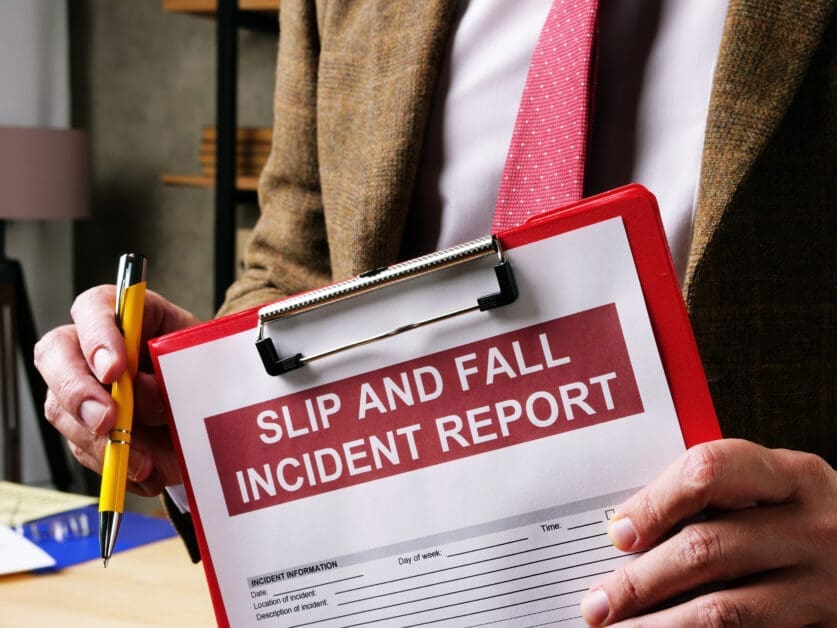
Photos that clearly show the hazard, incident reports made close to the time of the fall, and witness accounts that match the facts all help build credibility. Blurry images, missing details, or conflicting descriptions tend to create doubt that is hard to fix later.
That is why collecting the right evidence after a slip and fall accident matters so much. Good evidence does more than show that a fall happened. It helps show why it happened, who may be responsible, and how the claim is likely to be viewed.
Timing and Consistency Affect Credibility
The timing of key details can affect how a claim is perceived. Waiting too long to report the incident or get medical care can create gaps that make the case harder to assess. Those gaps often raise questions about what happened and whether the injury was actually tied to the fall.
Consistency matters just as much. The description of the incident should line up across reports, medical records, and later statements. When the details stay consistent, the claim tends to feel more reliable. When they do not, attention can shift away from the hazard and toward the inconsistencies.
Even small differences can become a problem when a claim is closely reviewed. A prompt report and a clear record help support credibility from the beginning.
Damages Help Define the Strength of a Case
The seriousness of the harm also affects how strong a slip and fall claim appears. Even when liability seems fairly clear, the overall strength of the case often depends on the extent of the damages.
Medical treatment is a major part of that picture. Ongoing care, documented diagnoses, and a clear connection between the injury and the fall all help support the claim. Lost wages, work restrictions, and other financial consequences matter as well. A better understanding of damages in personal injury law helps explain why the impact of an injury can matter as much as the accident itself.
A claim with significant, well-documented damages usually carries more weight than one where the injury appears minor or the losses are difficult to verify.
Legal Evaluation Brings the Full Picture Together
Looking at each factor in isolation can give the wrong impression. A case may seem strong because the injury is obvious, or weak because one piece of documentation is missing. In practice, legal evaluation looks at how liability, evidence, timing, and damages work together.
That process often reveals patterns that are easy to miss at first. A few gaps in the record, uncertainty about who knew about the hazard, or inconsistencies in reporting can change how a claim is viewed. At the same time, a case with moderate injuries may be stronger than it first appears when the supporting details are solid.
In many situations, experienced injury lawyers for slip and fall cases can spot those strengths and weaknesses early, which helps shape how the claim is approached and whether it is likely to move forward in a meaningful way.
Common Issues That Can Weaken a Claim
Some cases lose strength because certain facts raise questions, not because the injury is insignificant. Shared fault is one common example. If the injured person is seen as partly responsible for the fall, that can affect how the claim is valued and argued.
Missing documentation can also create problems. Without a clear record of the hazard, the incident, or the injury, it becomes harder to connect the fall to the property condition. Something may have gone wrong, but a lack of proof can still undermine the claim.
Gaps in medical treatment are another concern. Delays in care, missed appointments, or long breaks in treatment can make it harder to show how serious the injury was or whether it was caused by the fall. Consistent treatment usually strengthens the record.
There are also situations where the hazard does not appear clearly dangerous. If the condition is treated as obvious or avoidable, the argument that the property owner failed to act reasonably may be harder to support.
Looking at the Full Picture Before Taking Action
No single factor decides whether a slip and fall case is strong. A claim with clear liability but limited damages may still run into problems. Another claim with less dramatic injuries may hold up well, given strong documentation and consistent facts.
That is why it helps to step back and assess the full picture. Liability, evidence, timing, and damages each contribute in different ways. When those parts support one another, the claim tends to look more credible and more viable.
A careful evaluation early on can lead to better decisions and a clearer sense of what the case is likely to involve.
Conclusion
A strong slip and fall case involves more than showing that an injury occurred. Responsibility, reliable evidence, consistent documentation, and meaningful damages all affect how a claim is viewed. When those elements line up, the case is much easier to support.
Looking at the situation from several angles creates a more realistic understanding of where things stand. That clarity can make a real difference when deciding whether to pursue a claim and how to approach it.