
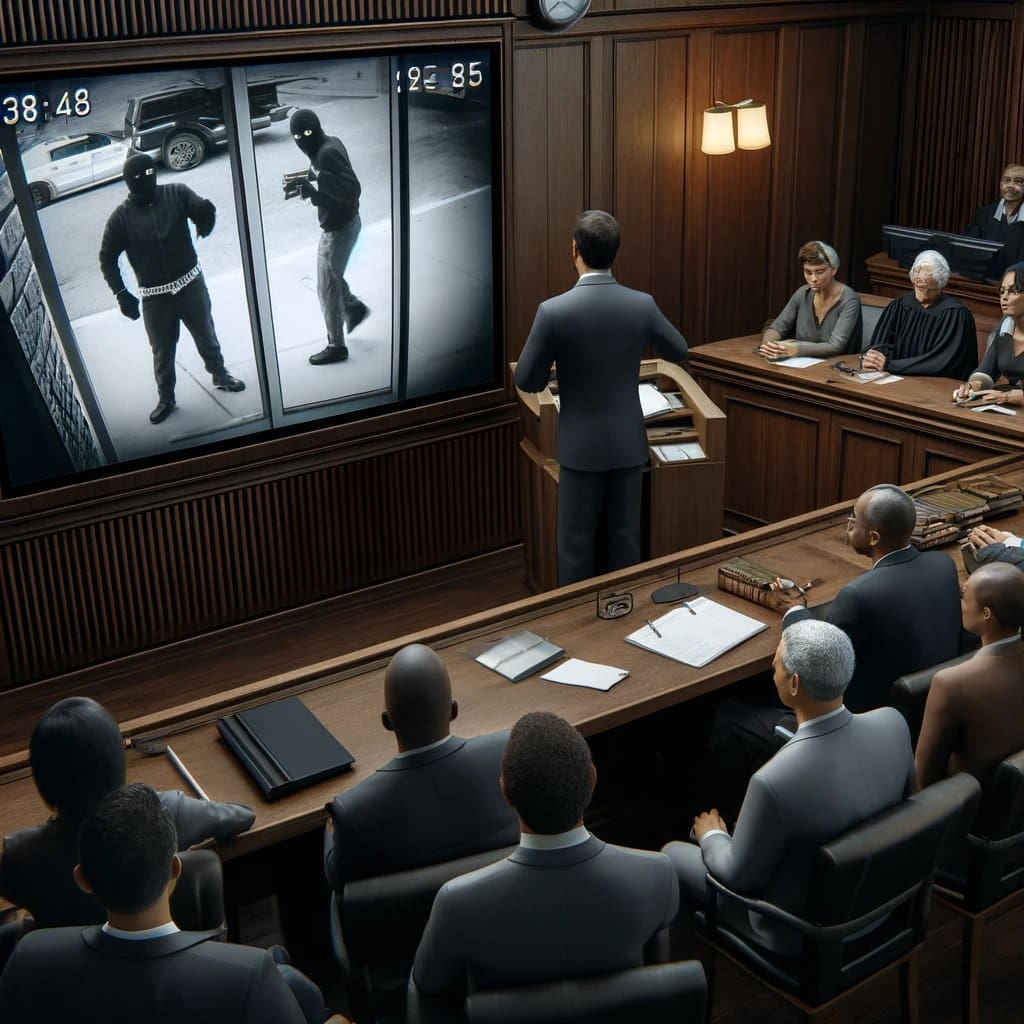
How to Beat an Armed Robbery Charge in Houston When No Weapon Was Recovered
[In Houston, the State can still pursue an armed robbery/aggravated robbery case without recovering a gun or knife—but lack of a weapon often creates powerful reasonable doubt. Texas prosecutors must prove the use or exhibition of a deadly weapon or that the object was used in a deadly way. This article explains the defenses, evidence issues, and Houston-specific strategy to beat an armed robbery charge when no weapon was found.]
In Houston, “armed robbery” cases are typically filed as aggravated robbery under Texas law. Many people assume prosecutors must produce the gun or knife to win. They do not. But when no weapon is recovered, the case often becomes far more vulnerable—because the State must still prove, beyond a reasonable doubt, that a deadly weapon was used or exhibited (or that the defendant caused or threatened serious bodily injury) during the robbery.
This article explains how aggravated robbery is proven in Texas, why missing-weapon cases are beatable, and the defense strategies Houston criminal defense attorneys commonly use in Harris County and surrounding jurisdictions.
What the State Must Prove in a Houston “Armed Robbery” Case
Texas defines robbery as committing theft and, in the course of that theft, intentionally, knowingly, or recklessly causing bodily injury to another or intentionally/knowingly threatening or placing another in fear of imminent bodily injury or death. “Armed robbery” is usually prosecuted as aggravated robbery when the allegations include a weapon or serious injury.
Aggravated robbery elements (Texas Penal Code § 29.03)
To convict for aggravated robbery, prosecutors generally must prove robbery plus at least one aggravating factor, such as:
- Using or exhibiting a deadly weapon (e.g., firearm, knife, or an object used in a deadly manner), or
- Causing serious bodily injury, or
- Robbing/assaulting certain protected victims (e.g., elderly or disabled individuals).
When the charge is “armed robbery,” the State’s theory is usually the first one: deadly weapon use or exhibition. If no weapon was recovered, the case often hinges on witness perception, video quality, and whether the alleged weapon can be reliably identified.
Can Texas Convict Without Recovering the Weapon?
Yes. Texas courts can allow a conviction based on credible testimony that the defendant used or exhibited a deadly weapon—even if the weapon was never found. Prosecutors may rely on:
- Victim/witness testimony (“He pointed a gun at me”)
- Surveillance video showing an object consistent with a firearm
- Statements attributed to the accused (“I had a gun”)
- Physical effects consistent with a weapon (e.g., firearm-shaped bulge, injury patterns)
But “can” is not “will.” Missing-weapon cases create defense opportunities because the State’s evidence is often subjective and vulnerable to cross-examination and expert critique.
Why “No Weapon Recovered” Is a Major Defense Advantage
When law enforcement cannot recover the gun/knife/weapon, the defense can argue that:
- The object was never a deadly weapon (toy gun, BB gun, replica, phone, tool, or hand gesture)
- The witness misperceived the object in a high-stress situation
- Video is inconclusive and does not show “use or exhibition”
- Police assumptions substituted for proof
- Chain-of-events gaps exist (no weapon found during arrest, search, or inventory)
In Harris County aggravated robbery cases, the “deadly weapon” finding dramatically affects punishment exposure and parole eligibility. That is why weapon proof is often the central battlefield.
Key Defense Strategies to Beat an Armed Robbery Charge When No Weapon Was Found
1) Attack “deadly weapon” proof: what was it, really?
Texas law treats firearms as deadly weapons. Other objects can qualify only if they are manifestly designed for deadly use or used or intended to be used in a manner capable of causing death or serious bodily injury.
When no weapon is recovered, the defense can press these questions:
- Did the witness actually see a weapon—or infer one?
- How long did the witness observe it?
- What lighting conditions existed?
- Was the witness focused on the weapon (weapon-focus effect), reducing accuracy on identity?
- Did the witness describe it consistently (color, size, material, markings)?
Example: A complainant reports “a black handgun,” but on 911 audio they say “I think he had something” and later describe a “silver pistol.” No weapon is found on arrest or in a vehicle search. That inconsistency can be leveraged to argue the State cannot prove “deadly weapon” beyond a reasonable doubt.
2) Challenge the “use or exhibition” requirement
Even if an object existed, the State must show it was used or exhibited during the robbery. That may be disputed when:
- The object was never displayed (only implied)
- The allegation is based on a bulge in clothing
- The witness only saw an object after the alleged theft
- The object appears briefly on poor-quality video
Implied threats can support robbery, but upgrading to aggravated robbery often depends on the clarity of weapon display or conduct.
3) Suppress the stop, search, or identification
Missing-weapon cases frequently involve intense police response—high-risk stops, rapid witness show-ups, and aggressive searches. If police violated constitutional rules, the defense can seek suppression of key evidence. Common motion targets include:
- Unlawful traffic stops lacking reasonable suspicion
- Warrantless searches beyond recognized exceptions
- Phone searches without a warrant or valid consent
- Overly suggestive show-ups (single-suspect identification at the scene)
Houston reality: In fast-moving robberies, officers may detain someone based on a vague description (“male in dark hoodie”). If that detention and search are unlawful, the defense may keep out incriminating items (cash, clothing, statements) that the State uses to “connect the dots” to a weapon that was never found.
4) Expose eyewitness misidentification and stress-driven errors
In no-weapon-recovered cases, the prosecution often leans heavily on eyewitness testimony. Eyewitness identification is a leading cause of wrongful convictions nationwide, and robbery scenarios are especially risky due to:
- Short viewing time
- High stress and fear
- Cross-racial identification issues
- Weapon-focus effect (attention on an alleged weapon)
- Contamination from conversations, social media, or police feedback
Defense attorneys may use 911 audio, body-worn camera footage, and early written statements to compare what was said before memory was influenced. In many cases, the earliest statements are less certain—an important point for trial.
5) Use video and digital evidence the State overlooked
Houston robbery allegations often involve convenience stores, parking lots, and apartment complexes with cameras—but video is frequently incomplete or poorly preserved. A defense team can:
- Send rapid preservation requests to businesses and property managers
- Obtain higher-quality exports than what police collected
- Collect nearby camera angles (adjacent stores, traffic cameras, doorbell cams)
- Analyze timestamps and frame rates to challenge timeline assumptions
Example: A grainy clip appears to show a “gun” for half a second. A higher-resolution export reveals it is a phone or key fob, or shows the suspect’s hand was empty when alleged threats were made.
6) Attack “confession” or incriminating statements
When there is no weapon, prosecutors may lean on statements like “I had it on me” or “I was just trying to scare him.” These statements can be challenged if:
- Miranda warnings were not properly given during custodial interrogation
- Statements were coerced or unreliable
- Police reports paraphrased rather than quoted
- The defendant’s words were ambiguous (“I had something”)
Even small wording differences matter in aggravated robbery. “I had a gun” is different from “I had something in my pocket.” Without the weapon, ambiguity should benefit the defense.
7) Present an affirmative narrative: toy, replica, or no weapon at all
In some cases, the best defense is not merely “the State can’t prove it,” but a coherent alternative explanation supported by evidence:
- A realistic replica or toy was used (not always a firearm under Texas law)
- A BB gun/air gun was involved (classification depends on facts and case law)
- No object existed; a gesture or wording caused a mistaken belief
- The complainant’s expectations shaped perception (high-crime area assumptions)
This approach works best when supported by consistent witness accounts, video, or tangible corroboration (purchase records, recovered replica, or testimony from neutral witnesses).
Common Houston Evidence Problems in Missing-Weapon Robbery Cases
Body camera gaps and delayed activation
Defense attorneys review whether body-worn cameras captured the earliest witness statements. Del














