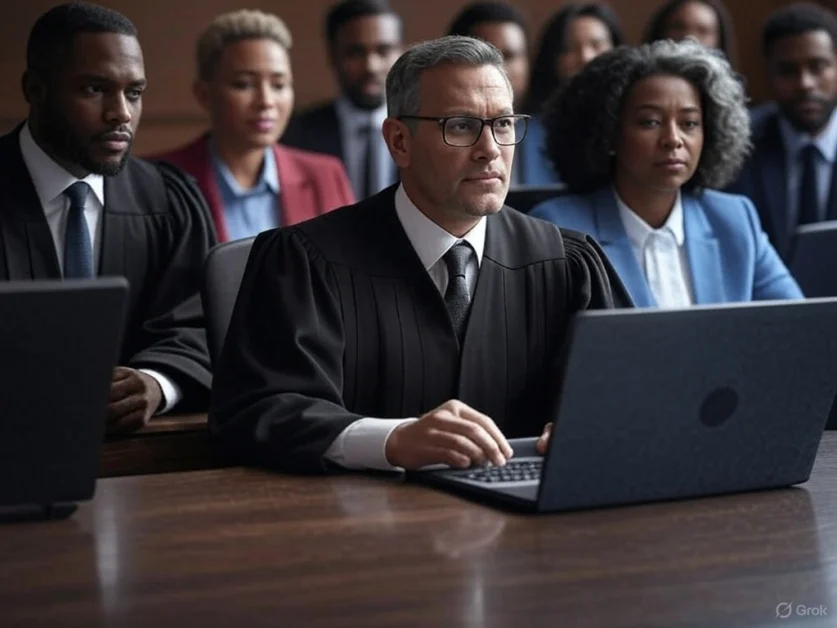
Health safety standards violations are addressed through agency enforcement (OSHA can fine employers up to $16,550 per violation in 2025, higher for willful/repeat) plus civil and, in severe cases, criminal penalties. Liability can also arise under negligence, premises liability, product liability, and healthcare regulations. This article covers occupational, public health, and healthcare enforcement and compliance. […]
Read More
How Does the Law Handle Crypto-Related Financial Crimes?
U.S. law treats many crypto-related financial crimes as traditional offenses—such as fraud, money laundering, and unlicensed money transmission—often carrying penalties that can include years in federal prison and significant fines. Regulators and prosecutors apply long-standing statutes while using blockchain analytics to trace transactions and prove intent. This article explains the key charges, how investigations work, […]
Read More
How Do Legal Systems Address Fraudulent Activities on Social Media?
Legal systems address social media fraud by applying existing criminal and civil fraud laws, often supplemented by platform policies and cybercrime statutes. Enforcement typically relies on digital evidence, cross-border cooperation, and remedies ranging from account takedowns to fines, restitution, and imprisonment. This article explains common legal theories, investigative tools, jurisdiction and anonymity challenges, and practical […]
Read More
How Are Legal Rights Defined in the Age of Digital Privacy?
In the U.S., legal rights to digital privacy are defined through 50 state privacy laws plus federal sector rules and evolving court decisions. These frameworks govern consent, data collection, sharing, breach duties, and limits on government and private surveillance. This article explains the key statutes, constitutional principles, and practical steps for protecting digital privacy rights. […]
Read More
What Legal Battles Are Emerging from Trump’s Foreign Aid Cuts?
Trump’s foreign aid cuts are triggering legal challenges over the President’s authority to withhold or redirect congressionally appropriated funds. Lawsuits and oversight fights are testing statutory limits under federal appropriations law, the Impoundment Control Act, and related procurement and contract rules. This article explains the most likely claims, who has standing, key court venues and […]
Read More
How Does the Supreme Court Shape Legal Doctrine on Guns and Immigration?
The Supreme Court has reshaped doctrine on guns and immigration through multiple landmark rulings since 2008, setting binding precedent for all lower federal courts. These decisions recalibrate Second Amendment standards and the limits of federal and state power in immigration enforcement. This article explains the key cases, the doctrinal tests they created, and their real-world […]
Read More
How Does Corporate Environmental Responsibility Face Legal Challenges?
Corporate environmental responsibility faces legal challenges primarily through regulatory enforcement actions, shareholder and community lawsuits, and penalties for noncompliance that can include substantial fines and injunctive orders. As environmental rules tighten and ESG disclosures increase, companies must prove due diligence across their operations and supply chains to manage liability and reputational risk. This article explains […]
Read More
How do Romeo and Juliet laws affect the classification of sex offenders
Romeo and Juliet laws can prevent sex offender registration in close-in-age, consensual cases, and in some states limit registration to about 2–4 years of age difference. They narrow statutory rape charges or reclassify offenses so teens aren’t labeled predators for peer relationships. This article explains how these exemptions affect charging, registration, and long-term consequences. Romeo […]
Read More
What Are the Legal Outcomes for Politicians Involved in Fraud Schemes?
Politicians involved in fraud schemes can face up to 20 years in federal prison per wire fraud count, plus fines, restitution, and asset forfeiture. Convictions can also trigger removal from office, loss of pensions, and bans on holding future public office under state or federal rules. This article explains key statutes, charging theories, and typical […]
Read More
Traffic Court: Tips for Representing Yourself
You can represent yourself in traffic court, and most minor citations are resolved in one short hearing (often 5–15 minutes). Preparation—reviewing the citation, gathering evidence, and practicing a clear explanation—can increase your odds of a reduction or dismissal. This article covers the traffic court process, defense strategies, and courtroom conduct tips. Representing oneself in traffic […]
Read More
Traffic Court: Tips for Representing Yourself
Representing yourself in traffic court can reduce penalties if you prepare evidence, understand the charge, and follow local procedures. Most cases are decided in a brief hearing, so clear documents, a concise defense, and respectful courtroom conduct matter. This article covers pro se strategy, plea decisions, and common pitfalls to avoid in 2025. The decision […]
Read More
Intellectual Property Lawyer: Protecting Your Creative Assets
An intellectual property lawyer typically handles 4 core protections: patents, trademarks, copyrights, and trade secrets. They secure registrations, draft and negotiate licenses, and enforce rights in disputes to prevent infringement and preserve value. This article explains what IP lawyers do, when to hire one, and how they protect and monetize creative assets. The role of […]
Read More