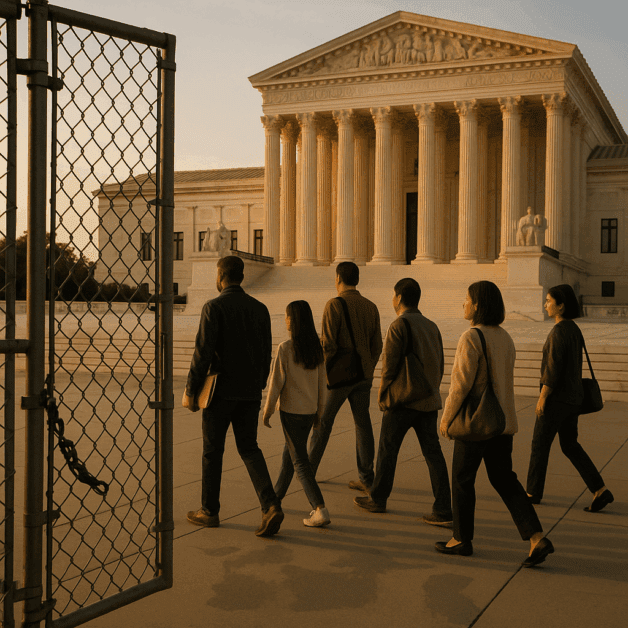
Articles in this category cover the U.S. Constitution and how it shapes government power and individual rights, including federalism and separation of powers. Topics include Supreme Court and lower-court constitutional rulings on issues such as free speech, due process, equal protection, search and seizure, voting rights, and executive and legislative authority.
A federal judge has blocked Florida’s 2023 “Immigrant Work Permit” law (SB 1718) from being enforced. The ruling halts provisions that would have imposed new immigration-verification rules and penalties affecting employers and workers across the state. This article explains what the law required, why it was struck down, who is impacted, and what happens next […]
The Supreme Court has narrowed how far states can go in enforcing immigration-related laws, reinforcing that immigration regulation is primarily a federal power. The ruling curbs state measures that intrude on federal authority and affects how state and local agencies may detain, prosecute, or otherwise target noncitizens. This article explains what the Court decided, why […]
The Sixth Amendment guarantees 6 key rights for people accused in U.S. criminal prosecutions, including a speedy and public trial, an impartial jury, and the right to counsel. It also protects confrontation and compulsory process and requires notice of the accusation. This article explains what the Sixth Amendment says and how each right applies in […]
The Eighth Amendment (ratified in 1791) prohibits excessive bail, excessive fines, and cruel and unusual punishments. It sets constitutional limits on how the government can penalize and detain people in criminal cases. This article explains what the amendment means, how courts apply it, and common real-world examples. Understanding the Eighth Amendment The Eighth Amendment is […]