comparative negligence Florida

Visitors exploring this tag will discover a wealth of resources explaining how fault is determined in personal injury cases under Florida’s comparative negligence laws. Featuring expert attorney interviews, legal articles, and breakdowns of key statutes, this section provides insight into how liability and compensation are calculated when multiple parties share responsibility for an accident. Whether seeking clarity on legal terminology or understanding the implications of negligence laws in Florida, this content is designed to inform and educate.

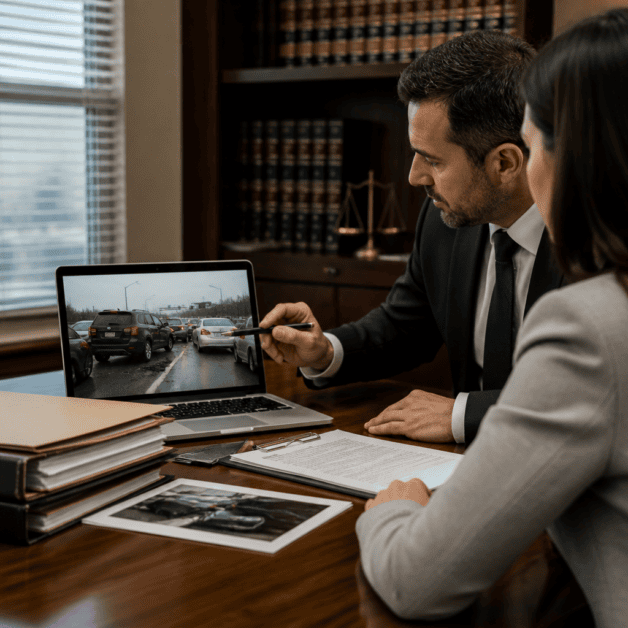
How to Prove Negligence in a Multi-Car Pileup on I-95 in Florida Using Dashcam and Police Report Evidence

How to Prove Negligence in a Multi-Car Pileup on I-95 in Florida Using Dashcam and Police Report Evidence

Proving negligence in a Florida I-95 multi-car pileup typically requires 4 elements—duty, breach, causation, and damages—supported by objective evidence like dashcam video and the Florida Traffic Crash Report. I-95 pileups often involve chain-reaction impacts, conflicting accounts, and multiple insurance carriers. This article explains how Florida attorneys use dashcam footage and police-report evidence to establish liability, […]
How to Prove Negligence in a Multi-Car Pileup on I-95 in Florida Using Dashcam and Police Report Evidence Read More »

How to Prove Fault in a Florida Rear-End Collision When the Lead Driver Braked Suddenly

How to Prove Fault in a Florida Rear-End Collision When the Lead Driver Braked Suddenly

[In Florida, the rear driver is usually presumed at fault in a rear-end crash—but that presumption can be rebutted with evidence the lead driver stopped abruptly and unreasonably. Sudden braking can shift or share liability when it’s not tied to traffic conditions, hazards, or lawful driving. This article explains the Florida law, proof strategies, key

How to Prove Fault in a Florida Rear-End Collision When the Lead Driver Braked Suddenly Read More »

How to Maximize Your Settlement After a Rear-End Collision on I-95 in Miami-Dade County, Florida

How to Maximize Your Settlement After a Rear-End Collision on I-95 in Miami-Dade County, Florida

Rear-end crashes are among the most common collision types in Florida, and the “following too closely” driver is often presumed at fault—facts that can materially increase settlement value. On I-95 in Miami-Dade County, heavy congestion, sudden stops, and aggressive driving create recurring rear-end impact patterns with serious neck, back, and traumatic brain injuries. This article

How to Maximize Your Settlement After a Rear-End Collision on I-95 in Miami-Dade County, Florida Read More »

How to Prove Comparative Negligence in a Florida Rear-End Accident When the Lead Driver Braked Suddenly

How to Prove Comparative Negligence in a Florida Rear-End Accident When the Lead Driver Braked Suddenly

In Florida, a rear driver can reduce or avoid liability if evidence shows the lead driver’s sudden braking was unreasonable and contributed at least 1% to the crash under Florida’s modified comparative negligence rule. Rear-end collisions are often presumed the trailing driver’s fault, but that presumption can be rebutted with the right facts. This article

How to Prove Comparative Negligence in a Florida Rear-End Accident When the Lead Driver Braked Suddenly Read More »

How to Prove Negligence in a Florida Rear-End Crash When the Other Driver Claims Sudden Brake Failure

How to Prove Negligence in a Florida Rear-End Crash When the Other Driver Claims Sudden Brake Failure

Florida rear-end collisions typically create a rebuttable presumption that the rear driver was negligent—even when they claim “sudden brake failure.” In practice, that defense only works if the driver can prove the failure was truly unforeseen and not tied to poor maintenance. This article explains how to prove negligence in a Florida rear-end crash by

How to Prove Negligence in a Florida Rear-End Crash When the Other Driver Claims Sudden Brake Failure Read More »

How to Prove Fault in a Florida Rear-End Car Accident When the Other Driver Claims Sudden Stop

How to Prove Fault in a Florida Rear-End Car Accident When the Other Driver Claims Sudden Stop

[In Florida, the trailing driver is presumed at fault in most rear-end crashes, even when they claim you “stopped suddenly.” That presumption is strong, but it can be rebutted with evidence of an abrupt, unforeseeable stop or another independent cause. This article explains how fault is proven and defended in Florida rear-end cases, what evidence

How to Prove Fault in a Florida Rear-End Car Accident When the Other Driver Claims Sudden Stop Read More »

How to Prove Negligence in a Florida Left-Turn Car Accident at an Unprotected Intersection

How to Prove Negligence in a Florida Left-Turn Car Accident at an Unprotected Intersection

In Florida, an unprotected left-turn driver must yield to oncoming traffic under Fla. Stat. § 316.122—so proof often starts with showing a failure to yield. Left-turn crashes at uncontrolled or signalized intersections commonly turn on right-of-way, visibility, and timing. This article explains the evidence and legal elements Florida attorneys use to prove negligence, defeat comparative-fault

How to Prove Negligence in a Florida Left-Turn Car Accident at an Unprotected Intersection Read More »

Defending Weapons Charges: Insights from Attorney Kirk Tarman

How to Prove Negligence When a Driver Runs a Red Light in Florida: Evidence, Witnesses, and Traffic Camera Footage

In Florida, proving negligence after a red-light crash usually turns on four elements—duty, breach, causation, and damages—and the strongest cases combine objective proof like camera video with eyewitness and scene evidence. Because red-light violations often happen fast, early evidence preservation is critical. This article explains the key evidence, how to obtain traffic camera footage, and

How to Prove Negligence When a Driver Runs a Red Light in Florida: Evidence, Witnesses, and Traffic Camera Footage Read More »

Essential Guide: 5 Warning Signs You Should Hire a Lawyer After an Accident in Florida

5 Signs You Need a Lawyer After an Accident in Florida

In Florida, you should contact an accident lawyer if injuries are serious, fault is disputed, or the insurer delays, denies, or offers a low settlement. These issues often determine whether you recover full medical costs, lost wages, and future damages. This article explains five clear signs and what to do next across Florida, from Tampa

5 Signs You Need a Lawyer After an Accident in Florida Read More »

Scroll to Top