
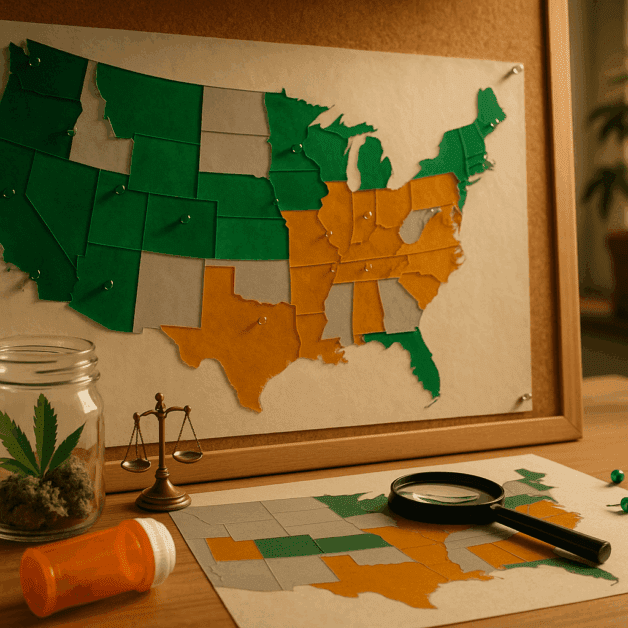
The 2026 Map – Every State Where Weed Is Legal (Recreational vs. Medical)
As of 2026, most U.S. states allow cannabis in some form, with many permitting medical marijuana and a growing number legalizing recreational use. Laws vary by state on possession limits, home grow, licensing, and qualifying conditions. This article maps every state’s status and breaks down recreational vs. medical legalization.
Where Does the U.S. Stand on Cannabis in 2026?
Cannabis laws in the United States have changed dramatically over the past decade. What started as a handful of states allowing medical use has grown into a widespread shift across the country. By 2026, the legal landscape looks very different from what it was just ten years ago, with more states than ever allowing some form of marijuana use — either for medical purposes, recreational use, or both.
Whether you’re a patient looking for relief, a traveler trying to stay compliant with local laws, or just someone curious about where drug law stands today, this guide breaks it all down in plain language. Here’s a complete look at every state where weed is legal in 2026, what kind of use is allowed, and what that means for everyday people.
Understanding the Difference: Recreational vs. Medical Cannabis
Before diving into the map, it helps to know what these two categories actually mean in practice.
- Medical marijuana means a state allows cannabis use only for people who have a qualifying health condition and have received a recommendation or certification from a licensed doctor. Patients usually need to register with the state and carry a medical card.
- Recreational marijuana (also called adult-use cannabis) means any adult — typically 21 and older — can legally purchase and use cannabis without needing a medical reason. These states usually have licensed dispensaries open to the general public.
It’s also worth noting that even in states where cannabis is fully legal, federal law still classifies marijuana as a Schedule I controlled substance. This creates a complicated situation where something can be perfectly legal under state legislation but technically still illegal under federal law.
States Where Recreational and Medical Marijuana Are Both Legal
These states have gone the furthest in cannabis regulation, allowing adults to buy and use marijuana freely while also maintaining medical programs for patients who need additional access or protections.
- Alaska – Legal since 2015 for recreational use; medical program has been in place since 1998.
- Arizona – Voters approved recreational use in 2020. Medical marijuana has been legal since 2010.
- California – One of the largest cannabis markets in the world. Medical use dates back to 1996, and recreational use became legal in 2016.
- Colorado – A pioneer in cannabis regulation. Both recreational and medical marijuana have been legal since 2012.
- Connecticut – Legalized recreational cannabis in 2021, with retail sales launching in 2023.
- Delaware – Joined the adult-use states in 2023, with a medical program already in place.
- Illinois – Legalized recreational use in 2020, with one of the more structured state cannabis regulation systems in the country.
- Maine – Medical marijuana has been legal since 1999, and recreational use passed in 2016.
- Maryland – Adult-use cannabis sales began in 2023 after voters approved it in 2022.
- Massachusetts – Voters approved recreational use in 2016, and the market has been growing steadily since.
- Michigan – Legalized recreational marijuana in 2018. It now has one of the most active cannabis markets in the Midwest.
- Minnesota – Legalized recreational cannabis in 2023, with adult-use sales expected to be fully operational by 2025.
- Missouri – Voters approved recreational marijuana in November 2022, with sales starting in 2023.
- Montana – Recreational cannabis was approved in 2020 and sales began in 2022.
- Nevada – Recreational marijuana has been legal since 2017. Las Vegas has become a notable destination for cannabis tourism.
- New Jersey – Recreational sales launched in 2022 after voters approved the measure in 2020.
- New Mexico – Adult-use cannabis sales began in 2022, supported by strong state legislation.
- New York – Legalized recreational use in 2021. The rollout of retail stores has been gradual but ongoing.
- Ohio – Voters approved recreational marijuana in November 2023, with sales beginning in 2024.
- Oregon – One of the earlier adopters of recreational marijuana, legal since 2015.
- Rhode Island – Legalized recreational cannabis in 2022.
- Vermont – Was one of the first states to legalize recreational cannabis through the legislature rather than a ballot measure, back in 2018. Retail sales followed in 2022.
- Virginia – Recreational marijuana became legal in 2021, with retail sales opening in 2024 after delays in cannabis regulation.
- Washington – Along with Colorado, Washington was among the first states to legalize recreational use, back in 2012.
- Washington D.C. – Cannabis is legal for personal use and gifting, though retail sales through licensed dispensaries operate under a unique legal framework.
States With Medical Marijuana Only
These states allow cannabis use for qualifying patients with a valid medical card, but recreational use remains illegal. The rules for what conditions qualify, how much you can possess, and where you can buy vary widely by state.
- Alabama – Medical marijuana was approved in 2021. The rollout has been slow due to regulatory challenges.
- Arkansas – Voters approved medical marijuana back in 2016. Recreational measures have not yet passed.
- Florida – Has one of the largest medical marijuana programs in the country. A recreational ballot measure failed in 2024, leaving the state as medical-only for now.
- Georgia – Allows a limited low-THC oil for specific medical conditions. The program is still quite restrictive.
- Hawaii – Medical marijuana has been legal since 2000, making it one of the earlier adopters, though recreational use has not been approved.
- Iowa – Has a very limited medical cannabis program focused on low-THC products.
- Kentucky – Medical marijuana was legalized in 2023, with the program being developed and rolled out since then.
- Louisiana – Medical marijuana is legal and the program has expanded over time, but recreational use is not permitted.
- Mississippi – Voters approved a medical marijuana program in 2022 after an earlier measure was struck down by the state Supreme Court.
- New Hampshire – Has a medical marijuana program, and discussions around recreational legalization continue in the state legislature.
- North Dakota – Medical marijuana is legal. A recreational measure on the 2022 ballot was defeated.
- Oklahoma – Has one of the most open medical marijuana programs in the country, with very accessible qualifying criteria. Voters rejected a recreational measure in 2023.
- Pennsylvania – Medical marijuana is legal and widely used, but recreational legislation has stalled repeatedly.
- South Dakota – A recreational measure passed in 2020 but was struck down by the courts. Medical marijuana remains legal.
- Utah – Has a tightly regulated medical program, with a focus on specific health conditions and controlled dispensaries.
- West Virginia – Medical marijuana is legal, though the program has been slow to fully launch.
States Where All Forms of Marijuana Remain Illegal
A shrinking but still notable group of states continues to prohibit all marijuana use, whether medical or recreational. In these states, possession can still lead to criminal charges under state drug law.
- Idaho – One of the few remaining states with a complete ban on cannabis in any form.
- Kansas – No medical or recreational marijuana is legal under state law.
- Nebraska – Voters approved a medical marijuana measure in November 2024. Implementation is underway, but it had not yet launched full sales by early 2026.
- North Carolina – Medical marijuana legislation has been discussed but not yet signed into law. All use remains illegal.
- South Carolina – Despite repeated legislative attempts, cannabis remains fully illegal.
- Tennessee – No legal cannabis program exists, and the state has generally resisted reform efforts.
- Texas – Has a very limited compassionate use program for specific medical conditions, but broad cannabis use remains illegal. Possession can carry serious criminal penalties.
- Wisconsin – All marijuana use is still illegal under state law, despite neighboring states having legalized it.
- Wyoming – One of the most restrictive states when it comes to cannabis. No medical or recreational program exists.
Key Trends Shaping Cannabis Laws in 2026
The movement toward legalization hasn’t slowed down much. Here are some of the bigger patterns worth paying attention to:
Ballot Measures Remain a Powerful Tool
A lot of the progress on marijuana law has happened through voter-driven ballot initiatives rather than through state legislatures. States like Ohio, Missouri, and Michigan all legalized recreational cannabis this way. When legislatures stall, voters have often taken matters into their own hands.
More States Are Moving From Medical to Recreational
States that have had medical marijuana programs for years are increasingly becoming targets for recreational legalization efforts. Pennsylvania, Florida, and New Hampshire are among the states where adult-use cannabis remains a hot political topic heading into the next few years.
Cannabis Regulation Is Getting More Sophisticated
In states where cannabis is legal, the rules keep evolving. Governments are working on things like social equity programs to help communities disproportionately affected by past drug law enforcement, caps on THC potency, delivery services, consumption lounges, and tighter rules on packaging and advertising.
Federal Reform Discussions Continue
There has been ongoing discussion at the federal level about rescheduling or even descheduling marijuana. In 2024, the DEA proposed moving cannabis from Schedule I to Schedule III, which would be a significant shift in federal drug law — though it would not make cannabis federally legal for recreational use.
What You Need to Know Before You Travel
Even in states where marijuana is fully legal, there are important rules to follow. Here’s what travelers should keep in mind:
- You cannot cross state lines with cannabis, even if both states have legal marijuana. That counts as a federal offense since you’re crossing state borders.
- Possession limits vary. Most recreational states allow adults to possess up to one ounce of flower, but the specific amount differs by state.
- Public consumption is usually prohibited. Just because cannabis is legal doesn’t mean you can smoke it anywhere. Most states restrict use to private property.
- Federal land is off-limits. National parks, federal buildings, and other federally managed spaces remain no-go zones for cannabis, regardless of state law.
- DUI laws apply to cannabis. Driving under the influence of marijuana is illegal everywhere in the country, and many states are ramping up enforcement tools to detect impaired driving.
The Bottom Line
Cannabis law in the United States is no longer a fringe issue — it’s mainstream policy that affects millions of Americans every day. By 2026, the majority of U.S. states have some form of legal cannabis, and the trend lines suggest more changes are still coming. Whether you support legalization or have concerns about it, staying informed about the laws in your state and any state you visit is simply smart and responsible.
The patchwork of state legislation means there’s no single answer to the question of whether weed is legal in America. It depends entirely on where you are, what you’re doing, and whether you’re following the specific rules of that state’s cannabis regulation framework. Knowing the difference can keep you on the right side of the law — and help you understand what’s changing in real time.














