

Understanding Your Legal Rights After a Violent Crime Arrest
After a violent crime arrest, you have at least 3 immediate rights: remain silent, request an attorney, and refuse consent to searches (with exceptions). Invoking these rights early helps prevent self-incrimination and preserves defenses. This article explains what to say and do after arrest, police questioning, and first court steps.
Few things shake a person as much as being arrested for a violent crime. In those first moments, when they handcuff you, everything suddenly becomes a blur — your heart is pounding like crazy, your thoughts are racing over each other, and you just don’t know what to do. And that’s where the problem lies: what you say or do in the next few hours can shape your entire life.
That’s why knowing your own rights is so important — because it can depend on whether everything will end fairly or devastatingly for you.
If you have been arrested in Georgia, working with an experienced Atlanta violent crime lawyer from the beginning of the case can protect your rights and help build the strongest possible defense.
Your Rights Begin at the Time of Arrest
Many people mistakenly think that their legal rights don’t start until they get to the courtroom. In reality, your constitutional protection begins the moment the police detain or arrest you. Knowing these rights—and exercising them properly—can make a big difference in the outcome of your case.
Interestingly, research shows how few people actually understand these rights in practice. A study conducted by legal theorist Saul Kassin on false confessions revealed something startling: a significant percentage of innocent people waive their right to remain silent precisely because they believe that “cooperation” will help them. Kassin’s research found that innocent suspects are more likely to waive their rights than guilty ones—because they think they have nothing to hide. That mistake often costs them dearly.
The Right to Remain Silent
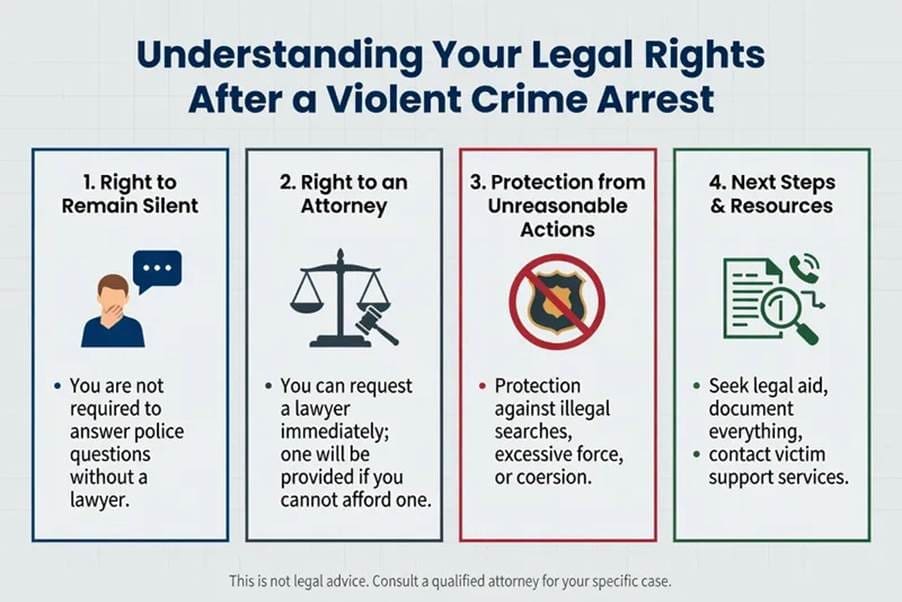
One of the most powerful rights you have is the right to remain silent. According to the Fifth Amendment of the US Constitution, no one can compel you to testify against yourself. When the police arrest you, they are required to inform you of this right through a so-called Miranda rights.
What does this mean in practice?
It means you don’t have to answer questions about where you were, what you were doing or what happened. Anything you tell the police can and will be used against you in court. This applies whether you are sitting in the back of a police car, being processed at the station, or even speaking informally with officers on the scene.
The best move is simple: politely but firmly say that you are exercising your right to remain silent and that you want to speak to a lawyer before answering any questions.
Right to a Lawyer
The Sixth Amendment guarantees your right to legal representation. If you cannot afford a lawyer, one will be assigned to you. This right is essential. Police officers are trained in interrogation techniques designed to elicit statements that can be used against you—even when those statements seem innocuous at the time.
As soon as you ask for a lawyer, the police must stop questioning you until your lawyer arrives. And there is no compromise here—do not give up this right at any cost, no matter how strong the pressure is.
What the Police Can and Can’t Do After Your Arrest
Understanding the limits of police authority is equally important.
What can the police do:
- To conduct a search directly related to the arrest—they can search you and the area around you at the time of arrest
- To detain you for questioning within the framework of the law
- To take fingerprints and photographs as part of the processing process
What the police must not do:
- To continue questioning you after you asked for a lawyer
- To use physical force or coercion to extract a confession
- To conduct an unreasonable search of your home or vehicle without a proper warrant
- To deny you access to a lawyer after you have requested one
If your rights have been violated during an arrest or investigation, it can be challenged in court. Evidence gathered illegally can simply be thrown out of the case—and that can seriously undermine the entire charge against you.
Right to a Fair Trial
Any person accused of a crime in the United States is presumed innocent until proven guilty. It’s not just a legal formality—it’s a fundamental tenet of American justice. You have the right to a public trial before an impartial jury, the right to confront the witnesses against you, and the right to present your own witnesses and evidence.
Research of The National Registry of Exonerations shows how important professional representation really is. Their data reveals that more than half of wrongful conviction cases are related to inadequate legal defense or errors during the investigation. In other words, having the right lawyer at the right time isn’t a luxury—it’s the safety belt that separates you from miscarriages of justice.
Acting Quickly Makes a Difference
The steps taken in the hours and days immediately following an arrest are often the most important. Evidence must be preserved, witnesses found, and legal strategies developed early. Any delay can cost you valuable opportunities to build a strong defense.
After all, an arrest is not the same as a conviction. No matter how dark the situation seems at the moment, nothing has been resolved yet. What you do now has weight and can change the entire course of things. Know your rights, rely on them and do not hesitate to have an expert defense lawyer with you.
Because when your future is at stake, the right step at the right time is worth more than anything else.














