Legal Challenges in Representing Remote Highway Accident Victims
Representing remote highway accident victims is harder because key evidence can disappear within 24 hours and witnesses are often unavailable. Sparse policing, delayed medical response, and unclear jurisdiction make proving fault and damages more complex. This article covers evidence preservation, venue/jurisdiction choices, and strategies to counter insurer challenges.
A crash on a two-lane desert highway doesn’t leave the same paper trail as one at a busy city intersection. No traffic camera catches the swerve. No corner-store clerk hears the impact. What’s left is a skid mark baking in the sun and a client whose memory of the next twelve hours is a blur of pain and waiting. Those first hours, before the scene changes and the story hardens into whatever the responding officer happened to write down, often decide the case. Here’s what makes these files genuinely hard, and where they tend to fall apart.
The First Hours: Where Cases Are Won or Lost
Ask any attorney who’s handled a rural highway file and they’ll tell you the same thing: the clock starts before the client even calls. Wind, traffic, and weather erase physical evidence at a rate that would horrify a city-based litigator used to intersection cameras and a dozen eyewitnesses on the sidewalk. A firm that’s built its practice around this exact problem, Desert Injury Lawyer, puts it plainly in intake calls — if nobody preserves the scene within days, sometimes hours, there may be nothing left to preserve at all.
That urgency isn’t dramatics. It’s physics and bureaucracy working against the client at the same time.
Evidence That Doesn’t Wait
Skid Marks, Debris, and the Vanishing Scene
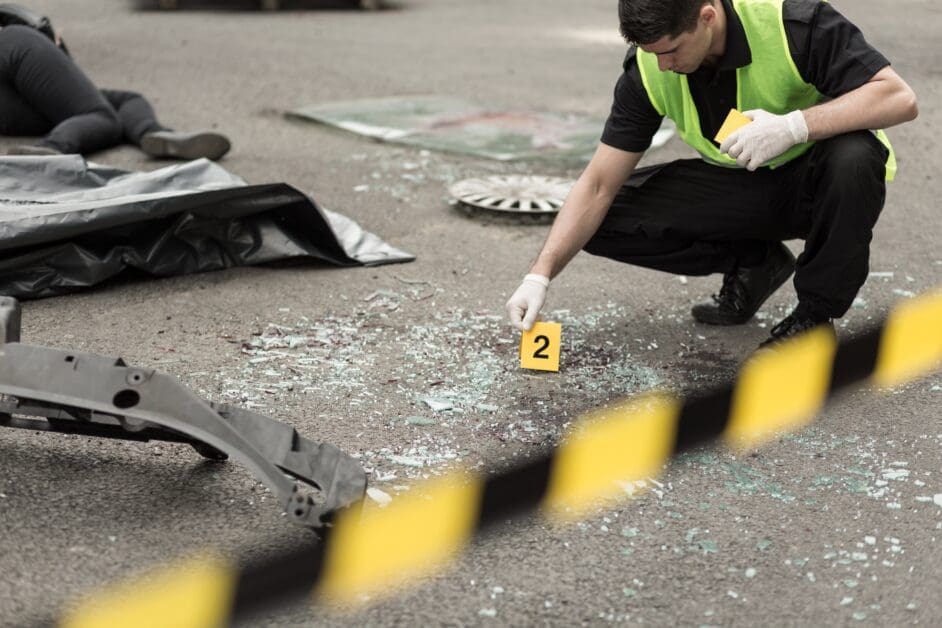
On a rural highway, the roadway itself is often the single best witness to what happened, and it’s also the first thing that disappears. Skid marks fade within days under heat and traffic. Debris fields get swept aside by the next county maintenance crew or blown across the shoulder by wind. Gouge marks in asphalt, fluid trails, tire debris — all of it is time-limited evidence, and none of it waits for a retainer agreement to get signed.
A few things tend to separate a well-preserved rural case from one that collapses on causation:
- Same-week scene documentation with measured photographs and, where the budget allows, drone imagery showing the full stretch of roadway, not just the point of impact
- Immediate preservation letters to any trucking company or commercial carrier involved, since electronic control module (ECM) data and telematics logs can be overwritten in routine cycles
- Requests for county or state DOT maintenance and incident records before they’re purged under standard retention schedules
- Independent accident reconstruction, ideally within the first two weeks, while tire marks and debris scatter patterns are still measurable
Miss that window and the case shifts from “what happened” to “what we can argue happened,” which is a much harder sell to an insurance adjuster or a jury.
Commercial Vehicles Raise the Stakes
When a semi-truck or other commercial vehicle is involved, FMCSA regulations under 49 CFR Part 395 (hours-of-service) and Part 396 (inspection and maintenance) become central to the case — but the carrier controls most of the relevant data. Electronic logging device records, dispatch records, and maintenance logs can all be requested through a spoliation letter, and courts have shown a real willingness to sanction carriers who let that data lapse after being put on notice. That’s leverage, but only if counsel sends the letter fast enough to matter.
The Witness Problem
City accidents tend to produce witnesses almost by accident — pedestrians, shopkeepers, drivers stopped at the same light. Remote highways don’t work that way. Traffic might pass once every few minutes, and whoever does stop is often a stranger passing through, not a local who can be tracked down later through a neighborhood canvas.
Finding and locking down that testimony requires a different approach:
- Pulling toll records, gas station receipts, or rest-stop camera footage from businesses along the corridor, which sometimes catch a vehicle passing near the time of the crash
- Checking dashcam footage from other vehicles that may have passed the scene, since more commercial and personal vehicles now run continuous recording
- Contacting local tow operators and first responders quickly, since they often remember details that never made it into the official report
- Running a public appeal through local news or community boards in small counties, where a single Facebook post can surface a witness that no formal canvass would ever find
None of this is glamorous work. It’s phone calls, records requests, and a willingness to chase a lead that might go nowhere. But in a case with no camera footage, a single credible witness can be the difference between a fair settlement and a fight over liability that drags on for years.
When Police and EMS Take Their Time
Response times matter more than most people outside this practice area realize. In dense urban corridors, EMS might arrive in under ten minutes. On a stretch of desert highway forty miles from the nearest station, that number can climb past thirty or even sixty minutes — and that gap does real damage to a case, not just to a client’s health.
Here’s the mechanism: insurance defense counsel routinely argues that a delay between the crash and documented treatment weakens the causal link between the collision and the injury. If the police report notes the crash at 2:14 p.m. and the hospital intake form shows arrival at 4:40 p.m., an adjuster will ask why. Was the injury really from the crash, or did something happen in between? That question shouldn’t be persuasive given the obvious explanation — there was no ambulance for forty miles — but it gets asked anyway, and it needs an answer built into the file from day one, not reconstructed months later.
Good practice here means treating the responding officer’s report as a starting point, not the final word, and supplementing it with:
- Dispatch logs showing the actual time of the 911 call versus the time help arrived
- Statements from the client and any companions describing symptoms in the interim
- Any partial documentation from a Good Samaritan, off-duty medical professional, or fire crew that arrived before the ambulance
Jurisdiction at the County Line
Remote highways have an inconvenient habit of running straight through county and state boundaries, and a crash near one of those lines can turn into a jurisdictional headache before the medical bills even start arriving. Which county’s sheriff has primary jurisdiction? Which state’s substantive law governs damages if the highway briefly crosses a border? Choice-of-law questions that would never come up in a city case suddenly matter a great deal.
This gets more complicated, not less, once a commercial carrier is involved, since interstate trucking cases can trigger federal preemption questions layered on top of state tort law. Getting the venue and choice-of-law analysis right early avoids the expensive alternative: refiling, or worse, running into a statute of limitations problem because the case sat in the wrong court for months while everyone figured out where it belonged.
Why Local, Remote-Region Experience Actually Matters
None of this is theoretical. Attorneys who primarily handle city collisions can be perfectly competent lawyers, but rural highway cases reward a specific kind of institutional knowledge — knowing which tow yards in a given county hold onto vehicles the longest, which sheriff’s departments respond to records requests quickly and which take months, and which local hospitals tend to under-document trauma intake on a slow Tuesday night. That knowledge doesn’t come from a general practice; it comes from having handled enough of these files to know where the evidence usually hides and how fast it usually disappears.
For any attorney building or referring out a remote highway case, the practical takeaway is straightforward: move on evidence preservation immediately, treat every timing gap in the medical record as something to explain rather than ignore, and settle jurisdiction questions before they settle themselves the hard way — in a courtroom, months into litigation, with a client still waiting for answers.