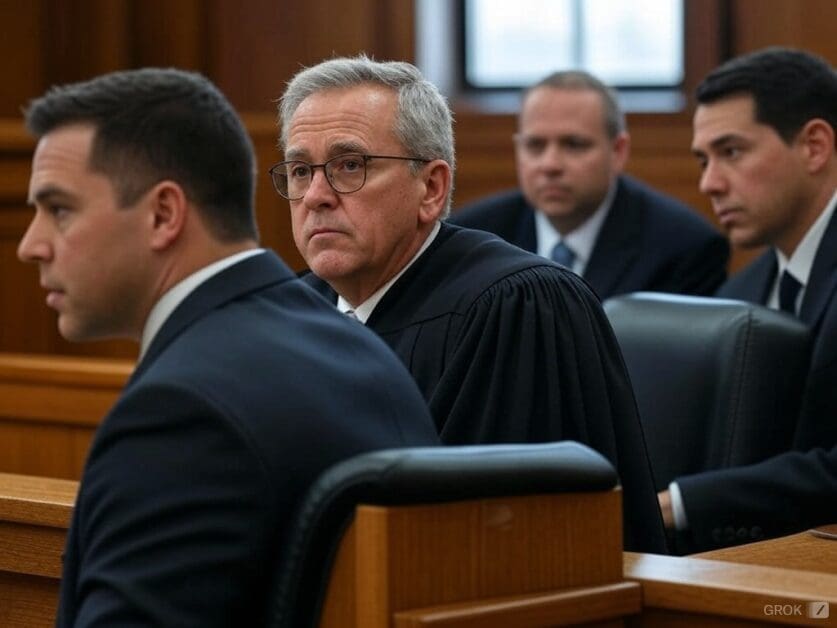
Other Legal Issues

<a href="https://attorneys.media"><img class="aligncenter size-full wp-image-32424" src="http://attorneys.media/wp-content/uploads/2023/12/Other-Legal-Issues.jpg" alt="Expert Legal Team Tackling Diverse Legal Challenges: A Comprehensive Approach" width="1024" height="1024" /></a> <h4>Understanding the Spectrum of Legal Issues: Beyond Criminal and Civil Law</h4>   The realm of law extends far beyond the familiar territories of criminal and civil issues. A vast array of <strong>legal matters</strong> falls outside these categories, encompassing everything from administrative law to intellectual property, environmental regulations, and beyond. Understanding these diverse legal areas is crucial for navigating the intricate world of law effectively. One significant area often overlooked is administrative law. This branch deals with the rules and regulations that govern federal and state agencies. Issues like zoning laws, licensing, and regulatory compliance are central to this field. Navigating administrative law requires an understanding of how government agencies operate and the processes involved in administrative decision-making. Intellectual property law is another crucial area, especially in our technology-driven age. It encompasses the protection of inventions, trademarks, copyrights, and patents. Understanding intellectual property rights is vital for creators, innovators, and businesses looking to protect their unique ideas and products. Environmental law is increasingly significant in today's eco-conscious world. It involves regulations and policies aimed at protecting the environment, including laws related to pollution, natural resource management, and sustainability. Navigating these laws requires not only legal expertise but also an understanding of environmental science and public policy. Family law, dealing with matters like divorce, child custody, and adoption, is another critical area. These issues require a delicate balance of legal knowledge and emotional intelligence, as they often involve complex family dynamics and deeply personal matters. Estate planning and probate law are also essential, involving the management and distribution of an individual's estate after death. This field requires knowledge of tax laws, trusts, wills, and estate administration processes. The legal landscape also includes emerging areas like cybersecurity law, which deals with issues related to data protection, privacy, and digital rights. As technology evolves, so does the legal framework surrounding it, making continual education and adaptation essential for legal professionals. In conclusion, the spectrum of legal issues is broad and varied, extending well beyond criminal and civil law. Understanding these diverse legal areas is crucial for individuals seeking legal advice and for professionals aiming to provide comprehensive legal services.

115 posts

Madigan Trial: Jury Hears Evidence of Land Transfer After Law Firm Pitch

Madigan Trial: Jury Hears Evidence of Land Transfer After Law Firm Pitch

The jury heard evidence about a proposed amendment to a land transfer bill during the spring 2018 Illinois legislative session. Prosecutors say it followed a law firm pitch and was part of an alleged effort to steer property tax appeal work tied to Michael Madigan’s network. The article covers the testimony, the land transfer episode, […]
Read More
FTX Fallout Continues: Bankman-Fried Sentenced as Bankruptcy Court Confirms Reorganization Plan

FTX Fallout Continues: Bankman-Fried Sentenced as Bankruptcy Court Confirms Reorganization Plan

Sam Bankman-Fried was sentenced in federal court as the FTX bankruptcy proceeded, with the bankruptcy court confirming FTX’s reorganization plan. The developments mark a major turning point in both the criminal case and the Chapter 11 process, setting the framework for asset recovery and creditor payouts. This article breaks down the sentencing outcome, what plan […]
Read More
Mandatory Minimum Sentences: Navigating Strict Penalties

Mandatory Minimum Sentences: Navigating Strict Penalties

Mandatory minimum sentences impose fixed prison terms for specific crimes, often preventing judges from reducing penalties below the statutory floor. These laws can sharply increase incarceration exposure based on the charge, drug quantity, or use of a firearm, making early defense strategy critical. This article explains how mandatory minimums work, common triggers and exceptions, and […]
Read More
Launching Your Business: Legal Essentials for Entrepreneurs

Launching Your Business: Legal Essentials for Entrepreneurs

Entrepreneurs should address 5 core legal essentials before launch: entity formation, tax registration, IP protection, key contracts, and regulatory compliance. Doing these early reduces liability and prevents costly disputes as you grow. This article explains each step and when to consult a business attorney. The journey of entrepreneurship is fraught with challenges, and among the […]
Read More
What Are Protective Orders Laws in United States?

What Are Protective Orders Laws in United States?

Protective orders in the United States are court-issued orders that restrict contact and can require stay-away provisions to protect victims from abuse, stalking, or threats. Every state and D.C. has its own statutes, with different filing requirements, durations, and enforcement penalties. This article explains who qualifies, how to get an order, what it can include, […]
Read More
How does the arbitrary and capricious standard differ from other standards of review?

How does the arbitrary and capricious standard differ from other standards of review?

The arbitrary and capricious standard is a deferential review that upholds an agency decision unless it lacks a rational basis in the record or ignores key facts. Unlike de novo or substantial evidence review, courts do not reweigh evidence and instead look for reasoned decision-making. This article compares it to other standards and explains when […]
Read More
What Are Pyramid and Ponzi Schemes Laws in United States?

What Are Pyramid and Ponzi Schemes Laws in United States?

In the United States, pyramid and Ponzi schemes are illegal and can trigger federal charges like securities fraud and wire/mail fraud, carrying penalties of up to 20 years per count. The SEC, FTC, and DOJ, plus state attorneys general, investigate and prosecute these frauds and seek restitution. This article covers key federal/state laws, enforcement, penalties, […]
Read More
Mens Rea: Proving Criminal Intent in Court

Mens Rea: Proving Criminal Intent in Court

In most U.S. criminal cases, prosecutors must prove mens rea—one of four mental states: intent, knowledge, recklessness, or negligence—beyond a reasonable doubt. This requirement separates accidental conduct from culpable wrongdoing and can be challenged with evidence of mistake, lack of awareness, or diminished capacity. This article explains mens rea standards, proof methods, and defenses. The […]
Read More
Habeas Corpus: Challenging Unlawful Detention

Habeas Corpus: Challenging Unlawful Detention

A habeas corpus petition asks a court to review whether a person’s detention is lawful and can result in release, a new hearing, or other relief. It’s a constitutional safeguard against arbitrary imprisonment and is commonly used after conviction or during custody challenges in state and federal courts. This article explains what habeas corpus is, […]
Read More
Fruit of the Poisonous Tree: Excluding Tainted Evidence

Fruit of the Poisonous Tree: Excluding Tainted Evidence

The fruit of the poisonous tree doctrine excludes evidence derived from an unlawful search, seizure, or interrogation under the Fourth and Fifth Amendments. Courts may still admit it if an exception applies, including independent source, inevitable discovery, or attenuation. This article explains the rule, its origin, how it’s applied, and the main exceptions. The fruit […]
Read More
Speedy Trial Rights: Timely Justice in Criminal Cases

Speedy Trial Rights: Timely Justice in Criminal Cases

The Sixth Amendment guarantees a speedy trial in all criminal prosecutions, and many states also set specific statutory deadlines (often 60–180 days). Courts weigh factors like length of delay, reasons, the defendant’s assertion of the right, and prejudice. This article explains constitutional and statutory speedy-trial rules, common delay issues, and potential remedies such as dismissal. […]
Read More
Chain of Custody: Ensuring Evidence Integrity in Criminal Trials

Chain of Custody: Ensuring Evidence Integrity in Criminal Trials

Chain of custody is the documented record of evidence custody and transfers from collection to courtroom presentation. Courts rely on it to show evidence wasn’t altered, contaminated, or mishandled, which affects admissibility and weight. This article explains the process, key documentation steps, and common challenges in criminal trials. The chain of custody is a critical […]
Read More
Scroll to Top