
DUI Checkpoints – The Exact Script You Should Follow in Every State
At a DUI checkpoint, you typically must provide 3 items: driver’s license, registration, and proof of insurance. You can politely decline to answer investigatory questions and request an attorney if detained, while complying with lawful orders. This article gives an exact, step-by-step script to follow at DUI checkpoints in every state.
What Actually Happens at a DUI Checkpoint
Getting stopped at a DUI checkpoint can be a nerve-wracking experience, even if you haven’t had a single drink. The flashing lights, the officers approaching your window, the questions — it all happens fast. Most people don’t know exactly what to say or do, and that uncertainty can lead to mistakes that hurt them later.
This guide gives you a clear, step-by-step script to follow at any DUI checkpoint in any state. Understanding your rights under DUI law and knowing how police procedure works can make a significant difference in how the stop goes — and what happens afterward.
Your Rights at a DUI Checkpoint
Before we get into the script, you need to understand what the law actually gives you the right to do. Here’s the foundation of your suspect rights at a checkpoint:
- You have the right to remain silent. Beyond identifying yourself and providing basic documents, you are not required to answer questions about where you’ve been or whether you’ve been drinking.
- You have the right to refuse certain tests — but there are consequences. In most states, refusing a breathalyzer can result in automatic license suspension under implied consent laws.
- You have the right to not have your car searched without consent or probable cause. Simply being at a checkpoint does not give police the right to search your vehicle.
- You have the right to legal representation. If you are arrested, you can request an attorney before answering any further questions.
Knowing these rights isn’t about being difficult. It’s about protecting yourself within the law. Officers expect informed citizens, and exercising your rights calmly and politely is perfectly legal.
Before You Even Reach the Checkpoint
DUI checkpoints are generally required to be publicized in advance. Many law enforcement agencies post checkpoint locations online or in local news. If you see signs that a checkpoint is ahead, here’s what you should do:
- Slow down and stay in your lane. Sudden U-turns or lane changes near a checkpoint can be flagged as suspicious behavior and may give officers reason to pull you over separately.
- Have your documents ready — driver’s license, vehicle registration, and proof of insurance. Fumbling around for these things creates unnecessary tension.
- Turn down your radio and stay calm. A relaxed demeanor goes a long way.
Note: In some states, turning around before reaching a checkpoint is technically legal as long as you don’t break any traffic laws doing it. However, officers may follow you, so weigh this option carefully.
The Exact Script: What to Say When the Officer Approaches
When an officer walks up to your window, follow this script as closely as possible. It is polite, legal, and protects your rights under DUI law in every state.
Step 1 — Roll Down Your Window and Hand Over Your Documents
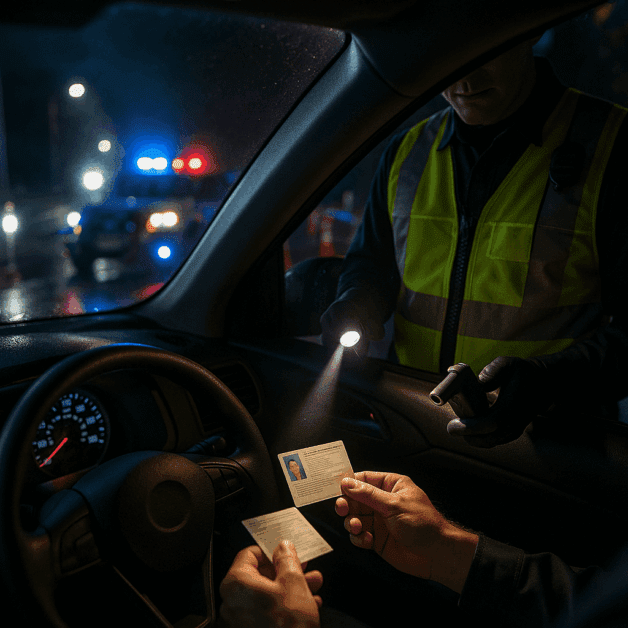
Don’t wait for the officer to ask. Roll down your window completely, keep your hands visible on the steering wheel, and say:
“Good evening, Officer. Here is my license, registration, and insurance.”
Why this works: You’re being cooperative and non-confrontational right from the start. You’re also controlling what you hand over without being asked a series of questions first.
Step 2 — When the Officer Asks “Have You Been Drinking Tonight?”
This is the question most people stumble over. Many people feel the urge to over-explain or volunteer information. Don’t. Use this response:
“I’d prefer not to answer any questions without an attorney present.”
Or, if you want to be even simpler:
“I’m choosing to exercise my right to remain silent.”
Say this calmly, without attitude. You are not being rude. You are exercising a constitutional right. The officer may push back or seem annoyed — that’s normal. Hold your position politely.
Step 3 — When the Officer Asks “Where Are You Coming From?”
Again, you are not required to answer this. Use the same approach:
“I’d rather not answer questions without legal counsel present. Am I being detained or am I free to go?”
This last part is important. Asking whether you are being detained or are free to go forces the officer to make a decision. If you are not being detained, they must let you go. If they say you are being detained, that changes the situation — but you still don’t have to answer questions.
Step 4 — If the Officer Asks You to Step Out of the Vehicle
Under the law, if an officer orders you to step out of your vehicle, you must comply. This was settled by the Supreme Court. However, complying with the order doesn’t mean you have to volunteer information. Say:
“I’ll step out as you’ve asked. I want to be cooperative, but I am choosing not to answer questions without an attorney.”
Keep your hands visible at all times. Move slowly and deliberately.
Step 5 — If You’re Asked to Take a Field Sobriety Test
Field sobriety tests — like walking a straight line or standing on one leg — are voluntary in most states. You can legally refuse them. These tests are subjective and can be failed even by completely sober people. Say:
“I respectfully decline to take the field sobriety test.”
Be aware that refusing may increase the officer’s suspicion, but the results of a poorly performed field test are often used against drivers in court. Refusing removes that evidence from the equation.
Step 6 — If You’re Asked to Take a Breathalyzer Test
This is where it gets more complicated. There are two types of breath tests to know about:
- Preliminary Alcohol Screening (PAS) device: This is the handheld device used at the roadside. In most states, you can refuse this test without automatic penalties — unless you are under 21 or on DUI probation.
- Evidentiary breathalyzer test: This is usually administered at the police station after an arrest. Most states have implied consent laws that mean refusing this test results in an automatic license suspension, sometimes for a year or more.
If asked about the roadside PAS device, you can say:
“I am declining the preliminary breath test. I understand I may be asked to take a chemical test after an arrest, and I will address that situation if it comes to that.”
If you’ve been arrested and are asked to take the evidentiary test at the station, weigh your options carefully. Refusal has serious consequences. Consult mentally with what you know about your situation and consider that a conviction for drunk driving can be far more damaging than a suspension.
Step 7 — If You Are Arrested
Stay calm. Do not resist — physically or verbally. Say clearly:
“I am invoking my right to remain silent and my right to an attorney. I will not answer any questions until I have spoken with a lawyer.”
Then stop talking. Seriously. Everything you say from this point forward can be used against you. Many people talk themselves into deeper trouble during and after an arrest simply because they feel the need to explain themselves.
Common Mistakes People Make at DUI Checkpoints
Even people who think they know their rights often make these critical errors:
- Volunteering information. Saying “I only had two beers” might seem harmless, but it confirms you consumed alcohol. Never volunteer this.
- Being rude or argumentative. This escalates the situation and gives the officer reason to look more closely at everything you do.
- Lying. Never lie to a police officer. Lying can result in additional charges and destroys your credibility if your case goes to court.
- Reaching around the car without telling the officer. Always announce what you’re doing before you do it. “My registration is in the glove box. May I reach for it?”
- Assuming the checkpoint is optional. Once you are in the checkpoint line and an officer has stopped you, you must comply with the lawful stop.
How DUI Checkpoint Laws Vary by State
While the core principles covered in this guide apply broadly across the country, it’s important to know that DUI law is not identical in every state.
- Some states don’t allow checkpoints at all. States like Texas, Oregon, Idaho, and Michigan have banned sobriety checkpoints on constitutional grounds. If you live in one of these states, this particular scenario won’t apply to you.
- Implied consent laws differ. The penalties for refusing chemical tests vary. Some states impose criminal penalties in addition to license suspension.
- Legal blood alcohol limits are mostly the same. The nationwide standard for drunk driving is a BAC of 0.08%, though commercial drivers face a limit of 0.04% and drivers under 21 often face zero-tolerance policies.
It’s worth spending a few minutes looking up the specific checkpoint and implied consent laws in your home state before you ever find yourself at a checkpoint. A little preparation goes a long way.
What Happens After a DUI Stop — Whether You’re Released or Arrested
If you’re released at the checkpoint, go straight home. Don’t make any additional stops that could lead to another encounter with law enforcement that same night.
If you’re arrested for drunk driving, the clock starts ticking on several important deadlines:
- In most states, you have a very short window — sometimes just 10 days — to request a hearing to contest the suspension of your driver’s license.
- Contact a DUI attorney as soon as possible. Many offer free consultations and can advise you on the strength of the evidence against you.
- Write down everything you remember about the stop while it’s fresh — what was said, what you were asked to do, and how the officers behaved. This information can be valuable for your defense.
Why Knowing This Script Matters
Police procedure at DUI checkpoints is designed to identify impaired drivers quickly. Officers are trained to look for signs of nervousness, smell for alcohol, and listen for inconsistencies in what drivers say. That doesn’t mean everyone stopped is guilty — it just means the system is not designed to work in your favor if you don’t know how to navigate it.
Using the script in this guide won’t guarantee you walk away without trouble if you’ve been drinking. But it can prevent you from making your situation worse through unintentional self-incrimination, poorly performed voluntary tests, or emotional reactions in a high-pressure moment.
Your rights exist for a reason. Use them — calmly, respectfully, and clearly.
Quick Reference Cheat Sheet
Here’s a fast summary you can mentally review before driving:
- Hand over license, registration, and insurance without being asked.
- Do not answer questions about your activities or alcohol consumption.
- Politely decline field sobriety tests.
- Know your state’s implied consent rules before deciding on a breathalyzer.
- If arrested, immediately invoke your right to silence and your right to an attorney.
- Stay calm, polite, and non-confrontational at every step.
- Contact a DUI attorney immediately if you are arrested.
Being prepared is not the same as planning to break the law. It simply means you understand how the system works and how to protect yourself if you ever find yourself in a difficult situation on the road.














