
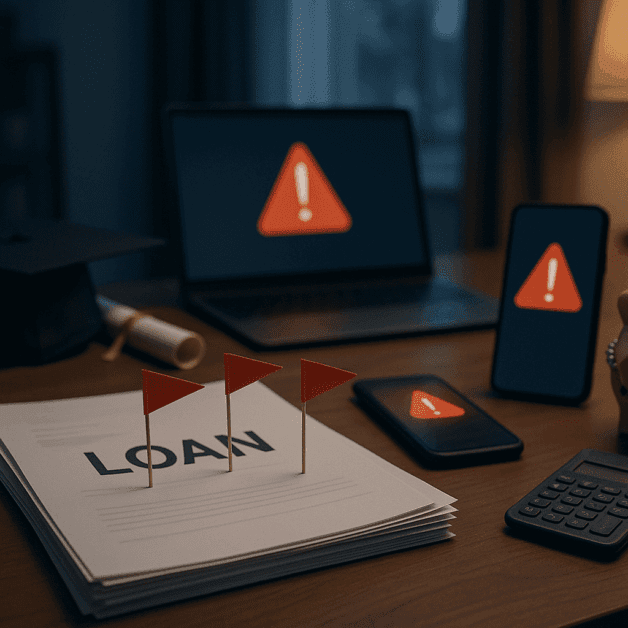
Student Loan Forgiveness Scams – The 3 Red Flags That Every Borrower Should Know
Student loan forgiveness scams typically show three clear red flags: upfront fees, guarantees of forgiveness, and requests for your FSA ID or Social Security number. Legitimate federal forgiveness and repayment programs are free to apply for through official government channels, and no company can promise approval. This article explains each warning sign, how these scams operate, and the steps borrowers can take to verify offers and protect their accounts.
Why Student Loan Forgiveness Scams Are on the Rise
Millions of Americans are struggling with student loan debt, and scammers know it. They take advantage of borrowers who are desperate for relief, making big promises that sound almost too good to be true. Unfortunately, many of those promises are exactly that — too good to be true.
Student loan fraud has become one of the fastest-growing forms of financial scams in the country. The Federal Trade Commission receives thousands of complaints every year from borrowers who lost money, had their personal information stolen, or ended up in worse financial shape after trusting the wrong company. Consumer protection experts warn that these scams are getting more sophisticated, making them harder to spot.
The good news is that once you know what to look for, you can protect yourself. There are three major red flags that show up in almost every student loan forgiveness scam. Learning to recognize them could save you hundreds or even thousands of dollars.
Red Flag #1: They Ask for Upfront Fees
One of the clearest warning signs of a student loan scam is when a company asks you to pay money before they do anything for you. This is sometimes called an “advance fee,” and it is illegal when tied to debt relief services under the FTC’s Telemarketing Sales Rule.
Scammers often dress this up with different language. They might call it a:
- Processing fee
- Application fee
- Document preparation fee
- Administrative fee
No matter what they call it, the result is usually the same. You pay the fee, they disappear, and your loans are still exactly where they were before. In some cases, these companies will string you along for months, collecting fees while doing little or nothing on your behalf.
Here is something important to understand about debt relief: legitimate student loan servicers and government programs do not charge you to apply for income-driven repayment plans, Public Service Loan Forgiveness, or other forgiveness programs. These services are free. If someone is asking for money upfront to access them, that is a scam prevention red flag you should not ignore.
Red Flag #2: They Promise Immediate or Guaranteed Forgiveness
No one can legally guarantee that your student loans will be forgiven. Not a private company, not a law firm, and not an individual consultant. Anyone who makes that promise is either lying to you or severely misleading you about how student loan forgiveness actually works.
Real forgiveness programs have specific requirements. For example:
- Public Service Loan Forgiveness (PSLF) requires 10 years of qualifying payments while working for a qualifying employer.
- Income-driven repayment forgiveness typically requires 20 to 25 years of consistent payments.
- Teacher Loan Forgiveness requires five years of teaching in a low-income school.
These programs are real, but they take time and have strict rules. There is no shortcut. When a company tells you they can wipe out your debt quickly or guarantee forgiveness no matter what, they are not being honest with you.
Scammers also like to use official-sounding names to seem more legitimate. They might call themselves something like the “Student Loan Relief Center” or claim to be affiliated with the Department of Education. Always verify any company you work with by checking the official Federal Student Aid website at studentaid.gov before handing over any personal information or money.
Red Flag #3: They Ask for Your FSA ID or Personal Login Information
Your FSA ID is the username and password you use to log into the Federal Student Aid website. It is linked to your financial records and your Social Security number. Giving it to anyone outside of trusted government channels is one of the most dangerous things a borrower can do.
Scam companies often ask for this information under the pretense of managing your account or speeding up the forgiveness process. What they are actually doing is gaining full control over your student loan account. With your FSA ID, a scammer can:
- Change your contact information so you stop receiving important notices
- Redirect your correspondence to keep you in the dark
- Apply for new loans in your name
- Steal your personal and financial identity
This type of student loan fraud can take years to undo and can seriously damage your credit score and financial future. Consumer protection authorities strongly advise that you never share your FSA ID with any private company or individual, no matter how legitimate they seem.
If you think your FSA ID has already been compromised, log in to studentaid.gov immediately and change your password. You should also contact your loan servicer directly and report the incident to the FTC at reportfraud.ftc.gov.
What You Should Do Instead
If you are struggling with student loan payments, there are real, free options available to you. Here is where to start:
- Visit studentaid.gov – This is the official U.S. government website for all things related to federal student loans. You can apply for income-driven repayment plans, check your forgiveness eligibility, and manage your loans directly at no cost.
- Contact your loan servicer directly – Your loan servicer is the company that handles your billing. They are required to help you understand your repayment options for free.
- Talk to a nonprofit credit counselor – Organizations accredited by the National Foundation for Credit Counseling (NFCC) can offer free or low-cost guidance on managing your student debt.
- Check with your employer – Some employers, especially government agencies and nonprofits, may offer assistance programs or qualify you for PSLF.
How to Report Student Loan Fraud
If you have encountered a student loan scam or believe you have already been targeted, reporting it helps protect other borrowers. You can file a complaint with:
- The Federal Trade Commission at reportfraud.ftc.gov
- The Consumer Financial Protection Bureau (CFPB) at consumerfinance.gov/complaint
- Your state’s attorney general office
Even if you did not lose money, reporting suspicious activity is an important part of consumer protection. The more reports these agencies receive, the better equipped they are to shut down fraudulent operations.
Stay Informed and Stay Safe
The best defense against student loan fraud is simple knowledge. Scammers rely on confusion and desperation to do their work. When you understand how legitimate forgiveness programs actually operate, it becomes much easier to spot the fakes.
Remember the three red flags: upfront fees, guaranteed forgiveness promises, and requests for your FSA ID. If any company approaches you with one or more of these warning signs, walk away. Your financial future is worth protecting, and the right help is available to you completely free of charge.
Take the time to do your research, use official government resources, and never let urgency or big promises push you into a decision you have not carefully thought through. Debt relief is possible — just make sure you are getting it from the right place.














