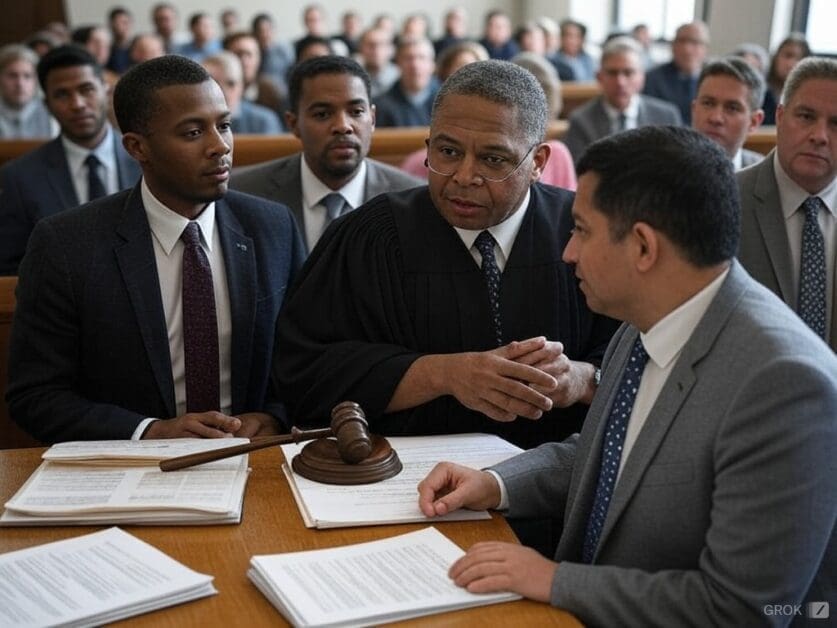
Due Process

Explore comprehensive resources on the fundamental legal concept of due process, where visitors can access informative articles, in-depth video interviews with legal experts, and definitions that clarify its role in the U.S. legal system. Content under this tag highlights key elements such as procedural fairness and constitutional protections, providing a well-rounded understanding for those interested in how due process safeguards individual rights in various legal proceedings. Ideal for both legal professionals and the general public, these materials are designed to enhance knowledge without offering specific legal advice.

Deciphering Legal Histories: An Insightful Journey through Case Law

How Do Precedents Shape Legal Decisions Now?

Legal precedents shape legal decisions now by requiring courts to follow binding higher-court rulings while treating similar past cases as persuasive authority. This reliance on case law promotes consistent outcomes, narrows judicial discretion, and helps lawyers predict results. This article explains how precedent works, when it can be distinguished or overruled, and its impact on […]

How Do Precedents Shape Legal Decisions Now? Read More »

Real-Life Interactions with Bad Debts: A Visual Representation

What Happens If Debtors Ignore Court Orders?

If debtors ignore court orders, they can face contempt of court, fines, arrest warrants, and stronger collection actions such as wage garnishment or bank levies. Courts may view noncompliance as willful, escalating penalties and limiting defenses, especially after missed hearings or ignored discovery. This article explains common orders in debt cases, what creditors can request,

What Happens If Debtors Ignore Court Orders? Read More »

Global Views on Supreme Court Rulings Impacting Due Process

Landmark Supreme Court Cases That Shaped Modern Due Process

Modern due process has been shaped by 10+ landmark Supreme Court decisions interpreting the Fifth and Fourteenth Amendments. These rulings define fair procedures (notice, hearing, counsel) and, at times, protect fundamental rights from arbitrary government action. This article highlights the key cases, holdings, and their impact on today’s due process standards. The concept of due

Landmark Supreme Court Cases That Shaped Modern Due Process Read More »

How Arbitrary and Capricious Rules Differ in Global Jurisdictions

How does the definition of arbitrary and capricious vary across different jurisdictions?

The definition of “arbitrary and capricious” varies across U.S. federal, 50 state, and other jurisdictions, mainly by how much deference courts give agencies and what explanation the record must show. Federal courts apply the APA’s “reasoned decisionmaking” review, while states and common-law systems use parallel but differently framed rationality, proportionality, or Wednesbury-type tests. This article

How does the definition of arbitrary and capricious vary across different jurisdictions? Read More »

Remedies for Capricious Government Actions

Legal Remedies for Arbitrary and Capricious Agency Actions

Courts can set aside an agency action as “arbitrary and capricious” under the APA’s 5 U.S.C. § 706(2)(A) standard. Review focuses on whether the agency considered relevant factors and explained its decision with record evidence. This article covers the test, common grounds for reversal, and practical steps for challenging agency conduct. When government agencies overstep

Legal Remedies for Arbitrary and Capricious Agency Actions Read More »

Steps to Prevent Arbitrary Government Actions

What procedural steps must agencies follow to prevent arbitrary decisions?

Agencies can avoid arbitrary decisions by following mandated procedures such as notice-and-comment rulemaking, building an evidence-based administrative record, and issuing reasoned explanations grounded in statutory authority. Courts commonly review whether the agency considered relevant factors, addressed significant comments, and explained any policy change without ignoring facts. This article outlines the key procedural requirements, recordkeeping practices,

What procedural steps must agencies follow to prevent arbitrary decisions? Read More »

Upholding Justice with Presumed Innocence

Presumption of Innocence: Cornerstone of Criminal Justice

In U.S. criminal courts, the presumption of innocence requires the prosecution to prove guilt beyond a reasonable doubt. This rule places the burden of proof on the government and protects defendants from conviction based on accusation alone. This article explains the doctrine’s constitutional roots, how it works at trial, and key limits and exceptions. The

Presumption of Innocence: Cornerstone of Criminal Justice Read More »

Evidence Withholding in Legal Practice

Brady Violations: When Prosecutors Withhold Evidence

A Brady violation occurs when prosecutors fail to disclose material evidence favorable to the defense under Brady v. Maryland. This can warrant a new trial, dismissal, or other relief if the suppression undermined trial fairness. This article explains the Brady rule, what counts as “material” evidence, and steps defendants can take. The integrity of our

Brady Violations: When Prosecutors Withhold Evidence Read More »

Officers Perform Search Without Warrant

Involuntary Confessions: Challenging Coerced Statements

An involuntary confession can be suppressed under the Fifth and Fourteenth Amendments if police coercion overbore a suspect’s will. Courts assess the totality of circumstances, including threats, promises, deception, interrogation length, and the suspect’s age, mental state, and access to counsel. This article explains the governing standards, key case law, and practical defense strategies for

Involuntary Confessions: Challenging Coerced Statements Read More »

Understanding Arbitrary Standard in Court

In what types of cases is the arbitrary and capricious standard most commonly used?

The arbitrary and capricious standard is most commonly applied in administrative law cases reviewing federal or state agency decisions under the Administrative Procedure Act. Courts use it to uphold agency action unless it lacks a rational basis, ignores important evidence, or reflects an unexplained departure from established policy. This article explains the case types where

In what types of cases is the arbitrary and capricious standard most commonly used? Read More »

Scroll to Top