
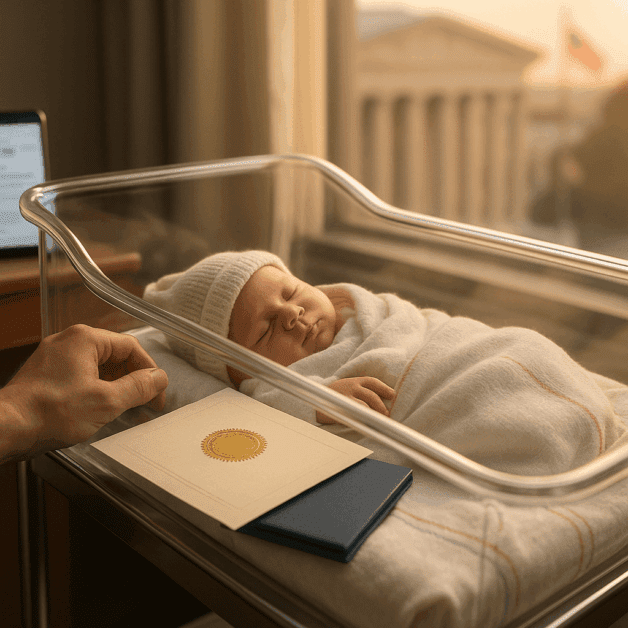
Why Birthright Citizenship Is Still Legal — No Matter What You Read on Facebook
Birthright citizenship remains legal in the United States under the 14th Amendment and more than a century of Supreme Court precedent, including *United States v. Wong Kim Ark* (1898). Despite viral claims and political proposals, changing this rule would require a constitutional amendment or a major shift in constitutional interpretation—not a social media post. This article explains what the law actually says, who qualifies, common myths, and what would (and wouldn’t) be needed to change it.
What Is Birthright Citizenship?
If you were born in the United States, you are an American citizen. It does not matter where your parents came from. It does not matter if they are here legally or not. This is called birthright citizenship, and it has been part of American law for over 150 years.
Despite what you might see shared on social media, this right is not being quietly erased. It is not a loophole. It is not a policy that a president can simply cancel with a phone call. It is written directly into the United States Constitution — the highest law in the land.
Let us break down where this right comes from, why it still stands today, and why so many people are confused about it.
Where Does This Right Come From?
Birthright citizenship in the United States comes from the 14th Amendment, which was added to the Constitution in 1868. The language is clear and straightforward. It reads:
“All persons born or naturalized in the United States, and subject to the jurisdiction thereof, are citizens of the United States and of the State wherein they reside.”
This amendment was created after the Civil War to make sure that formerly enslaved people were recognized as full American citizens. At the time, some states were trying to deny citizenship to Black Americans who had been born on American soil. The 14th Amendment put a stop to that by writing citizenship into the Constitution itself.
Because it is part of the Constitution, changing or removing birthright citizenship would require a constitutional amendment — a long and difficult process that requires approval from two-thirds of Congress and three-fourths of all states. No executive order, no law passed by Congress alone, and no presidential tweet can undo it.
Why Do People Think It Was Changed or Ended?
Social media is full of misleading claims about citizenship law. Some of the most common ones include:
- “The president ended birthright citizenship by executive order.”
- “Children of undocumented immigrants are no longer automatically citizens.”
- “The Supreme Court ruled against birthright citizenship.”
- “Congress passed a law that changed the 14th Amendment.”
None of these things have happened. These claims spread quickly because they sound official and people often share them without checking the source. Sometimes they are based on a proposed executive order, a political speech, or a bill that was introduced but never became law. A proposal is not a law. A speech is not a court ruling.
When you see a claim like this, the most important thing to do is check whether it comes from a reliable legal source — like the Supreme Court’s official website, a federal court decision, or a recognized legal organization. Facebook posts and partisan news sites are not legal authorities.
Has Any Court Ever Agreed That Birthright Citizenship Can Be Ended?
No major court has ruled that birthright citizenship can be eliminated by executive action. In fact, the courts have consistently upheld the 14th Amendment as written.
The Supreme Court addressed the core principle of birthright citizenship in the 1898 case United States v. Wong Kim Ark. In that case, the Court ruled that a man born in San Francisco to Chinese immigrant parents was a U.S. citizen at birth. The decision reinforced that the 14th Amendment means what it says — if you are born on U.S. soil, you are a citizen.
This case has never been overturned. It remains good law today.
More recently, when executive orders have attempted to limit birthright citizenship, federal courts have stepped in quickly to block them. Judges across the political spectrum have pointed to the same conclusion: the Constitution cannot be rewritten by a stroke of the pen.
What About the Phrase “Subject to the Jurisdiction Thereof”?
This is the part of the 14th Amendment that critics often point to when arguing against birthright citizenship. They claim that children of undocumented immigrants are not “subject to the jurisdiction” of the United States and therefore are not covered by the amendment.
Most legal scholars and courts have disagreed with this interpretation. Here is why:
- Anyone physically present in the United States is subject to American laws. Undocumented immigrants can be arrested, charged, and prosecuted under U.S. law — which means they are clearly under U.S. jurisdiction.
- The original intent of the “jurisdiction” clause was narrow. It was meant to exclude children of foreign diplomats (who have legal immunity) and, at the time, children born to members of Native American tribes who were considered separate sovereign nations.
- The Supreme Court’s ruling in Wong Kim Ark already settled this question for most purposes, ruling that children of non-citizen residents are still citizens at birth.
In short, this argument has been tried in courts before, and it has not succeeded in changing the law.
Can Congress Change Birthright Citizenship?
This is where things get a little more complicated. Some legal scholars argue that Congress could pass a law redefining who counts as “subject to the jurisdiction” of the United States. Others say that the plain text of the 14th Amendment makes it impossible to do so without a full constitutional amendment.
The truth is that no such law has passed, and if it ever did, it would almost certainly face an immediate legal challenge. The courts would then have to decide whether it was constitutional. Until that happens — and it has not — birthright citizenship remains the law of the land.
It is worth noting that passing a constitutional amendment is extremely hard. It has only happened 27 times in American history, and the last time was in 1992. Getting two-thirds of both the House and Senate to agree, and then getting three-fourths of all 50 states to ratify, is a massive undertaking. It is not something that happens overnight or quietly.
Why Does This Matter?
Understanding citizenship law matters for several important reasons:
- It affects real people. Millions of Americans were born in this country to immigrant parents. Misinformation about their citizenship status can cause real fear and confusion in their lives.
- It affects how we vote and participate. If people believe their rights have been taken away when they have not, they may not vote or exercise those rights. That weakens democracy.
- It shows why legal literacy matters. You do not need to be a lawyer to understand your basic rights, but you do need to know where to look for accurate information.
Legal myths spread fast, especially online. They often sound authoritative and tap into fear or anger. But believing a myth does not make it true, and a Facebook post does not carry the same weight as a Supreme Court ruling or the text of the Constitution.
How to Spot Legal Misinformation Online
Here are some simple steps you can take the next time you see a bold claim about citizenship or any other legal topic:
- Ask: Is this a law, a proposal, or a rumor? Many viral posts are about things that were proposed but never passed.
- Check the source. Official government websites, court decisions, and respected legal organizations are more reliable than opinion blogs or social media pages.
- Look for the actual text. If someone says a law was passed or a court ruled something, ask to see the actual document. Real legal changes leave a paper trail.
- Be skeptical of extreme claims. If something sounds like it would be the biggest legal change in decades, it probably would be all over every major news outlet — not just one Facebook post.
- Consult a legal professional. If you are genuinely worried about your own citizenship or immigration status, talk to a licensed immigration attorney.
The Bottom Line
Birthright citizenship is alive, legal, and protected by the United States Constitution. It has been affirmed by the Supreme Court, upheld by federal courts across the country, and backed by more than 150 years of legal precedent. No executive order has successfully ended it. No law has changed it. No court ruling has overturned it.
The next time you see a post claiming otherwise, take a breath and check the facts before sharing. Constitutional rights are not erased quietly — and if something this significant ever did change, it would be the biggest legal story in modern American history, not just a rumor floating around your news feed.
Stay informed, check your sources, and remember: knowing your rights is the first step to protecting them.














