
Why Safe Following Habits Matter in Adverse Conditions
Following distance gives a driver time to notice a slowdown, decide how to respond and bring the vehicle under control. On a clear, dry road, a brief delay may still leave enough pavement for a smooth stop. Once rain, fog, darkness or slick pavement changes the driving environment, the margin starts shrinking.
Before the brakes slow the car, the driver has to recognize that traffic has changed and react. The vehicle keeps moving during those moments. If the gap ahead is already tight, several car lengths can disappear before braking begins. By then, the driver has less road available for the stop itself.
Instead of estimating car lengths, drivers can judge the gap by time. Watch the vehicle ahead pass a fixed point, then count until reaching the same spot. As speed rises, the physical distance covered during that interval grows with it. When conditions deteriorate, increasing the interval leaves more room for recognition and braking without requiring a precise distance estimate from behind the wheel.
Once rain starts, visibility and traction often decline together. Tire spray obscures vehicles farther ahead, especially behind a large truck, where the trailer also blocks much of the lane. Moving back opens the view of traffic beyond the truck and gives earlier notice of a slowdown. That wider view also lets the driver notice brake lights farther up the line, which can signal congestion before the nearest vehicle even begins to slow down. Meanwhile, water on the pavement reduces the margin for braking, particularly where standing water collects or tires have limited tread.
Those changes usually build gradually. Light rain becomes steady, spray thickens and traffic keeps moving at nearly the same pace. A driver can become accustomed to the poorer conditions without realizing how much stopping room has been lost. Easing off the accelerator before braking feels urgent creates distance with less disruption than waiting for the vehicle ahead to force a hard stop.
Curves and grades place a similar demand on the available space. Around a bend, traffic may already be slowing before it comes into view. On a downgrade, the vehicle gathers speed more readily, increasing the distance needed to slow. Entering either situation with a larger gap leaves more roadway available before the next vehicle becomes an immediate obstacle.
Visibility presents another problem even when the pavement remains dry. Fog, darkness and glare make traffic patterns several vehicles ahead harder to read. Brake lights on the nearest car may remain visible while the reason for the slowdown stays hidden. As a result, a close follower often receives the warning later than a driver who has enough room to see beyond the nearest vehicle. Reducing speed while widening the gap preserves more road for a controlled response.
Snow and ice make the braking portion of the sequence less predictable. A driver might recognize a hazard promptly and still travel farther than expected after pressing the brake pedal. Hard braking also risks a skid, while an abrupt steering move offers little help if the adjacent lane is occupied. With more space ahead, slowing can begin earlier and with gentler inputs.
Heavy traffic often encourages the opposite habit. An open gap invites another vehicle to merge, and some drivers close the space to keep their place in line. If a car moves over anyway, briefly lifting off the accelerator rebuilds the interval without creating another abrupt speed change. Losing one place in traffic usually changes little about the trip, while the restored gap gives the driver room to respond if congestion tightens again.
Following Distance After a Collision
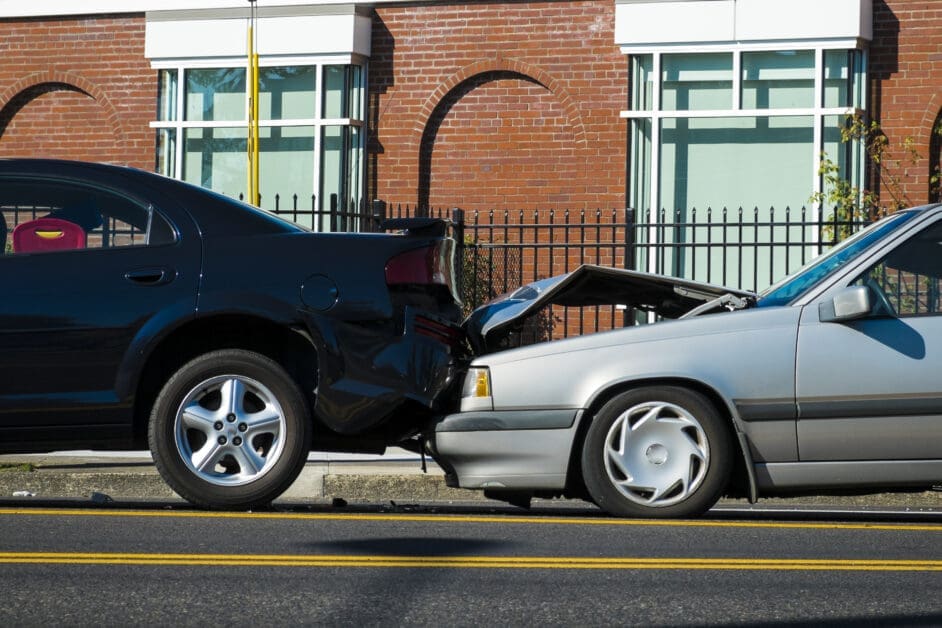
After a rear-end collision, the damage shows where two vehicles made contact, but it does not necessarily explain how the situation developed. Investigators and insurers often look at the seconds before impact to understand speed, braking, lane position and road conditions. A driver who followed closely for several miles presents a different sequence from one whose gap disappeared when another vehicle merged just before traffic stopped.
Road and weather conditions then become part of the legal analysis because reasonable driving depends on the circumstances. Traveling below the posted speed limit does not, by itself, establish that the chosen speed suited heavy rain or dense fog. Spacing works the same way. A gap that allows a controlled stop on dry pavement can leave too little room once traction or visibility falls.
Still, a rear-end crash does not automatically prove negligence. Responsibility depends on the law that applies and on evidence showing what each driver did before the collision. A sudden mechanical failure, debris in the roadway or an abrupt lane change could change the sequence. Investigators must determine whether following distance contributed to the impact and whether another event changed the driver’s available stopping room.
When accounts differ, physical and electronic evidence helps reconstruct the timeline. Photographs may preserve road conditions, vehicle positions and visible weather. Video sometimes shows when traffic began slowing or whether another vehicle entered the lane. Vehicle data can record speed or braking, while witness statements and police reports add observations from the scene. An experienced car accident lawyer like the attorneys at Barrera Law Group LLC may compare those sources when reviewing a claim to determine how much time the drivers had before contact.
The timing deserves close attention because following distance changes from second to second. Traffic compresses, vehicles merge and drivers begin braking at different moments. Looking only at where the vehicles came to rest can miss the movements that created the final gap. A useful reconstruction therefore follows the sequence from the first slowdown through the point of impact rather than treating vehicle position as a complete explanation.
Safe following habits work best when drivers adjust before the road forces the issue. As rain grows heavier, visibility fades or traffic tightens, extra space keeps more options available. The driver gets more time to notice a slowdown, more pavement for braking and less need for an abrupt maneuver. Once the gap is gone, a faster reaction cannot restore the road already used.
Published with permission from Barrera Law Group – New Mexico














