
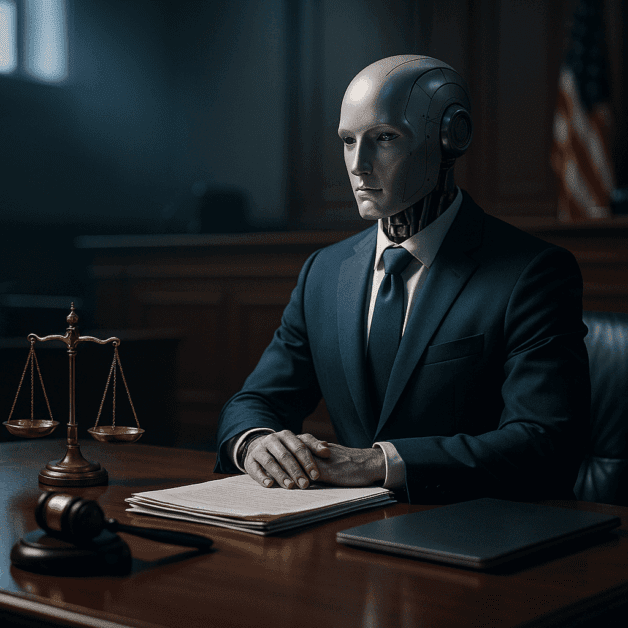
Your Company’s AI Chatbot Just Became a Lawyer — That’s a Federal Problem
Yes—if your AI chatbot gives legal advice, it can trigger unauthorized practice of law liability, and federal regulators can also get involved. Businesses are responsible for chatbot outputs, especially when users rely on them for legal decisions. This article explains where chatbots cross the line, key federal/state risks, and practical compliance safeguards.
When Your Chatbot Crosses the Line
Artificial intelligence chatbots have become a staple in modern business. Companies use them to handle customer service, answer product questions, and streamline daily operations. But there is a growing problem that many business owners have not considered: when a chatbot starts giving legal advice, it may be breaking the law — and your company could be held responsible.
This is not a hypothetical situation. As AI systems become smarter and more conversational, they are increasingly crossing into territory that only licensed attorneys are allowed to occupy. And when that happens, the legal and financial consequences can be serious.
What Is the Unauthorized Practice of Law?
The unauthorized practice of law, often shortened to UPL, refers to the act of providing legal services without a valid law license. Every state in the United States has laws that prohibit this. The same is true in many countries around the world.
When a person who is not a licensed attorney gives specific legal advice — meaning they tell someone what their legal rights are, how a law applies to their situation, or what legal steps they should take — that person may be committing a crime. The same standard is now being applied to technology, including AI chatbots.
Here is the tricky part: there is a difference between providing general legal information and providing legal advice. Legal information is educational. It explains what a law says in general terms. Legal advice, on the other hand, is specific. It applies the law to a person’s actual situation and tells them what to do. AI chatbots are very good at sounding specific and helpful — which is exactly what makes them a legal risk.
How AI Chatbots Slip Into Legal Territory
You might think your chatbot is simply answering questions or pointing customers toward resources. But here are some common situations where a chatbot quietly becomes a legal advisor:
- Explaining contract terms: When a chatbot tells a user what a specific contract clause means for their situation, it is offering legal interpretation.
- Advising on employment rights: If a chatbot tells a user whether they qualify for unemployment benefits or if they were wrongfully terminated, that is legal advice.
- Guiding immigration questions: Telling someone which visa category they likely qualify for is a legal determination that requires a licensed attorney.
- Recommending legal action: Suggesting that someone file a lawsuit, submit a complaint to a regulatory agency, or send a cease-and-desist letter is clearly practicing law.
- Interpreting government regulations: Walking a business through whether they are compliant with a specific federal rule crosses the line from information to advice.
The problem is that AI chatbots are designed to be helpful and direct. They are built to give answers, not to say “I don’t know.” That drive to respond confidently is what pushes them into the unauthorized practice of law — often without anyone in your company even realizing it.
Why This Is a Federal Problem
Many people think of unauthorized practice of law as a state-level issue, and in many cases, it is. But the problem becomes federal when certain regulated industries and federal agencies are involved.
Federal agencies like the Social Security Administration, the Department of Veterans Affairs, and the United States Patent and Trademark Office all have their own rules about who can represent people or provide services in matters before them. If your chatbot is helping users navigate these systems and offering specific guidance, you may be running into federal regulatory violations — not just state-level UPL concerns.
In addition, the Federal Trade Commission has broad authority to act against companies that engage in deceptive or unfair practices. If your AI chatbot is giving legal-sounding advice that users rely on and that advice turns out to be wrong or harmful, the FTC could view this as an unfair business practice. The Consumer Financial Protection Bureau has also shown interest in how AI tools are used in financial and legal contexts.
Beyond regulatory violations, there is also the matter of chatbot liability. If a user follows the advice your chatbot gives and suffers a financial or legal harm as a result, your company could face a lawsuit. Courts are still working out how to handle AI liability, but the trend is clear: businesses are being held accountable for the outputs of the tools they deploy.
Real-World Examples Worth Paying Attention To
Several high-profile incidents have already shown where this is heading. In 2023, a major airline was held responsible for the incorrect information its chatbot gave to a customer regarding bereavement fares. The chatbot confidently stated a refund policy that did not actually exist. The court ruled the company was bound by what the chatbot said.
While that case was not about legal advice specifically, the principle it established is important: companies are responsible for what their chatbots say. Apply that same principle to a chatbot telling a user they have a strong legal claim, or that they do not need a lawyer for their situation, and you can see how quickly the liability can grow.
Legal tech companies have also faced scrutiny. Some AI-powered legal services have been challenged for offering services that cross the line into the practice of law without proper licensing. Regulators in several states have started investigating these tools more aggressively.
Who Is Most at Risk?
While any business using an AI chatbot could potentially face these issues, some industries are at much higher risk than others. Companies in the following sectors should be especially careful:
- Financial services: Questions about debt, bankruptcy, contracts, and consumer rights are extremely common in this space.
- Healthcare: Patients often ask about their legal rights, insurance coverage disputes, and medical malpractice — all legal topics.
- Real estate: Lease agreements, property rights, and landlord-tenant law are frequent subjects that chatbots handle poorly from a legal standpoint.
- Human resources and employment platforms: Workers ask about discrimination, termination, benefits, and workplace rights constantly.
- Immigration services: This is one of the most regulated areas in terms of who can legally provide assistance.
- Legal tech companies: Ironically, companies building tools for the legal industry face some of the greatest scrutiny of all.
What the Regulatory Landscape Looks Like Right Now
Regulation of AI in legal contexts is still developing, but it is developing fast. Here is what the current landscape looks like:
State bar associations across the country are actively studying the issue. Some have already issued formal guidance. The California State Bar, for example, has published guidelines warning about AI tools that may cross into unauthorized practice of law territory. The American Bar Association has formed task forces to address the issue at a national level.
Several states have already brought enforcement actions against companies offering AI-powered legal services without proper licensing. These are not just warnings — they include fines, cease-and-desist orders, and in some cases, criminal referrals.
At the federal level, regulators are watching closely. The FTC has made clear that AI tools are not exempt from consumer protection laws. The use of AI does not give companies a free pass when it comes to deceptive or harmful practices.
How to Protect Your Business
The good news is that you do not have to stop using AI chatbots. You just have to use them more carefully. Here are practical steps to reduce your exposure to unauthorized practice of law claims and chatbot liability:
- Conduct a legal audit of your chatbot’s responses: Have a licensed attorney review the types of questions your chatbot answers and the responses it gives. Identify any areas where it may be crossing into legal advice territory.
- Add clear disclaimers: Make sure users understand that your chatbot is not a lawyer and cannot provide legal advice. These disclaimers should be visible and written in plain language — not buried in fine print.
- Set topic boundaries: Program your chatbot to recognize legal topics and redirect users to a licensed attorney rather than attempting to answer. A chatbot that says “This is a legal question — please consult with an attorney” is far safer than one that tries to answer everything.
- Train your AI on general information only: Make sure your chatbot is equipped to share general educational content, not personalized legal guidance.
- Monitor and update regularly: AI systems learn and evolve. Set up a regular review process to catch any new problematic response patterns before they become a legal issue.
- Work with legal counsel that understands AI: Not every attorney is familiar with the intersection of technology and UPL law. Find someone who is, and involve them in the design and deployment of your AI tools.
The Bottom Line for Business Owners
AI chatbots are powerful tools, and the temptation to let them do as much as possible is understandable. They save time, reduce costs, and can handle a huge volume of customer interactions. But their ability to sound authoritative and specific is also what makes them dangerous when it comes to legal questions.
Unauthorized practice of law is not a minor technicality. It is a regulatory violation that can result in fines, lawsuits, agency investigations, and significant damage to your company’s reputation. As the regulatory environment continues to tighten around AI, businesses that have not addressed this issue will find themselves increasingly exposed.
The solution is not fear — it is awareness and careful planning. Know what your chatbot is saying. Understand where the line is between information and advice. Build guardrails that keep your AI on the right side of that line. And when in doubt, direct users to a real, licensed attorney.
Your chatbot can be a valuable part of your business. It just cannot be your company’s lawyer. That distinction matters — and right now, the law is making sure of it.














