Blog

How to Reduce Vendor Contract Risk in Chicago: Indemnity, Insurance, and Limitation of Liability Clauses Explained

How to Reduce Vendor Contract Risk in Chicago: Indemnity, Insurance, and Limitation of Liability Clauses Explained

Chicago companies can cut vendor contract risk by up to three major levers: a tight indemnity, proof-based insurance requirements, and a realistic limitation of liability clause. Illinois law enforces these terms differently depending on drafting, industry (construction vs. services), and public policy limits. This article explains how Chicago businesses and counsel can structure these clauses, […]
Read More

How to Appeal a Texas Dps Driver License Suspension After a Refusal (alr Hearing) Explained

How to Appeal a Texas DPS Driver License Suspension After a Refusal (ALR Hearing) Explained

You have **15 days** from the date you receive notice to request an ALR hearing to appeal a Texas DPS driver license suspension after a breath/blood test refusal. In Texas, a refusal triggers an Administrative License Revocation (ALR) case that is separate from any DWI criminal charge. This article explains deadlines, what to file, what […]
Read More
How to Draft an Enforceable Non-compete Agreement in Texas After the 2024 Ftc Ban Attempt Explained

How to Draft an Enforceable Non-Compete Agreement in Texas After the 2024 FTC Ban Attempt Explained

Texas non-competes remain enforceable in 2026 if they meet the Texas Covenants Not to Compete Act’s requirements—despite the FTC’s 2024 attempted nationwide ban. The federal rule was challenged immediately, and Texas employers still primarily rely on state law and recent case guidance. This article explains how to draft an enforceable Texas non-compete after the FTC […]
Read More
How to Trademark Your Law Firm Name and Logo in Texas: Step-by-step for Attorneys

How to Trademark Your Law Firm Name and Logo in Texas: Step-by-Step for Attorneys

Texas lawyers can secure state trademark rights in as little as 2–6 months through the Texas Secretary of State, and broader federal protection typically takes 8–12+ months via the USPTO. Trademarks help Texas firms stop confusingly similar names, logos, and marketing that siphon clients. This guide walks through clearance, filing, specimens, timelines, costs, and enforcement […]
Read More
How to Secure California Broadcasting Rights for High School Sports: Licenses, Nil, and Streaming Platform Contracts

How to Secure California Broadcasting Rights for High School Sports: Licenses, NIL, and Streaming Platform Contracts

Securing California broadcasting rights for high school sports typically requires at least 3 layers of permission: school/district facility access, CIF-section compliance, and rights clearances for student-athlete NIL and music. In California, “who owns the stream” often depends less on copyright law and more on contract terms set by districts, leagues, and platform partners. This article […]
Read More
How to Defend a Negligence Claim After a Retailer’s Ai Loss-prevention System Wrongfully Detained a Customer in Texas

How to Defend a Negligence Claim After a Retailer’s AI Loss-Prevention System Wrongfully Detained a Customer in Texas

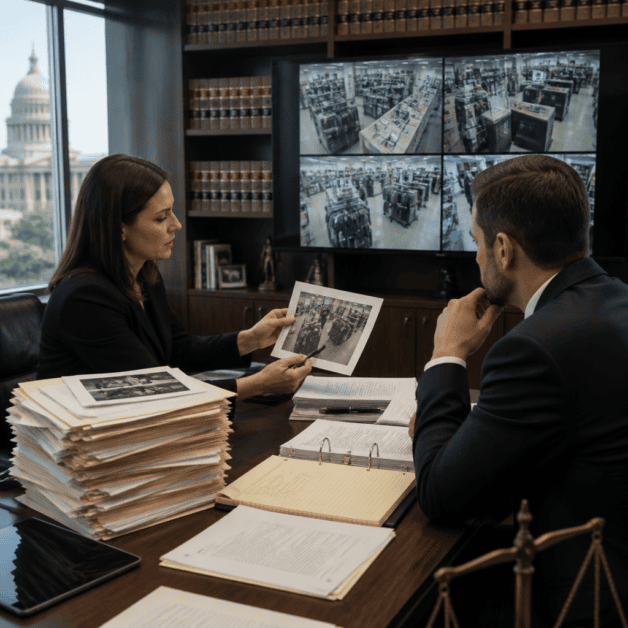
A Texas retailer can often defeat or limit a negligence claim arising from an AI loss-prevention detention by proving a lawful “shopkeeper’s privilege” detention and by attacking duty, breach, causation, and damages with system and incident evidence. As AI-driven camera analytics and facial-recognition alerts become common in Texas stores, wrongful detentions are generating hybrid premises, […]
Read More
How to File a Motion for Reconsideration After a California Court of Appeal Decision Under Rule 8.268

How to File a Motion for Reconsideration After a California Court of Appeal Decision Under Rule 8.268

A motion for reconsideration of a California Court of Appeal decision (a “petition for rehearing”) must be filed within 15 days after the decision is filed. California Rule of Court 8.268 strictly controls timing, content, and what issues can be raised. This article explains when rehearing is appropriate, how to draft and file under Rule […]
Read More
How to Register a Foreign Llc in Florida Without Triggering Unlicensed Business Penalties

How to Register a Foreign LLC in Florida Without Triggering Unlicensed Business Penalties

Florida generally requires a foreign LLC to register with the Florida Division of Corporations before “transacting business,” and failure can lead to civil penalties and loss of the right to sue in Florida courts. Many out-of-state companies accidentally trigger “unlicensed business” exposure by signing Florida contracts, opening locations, or hiring staff before qualifying. This article […]
Read More
How to File a Motion to Set Aside a Default Judgment in California (ccp § 473) After Missing a Court Deadline

How to File a Motion to Set Aside a Default Judgment in California (CCP § 473) After Missing a Court Deadline

You can often set aside a California default judgment by filing a motion under CCP § 473 within 6 months of the default, default judgment, or dismissal. This remedy is commonly used when a party missed a court deadline due to mistake, inadvertence, surprise, or excusable neglect. This article explains eligibility, deadlines, required papers, service, […]
Read More
How to Prove Liability in a Phoenix Left-turn Auto Accident when the Other Driver Claims You Were Speeding

How to Prove Liability in a Phoenix Left-Turn Auto Accident When the Other Driver Claims You Were Speeding

In Phoenix left-turn crashes, the turning driver is typically presumed at fault because Arizona law requires left-turning vehicles to yield to oncoming traffic. But insurers often try to shift blame by alleging the straight-through driver was speeding to reduce payouts under Arizona’s comparative fault rules. This article explains the evidence and legal standards Phoenix attorneys […]
Read More
How to Beat a Breaking and Entering Charge in Charlotte, North Carolina when You Had Permission to Enter

How to Beat a Breaking and Entering Charge in Charlotte, North Carolina When You Had Permission to Enter

Permission to enter is one of the strongest defenses to a breaking and entering charge in Charlotte—because North Carolina’s “breaking or entering” statute generally requires an entry “without consent.” In Mecklenburg County, these cases often turn on what was said, when, and whether the person giving access had authority. This article explains how Charlotte defense […]
Read More
How to Prove a Diminished Value Claim After a Car Accident in Austin, Texas (even After Repairs)

How to Prove a Diminished Value Claim After a Car Accident in Austin, Texas (Even After Repairs)

[In Texas, you can often recover a vehicle’s “diminished value” even after quality repairs—because market value commonly drops the moment an accident shows up on the history report. In Austin, these claims frequently arise after rear-end collisions, intersection crashes, and hail-damage repairs that still leave a stigma. This article explains the types of diminished value, […]
Read More
Scroll to Top