
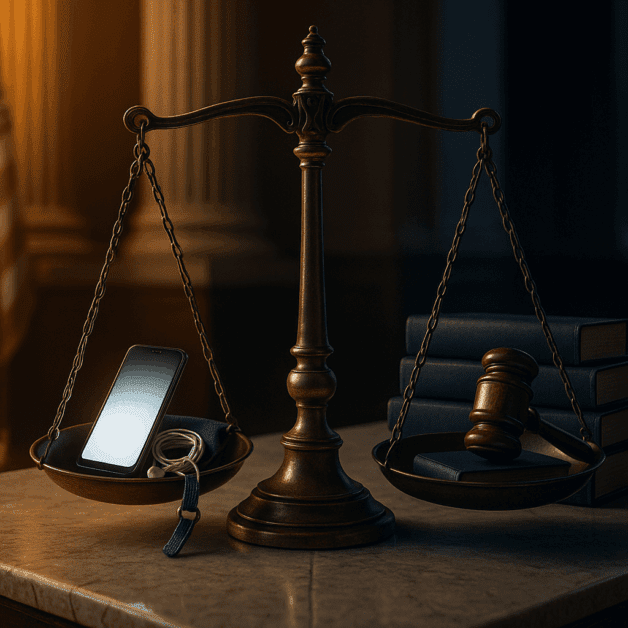
How Federal Judges Are Splitting on the First Amendment Rights of Teenagers
Federal judges are split, with at least two federal circuits applying different standards for when schools can punish teenagers’ speech. Some rulings extend strong First Amendment protection to off-campus and online speech, while others defer more to school safety and disruption concerns. This article explains the key cases driving the divide and what it means for students, parents, and schools.
A Growing Divide in the Courts
Across the United States, federal judges are reaching very different conclusions about how much free speech protection teenagers actually have. While the First Amendment is one of the most fundamental rights in American law, courts have long debated whether young people — especially students — deserve the same level of protection as adults. That debate is now sharper than ever, and the split among judges is creating real confusion for schools, parents, and students alike.
Some courts are ruling strongly in favor of teen speech rights, saying that young people do not shed their constitutional rights at the schoolhouse door. Others are giving schools and the government far more power to limit what teenagers can say, post online, or express publicly. The result is a legal landscape that looks very different depending on where you live.
What the First Amendment Actually Says
The First Amendment to the U.S. Constitution protects freedom of speech, religion, press, and assembly. It was designed to prevent the government from silencing people for expressing their views. However, it has never been treated as an unlimited right. Courts have always recognized some boundaries, especially when it comes to children and educational settings.
The key legal question when it comes to teenagers is this: Where exactly is the line between protecting young people and restricting their constitutional freedoms? And who gets to draw that line — schools, parents, legislatures, or judges?
The Landmark Cases That Set the Stage
To understand today’s court decisions, it helps to look at a few historic rulings that shaped the debate around teen speech rights.
- Tinker v. Des Moines (1969): The Supreme Court ruled that students wearing black armbands to protest the Vietnam War were protected by the First Amendment. This case established that students have free speech rights in school as long as the speech does not cause a substantial disruption.
- Bethel School District v. Fraser (1986): The Court ruled that a school could punish a student for giving a lewd speech at a school assembly. This showed that student speech rights are not identical to adult speech rights.
- Hazelwood School District v. Kuhlmeier (1988): The Court allowed schools to censor student newspapers that were part of school curriculum, giving schools more authority over school-sponsored speech.
- Mahanoy Area School District v. B.L. (2021): The Supreme Court sided with a high school cheerleader who was punished for posting a profanity-laced message on Snapchat while off campus. The Court ruled the school went too far, but it stopped short of creating a clear rule for all off-campus speech cases.
These cases created a framework, but they also left many questions unanswered — especially as the internet and social media changed how teenagers communicate.
Why Federal Judges Are Disagreeing
The disagreements among federal judges today largely stem from two major issues: off-campus online speech and government-sponsored content restrictions targeting minors.
Off-Campus Social Media Posts
One of the biggest battlegrounds involves what happens when a student says something online outside of school hours. Can a school punish a student for a social media post made at home on a Saturday night? Different courts have answered this question in very different ways.
Some courts say schools have limited authority over off-campus speech and that punishing students for what they say on their own time violates the First Amendment. Other courts have given schools more flexibility, especially when the speech involves threats, bullying, or content that affects the school environment. This inconsistency means a student in one state might be protected while a student in another state facing the same situation might face serious disciplinary action.
State Laws Targeting Teen Content
Another area of disagreement involves state laws designed to protect minors online. In recent years, several states have passed laws that restrict what content platforms can show to teenagers or limit teenagers’ ability to access certain online spaces. Supporters of these laws say they are necessary for youth protection. Critics say they go too far and restrict teens’ First Amendment rights to access information and express themselves.
Federal judges have split sharply on whether these laws are constitutional. Some have blocked them, saying they place too much restriction on free speech. Others have allowed them to move forward, saying the government has a legitimate interest in protecting children even if it means limiting certain types of expression.
The Youth Protection Argument
Those who support stronger restrictions on teen speech — or on the content teens can access — often make a straightforward argument: teenagers are still developing mentally and emotionally, and the government has both the right and the responsibility to protect them from harm.
This view holds that not all speech is equally valuable, and that some types of content — violent material, extreme political rhetoric, sexually explicit content, or online harassment — can cause real harm to young people. Judges who take this view tend to give schools and lawmakers more room to act, even when it means limiting what teenagers can say or see.
Supporters of this position point to research suggesting that certain types of online content can negatively affect teen mental health, and they argue that the government’s interest in youth protection is strong enough to justify some limits on expression.
The Free Speech Argument
On the other side, many legal experts and civil liberties advocates argue that restricting teen speech rights sets a dangerous precedent. They say that teenagers are not just children to be protected — they are developing citizens who need to practice free expression in order to grow into engaged adults.
These advocates argue that the First Amendment does not create a different category of rights for teenagers. While schools have some authority to maintain order, that authority should not extend to controlling what young people think, say, or read outside of school walls. Judges who take this position tend to be skeptical of government restrictions on teen speech and are more likely to strike down school policies or state laws that limit expression.
They also raise a practical concern: If teenagers learn that their speech can be monitored and punished even outside of school, they may grow up believing that free expression is not truly protected. That, they argue, is harmful to democracy itself.
Real-World Impact on Students and Schools
The split among federal judges has very real consequences for everyday life. Students who have been disciplined for social media posts, political speech, or off-campus behavior face different legal outcomes depending on the circuit court in their region. Schools, meanwhile, are left trying to figure out what rules they can legally enforce without running afoul of the Constitution.
Consider a few common scenarios that are playing out in schools across the country:
- A student posts a critical message about a teacher on social media over the weekend. Can the school suspend them?
- A student wears a political T-shirt to school that other students find offensive. Can the school send them home?
- A student creates an anonymous account online to mock a classmate. Does the school have the authority to investigate and punish them?
- A teenager tries to access news content or political commentary online that a state law says is restricted for minors. Does that restriction violate their First Amendment rights?
In each of these cases, the answer may depend entirely on which federal court has jurisdiction — and right now, those courts are not in agreement.
What Legal Experts Are Saying
Legal scholars across the political spectrum agree that the current situation is messy and unsustainable. Without clearer guidance from the Supreme Court, lower courts will continue to reach inconsistent conclusions. That creates confusion, encourages litigation, and leaves students and schools without reliable rules to follow.
Many experts believe the Supreme Court will need to take up more teen speech cases in the coming years to provide clearer direction. The Mahanoy decision was a step in that direction, but it deliberately avoided setting a broad rule — leaving most of the hard questions unanswered.
Some legal experts also point out that the rise of social media has fundamentally changed the nature of teen speech in ways the existing legal framework was not designed to handle. When the Tinker case was decided in 1969, students communicated face-to-face or through printed materials. Today, a teenager’s words can instantly reach thousands of people, be shared out of context, and have real consequences for individuals and communities. The law, many argue, has not caught up with that reality.
Where Things Are Headed
The debate over teen speech rights is not going away. If anything, it is likely to grow more intense as technology continues to change how young people communicate and as more states pass laws aimed at regulating what teenagers can access and express online.
Several key legal battles are currently working their way through the federal court system. These cases involve issues ranging from school discipline for off-campus posts to the constitutionality of state social media restrictions targeting minors. How these cases are decided — and whether any of them make it to the Supreme Court — will shape the legal landscape for teen speech rights for years to come.
For now, the law remains unsettled. Federal judges are drawing different lines, and teenagers across the country are living with the consequences of that uncertainty. Whether the courts ultimately decide to expand or restrict teen speech rights, one thing is clear: this is one of the most important and contested areas of First Amendment law today.
What This Means for Teens and Families
If you are a teenager or the parent of one, the current state of the law can feel overwhelming. Here are a few practical things to keep in mind:
- Know your rights — and their limits. Teenagers do have First Amendment protections, but those rights are not absolute. Schools have some authority to regulate speech, especially if it disrupts the learning environment.
- Off-campus speech is a gray area. What you say online at home can still have consequences, even if the legal picture is unclear. Courts are still working out the rules.
- Location matters. The legal standards for teen speech can vary significantly depending on where you live and which federal circuit covers your area.
- Document everything. If you believe your speech rights have been violated, keeping records of what was said and how school officials responded can be important if you need to seek legal help.
- Stay informed. The law in this area is changing. Following court decisions and staying aware of new state laws can help you understand what protections apply to you.
The question of how much free speech protection teenagers deserve is ultimately a question about what kind of society we want to be. Courts are still working on the answer, and the decisions they reach in the coming years will have a lasting impact on an entire generation of young Americans.














