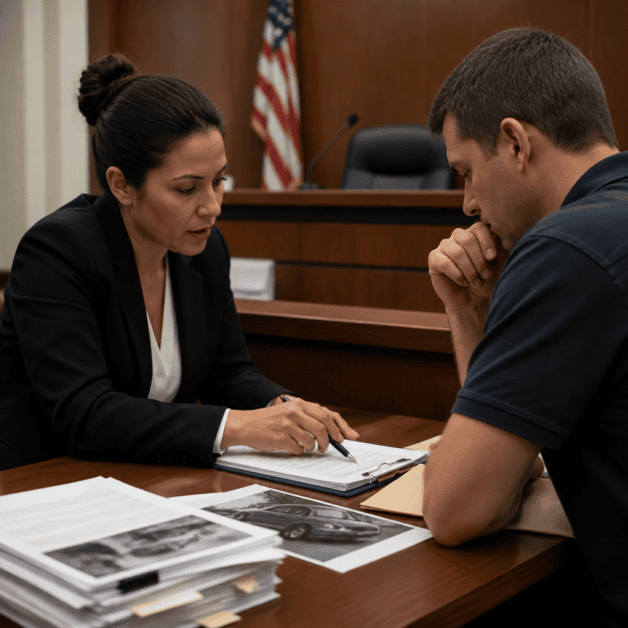
Explore comprehensive resources on the arrest process, including detailed articles that outline the legal procedures following an arrest, rights of the accused, and insights from experienced attorneys. Visitors will find informative video interviews and expert commentary on key topics such as arraignment, bail hearings, and pre-trial motions. Stay informed about your legal rights and navigate the complexities of criminal law with our authoritative content.
A warrantless arrest in Maricopa County must be promptly reviewed by a judge at your first appearance, typically within 24 hours of booking. That hearing sets release conditions and opens early opportunities to challenge an unlawful seizure. This article explains what happens at the first appearance and how Arizona attorneys attack illegal warrantless arrests from […]
An illegal traffic stop arrest in Phoenix can often be challenged by filing a motion to suppress under the Fourth Amendment and Arizona Rule of Criminal Procedure 16.2. If the judge finds police lacked reasonable suspicion for the stop or probable cause for the arrest/search, key evidence may be excluded—sometimes ending the case. This article […]
In Los Angeles, police generally need a warrant to arrest you—unless an exception applies, such as probable cause for a public offense or a valid arrest warrant. Many “traffic stop” arrests turn on whether the stop was lawful and whether officers had legal grounds to detain, search, and arrest. This article explains your rights during […]
In Phoenix, a warrantless DUI arrest can be dismissed if the judge suppresses key evidence at a suppression hearing—often because police lacked reasonable suspicion to stop you or probable cause to arrest. Arizona DUI cases frequently rise or fall on what the officer can prove about the stop, the detention, and the arrest timeline. This […]
September 15, 2025•By Attorneys.Media Editorial Staff
The bailable process matters because it can allow a defendant to secure release from custody before trial instead of remaining jailed. It protects constitutional rights, supports the presumption of innocence, and helps people keep jobs, housing, and access to counsel while their case proceeds. This article explains how bail works, why courts grant or deny […]
You have the right to remain silent and to request an attorney immediately during an arrest under the U.S. Constitution. You must provide basic identifying information where required, but you generally do not have to answer investigative questions or consent to a search without a warrant. This article explains what to say and do during […]
An arrest typically occurs when police have probable cause that a crime was committed and can lead to charges within 48–72 hours in many jurisdictions. Officers may give Miranda warnings before custodial interrogation, and you can invoke the right to remain silent and request counsel. This article explains the arrest process, key constitutional rights, and […]