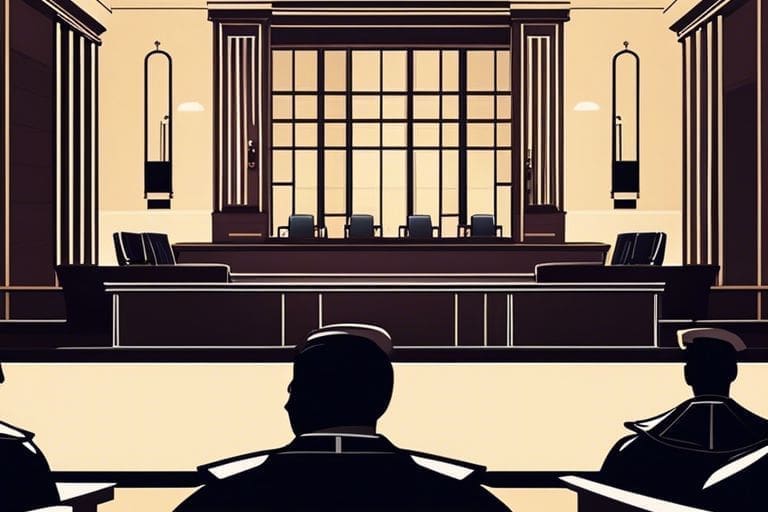
Court Trial

<a href="https://attorneys.media"><img class="aligncenter size-full wp-image-32432" src="http://attorneys.media/wp-content/uploads/2023/12/Court-Trial.jpg" alt="The Heart of Justice: Intense Moments in a Courtroom Setting" width="1024" height="1024" /></a> <h4>A Comprehensive Guide to Legal Strategies and Outcomes</h4> Navigating the legal landscape of <strong>court trials</strong> can be daunting. Whether you're a legal professional or someone with a vested interest in the outcome of a trial, understanding the key elements and strategies involved is crucial. Court trials are the epitome of the legal process, where disputes are settled, and justice is served. At the heart of every trial is the pursuit of truth, guided by stringent legal principles and practices. The procedure typically involves the presentation of evidence, witness testimonies, and the intricate interplay of legal arguments. A critical aspect of any court trial is the selection of a competent legal team. Lawyers skilled in litigation strategies play a pivotal role in shaping the trial's direction. They employ various tactics, from meticulous examination of evidence to persuasive argumentation, to sway the judge or jury's decision in their client's favor. The role of evidence cannot be overstated in court trials. It's the backbone of the legal argument, offering tangible proof to support or refute claims. The admissibility and reliability of evidence are often hotly contested, making the expertise of legal counsel invaluable. Witness testimonies provide another layer to the trial's narrative. Witnesses, whether eyewitnesses or experts in a particular field, offer insights that can significantly impact the trial's outcome. The ability of attorneys to effectively examine and cross-examine witnesses is a testament to their legal acumen. Jury deliberations are another critical component. In trials where a jury is present, these individuals, selected from the community, bear the responsibility of delivering a verdict based on the evidence and arguments presented. Their impartiality and judgment are fundamental to the trial's fairness and integrity. The verdict, whether delivered by a judge or jury, marks the culmination of the trial. It reflects a careful consideration of all presented facts, testimony, and legal arguments. The outcome can have far-reaching implications, not just for the parties involved but also for legal precedents and societal norms. In conclusion, court trials are complex and multifaceted. They require a deep understanding of legal principles, a strategic approach to presenting arguments and evidence, and an unwavering commitment to justice. For those involved, the experience can be both challenging and enlightening, offering a unique insight into the workings of the legal system. To expand further, let's delve into the post-trial processes. After a verdict is reached, the sentencing phase begins if applicable. This phase determines the consequences for the convicted party. Sentencing can range from fines and community service to imprisonment, depending on the severity of the crime and legal statutes. Additionally, the right to appeal is an essential aspect of the legal system. Parties dissatisfied with the trial outcome can seek a higher court's review, offering another layer of scrutiny and ensuring the justice system's checks and balances. In all, court trials embody the rule of law and the pursuit of justice, serving as pillars of a democratic society.

44 posts
Domestic Violence Accusations: Legal Steps to Protect Your Rights

Domestic Violence Accusations: Legal Steps to Protect Your Rights

If you face domestic violence accusations, take 7 key steps: stay calm, invoke your right to counsel, avoid contact, comply with orders, document evidence, identify witnesses, and prepare a defense. Early legal guidance helps prevent self-incrimination and protects custody, housing, and employment. This article explains the charges, the court process, and defense strategies. Facing domestic […]
Read More
Theft Charges: Potential Consequences and Defense Tactics

Theft Charges: Potential Consequences and Defense Tactics

Theft charges can lead to jail time, fines, restitution, and a permanent criminal record. Penalties often depend on the value of the property and whether the case is charged as petty theft or felony theft. This article explains theft offense types and proven defense tactics to protect your rights and future. Theft charges can have […]
Read More
Assault Charges: Building a Strong Defense Strategy

Assault Charges: Building a Strong Defense Strategy

Prosecutors must prove assault beyond a reasonable doubt, and strong defenses often include self-defense, lack of intent, misidentification, or false allegations. Early evidence preservation, witness interviews, and reviewing body-cam or surveillance footage can materially change outcomes. This article explains assault charge types, penalties, and how to build an effective defense strategy. Facing assault charges can […]
Read More
PFAS Foam Litigation: Attorneys Secure $95.8M in Tyco, BASF Settlements

PFAS Foam Litigation: Attorneys Secure $95.8M in Tyco, BASF Settlements

Attorneys secured $95.8 million in settlements from Tyco and BASF in the PFAS foam (AFFF) litigation. The deals advance the AFFF multidistrict litigation addressing PFAS “forever chemical” contamination and related cleanup and liability claims. This article covers the settlement totals and how they fit within the broader MDL. In a landmark development for environmental litigation, […]
Read More
Ticketmaster Patent Lawsuit Dismissed: Live Nation Wins Ticketing Tech Case

Ticketmaster Patent Lawsuit Dismissed: Live Nation Wins Ticketing Tech Case

A judge dismissed a Ticketmaster patent lawsuit, handing Live Nation a win in the ticketing technology dispute. The decision rejects claims that Ticketmaster’s ticketing innovations were unlawfully copied, narrowing the path for further patent enforcement in this area. This article explains the court’s reasoning, what the dismissal means for Ticketmaster and Live Nation, and the […]
Read More
Understanding Freedom of Speech: Key Legal Insights and Protections Explained

Understanding Freedom of Speech: Key Legal Insights and Protections Explained

Freedom of speech in the U.S. is primarily protected by the First Amendment, which limits government restrictions on expression but allows certain narrow exceptions. Those limits differ sharply when speech involves private employers, schools, social media platforms, or threats, harassment, and incitement. This article explains what “free speech” legally covers, the most common exceptions, and […]
Read More
How to Ensure Your Right to a Fair Trial

How to Ensure Your Right to a Fair Trial

The U.S. Constitution guarantees a fair trial through the Sixth Amendment and the Fourteenth Amendment’s due process protections. These rights include an impartial jury, legal counsel, and the ability to confront witnesses, but they can be compromised by unlawful procedures or bias. This article explains the core fair-trial rights, common violations, and practical steps to […]
Read More
Understanding Wrongful Death Claims: A Guide for Grieving Families

Understanding Wrongful Death Claims: A Guide for Grieving Families

Wrongful death claims let eligible survivors seek compensation for losses after a death caused by another party’s negligence or misconduct. They can cover funeral costs, lost income, and loss of companionship, but strict filing deadlines apply and vary by state. This article explains what qualifies as wrongful death, who can file, and how the legal […]
Read More
Understanding DUI Penalties: A Comprehensive Guide to Legal Consequences and Defense

Understanding DUI Penalties: A Comprehensive Guide to Legal Consequences and Defense

A DUI conviction can trigger fines, license suspension, jail time, and ignition interlock, with penalties increasing for higher BAC and repeat offenses. Exact consequences vary by state and depend on BAC level, prior DUIs, and whether injury or property damage occurred. This guide explains what qualifies as DUI, the court process, and common defense strategies. […]
Read More
Mastering Bench Conferences: A Deep Dive into Their Role in Legal Strategy

Mastering Bench Conferences: A Deep Dive into Their Role in Legal Strategy

A bench conference is a private, on-the-record discussion at the judge’s bench between the judge and attorneys, usually outside the jury’s hearing. It’s used to resolve objections, evidentiary disputes, and sensitive procedural issues without prejudicing jurors. This article explains when they occur, what’s discussed, and how they shape trial strategy. Bench conferences are a critical […]
Read More
The Adjudication Process: A Deep Dive into Judicial Decision-Making

The Adjudication Process: A Deep Dive into Judicial Decision-Making

Adjudication typically follows 5 core stages: filing, discovery, hearings/trial, deliberation, and judgment. A judge (or administrative officer) evaluates evidence and legal arguments to resolve the dispute under governing law. This article explains the procedures, participants, and how adjudication shapes fair, consistent judicial decision-making. Adjudication plays a central role in the legal system, serving as the […]
Read More
Scroll to Top