Judicial System

Explore in-depth insights into the judicial system through our comprehensive collection of articles, video interviews, and legal glossary definitions. Visitors will find detailed explanations of court processes, the roles of judges and juries, and the intricacies of various legal proceedings. Whether you are seeking to understand civil rights, criminal law, or appellate procedures, our resources provide the essential information needed to navigate the complexities of the legal landscape.

19 posts
Understanding Equal Protection: Legal Rights and Implications

Understanding Equal Protection: Legal Rights and Implications

Equal protection means the government must treat similarly situated people alike, and courts review many discrimination claims under strict, intermediate, or rational-basis scrutiny. Rooted in the Fourteenth Amendment and applied through key Supreme Court decisions, it limits unequal laws and enforcement based on protected characteristics or arbitrary classifications. This article explains the Equal Protection Clause, […]
Read More
Comprehensive Guide to Judicial Review

Comprehensive Guide to Judicial Review

Judicial review is the power of courts to invalidate laws or executive actions that violate the U.S. Constitution, rooted in the 1803 Supreme Court case Marbury v. Madison. It enforces checks and balances by ensuring all branches follow constitutional limits. This guide covers how judicial review works, key standards, and major applications. Judicial review is […]
Read More
Appellate Court – Legal Processes and Functions

Appellate Court – Legal Processes and Functions

An appellate court reviews a lower court’s decision for legal error—typically based on the existing record—and may affirm, reverse, modify, or remand the case. Unlike trial courts, appellate courts generally do not hear new evidence or witness testimony, focusing instead on briefs and oral argument. This article explains how appellate courts work, the steps in […]
Read More
Exploring the Best Evidence Rule: Implications for Legal Practice

Exploring the Best Evidence Rule: Implications for Legal Practice

The Best Evidence Rule generally requires the original writing, recording, or photograph (or a legally acceptable duplicate) to prove its contents in court. It limits testimony about what a document says unless an exception applies, such as loss, destruction, or inaccessibility not caused by bad faith. This article explains the rule, common exceptions, and how […]
Read More
Beyond A Reasonable Doubt: The Pinnacle Standard in Criminal Justice

Beyond A Reasonable Doubt: The Pinnacle Standard in Criminal Justice

Beyond a reasonable doubt is the highest standard of proof in criminal cases, requiring jurors to be firmly convinced of guilt with no reasonable doubt. It exists to reduce wrongful convictions because criminal penalties can include jail or prison. This article explains the definition, how it’s applied in trials, and common misconceptions. Understanding Beyond A […]
Read More
Comprehensive Guide to Understanding Bench Trials in the Legal System

Comprehensive Guide to Understanding Bench Trials in the Legal System

A bench trial is a trial decided by 1 judge who determines both the facts and the law, with no jury. It’s often used when issues are highly technical, the parties waive a jury, or speed and cost are priorities. This article explains the bench trial process, strategic pros and cons, and how bench trials […]
Read More
Mastering Bench Conferences: A Deep Dive into Their Role in Legal Strategy

Mastering Bench Conferences: A Deep Dive into Their Role in Legal Strategy

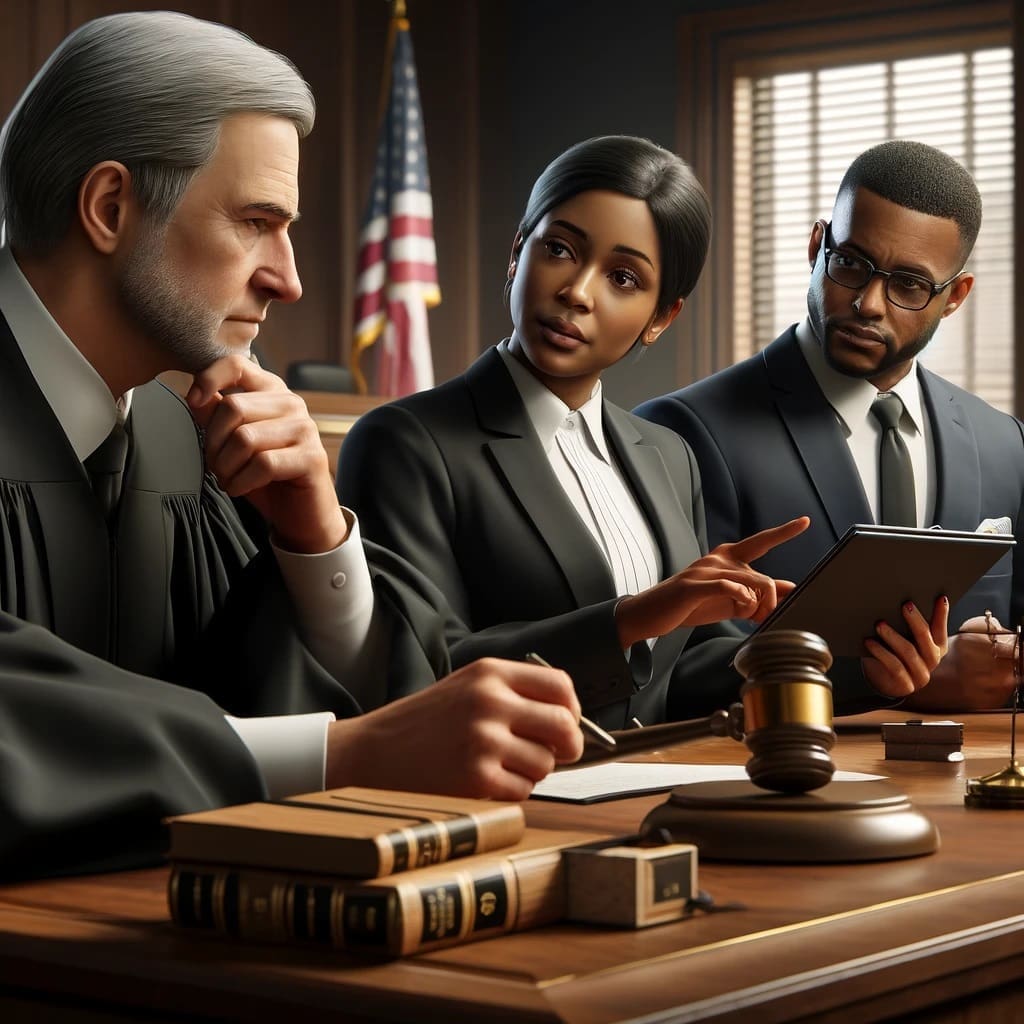
A bench conference is a private, on-the-record discussion at the judge’s bench between the judge and attorneys, usually outside the jury’s hearing. It’s used to resolve objections, evidentiary disputes, and sensitive procedural issues without prejudicing jurors. This article explains when they occur, what’s discussed, and how they shape trial strategy. Bench conferences are a critical […]
Read More
Scroll to Top