
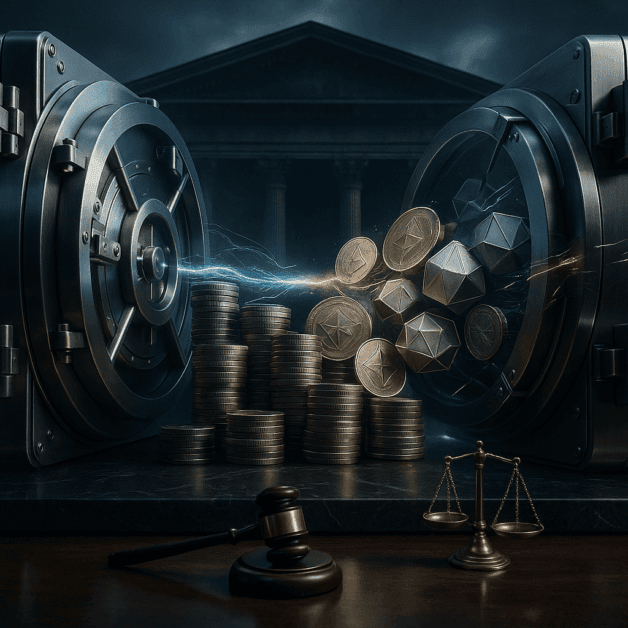
Digital Asset Treasuries (DATs) Are Merging — And Lawsuits Are Coming
Digital Asset Treasuries (DATs) are companies holding significant cryptocurrency on their balance sheets, often including billions in Bitcoin. As DATs merge, disputes over valuation, custody, disclosures, and fiduciary duties are likely to trigger shareholder and securities lawsuits. This article explains what DATs are, why consolidation is accelerating, and where litigation risk will emerge.
What Is a Digital Asset Treasury?
Over the past few years, a growing number of companies have started holding large amounts of cryptocurrency on their balance sheets. These companies, often called Digital Asset Treasuries or DATs, treat Bitcoin, Ethereum, and other digital assets the way traditional companies might hold cash or government bonds. Instead of keeping money in a bank, they store value in crypto.
Some of the most well-known examples include MicroStrategy, which holds billions of dollars in Bitcoin, and several smaller firms that have adopted similar strategies. The idea is simple: if you believe crypto will be worth more in the future, holding it makes financial sense. But when companies start merging with each other, things get complicated — fast.
Why DATs Are Starting to Merge
The crypto market has matured significantly. Companies that built their business models around holding digital assets are now looking for ways to grow, combine resources, and increase their market presence. Mergers and acquisitions between DATs are becoming more common for several reasons:
- Economies of scale: Larger combined holdings can give companies more influence over markets and reduce operational costs.
- Access to capital: Merged entities can raise money more easily from traditional financial markets.
- Regulatory preparation: Bigger companies are generally better positioned to handle new cryptocurrency laws and compliance requirements.
- Talent and technology: Merging allows companies to share expertise in blockchain technology and digital asset management.
On paper, these mergers look like straightforward business decisions. In reality, they are opening the door to a wave of legal disputes that neither the crypto industry nor traditional corporate law was fully prepared to handle.
Where the Legal Problems Begin
Merging two companies that hold significant amounts of cryptocurrency introduces legal challenges that simply did not exist a decade ago. Traditional corporate mergers deal with physical assets, intellectual property, and cash. DAT mergers add a new layer of complexity.
Valuation Disputes
One of the biggest sources of conflict is how to value the digital assets involved in a merger. Cryptocurrency prices can swing dramatically within hours. If a company’s Bitcoin holdings drop 20 percent between the time a merger agreement is signed and when the deal closes, who absorbs that loss? What price was used to calculate the company’s value in the first place? These questions are already leading to disagreements between buyers, sellers, and their shareholders.
Custody and Ownership Questions
Unlike stocks or bonds, cryptocurrency is controlled through private keys — essentially long passwords that give access to the funds. In a merger, transferring these keys and proving true ownership is not always straightforward. There have already been cases where custody arrangements were unclear, leading to disputes about who actually controlled the assets during the transition period.
Shareholder Lawsuits
Shareholders are increasingly filing lawsuits against DAT companies during and after mergers. Common complaints include claims that company directors failed to disclose the full risks of holding crypto assets, that merger deals were structured unfairly, or that executives acted in their own financial interest rather than in the interest of shareholders. These types of lawsuits fall under corporate law and fiduciary duty claims, which courts are very familiar with — but the crypto element adds new twists that make each case unique.
The Role of Cryptocurrency Law
Cryptocurrency law is still developing in most countries, including the United States. There is no single comprehensive set of rules that governs how digital assets should be treated in a corporate merger. Instead, companies must navigate a patchwork of regulations from different agencies.
The Securities and Exchange Commission (SEC) considers some cryptocurrencies to be securities. The Commodity Futures Trading Commission (CFTC) views others as commodities. State-level laws add another layer of complexity. When a DAT merger happens, lawyers must figure out which rules apply — and that determination is not always clear.
This legal uncertainty creates real risk. A company that structures its merger one way might later find that regulators view it differently, potentially triggering fines, forced restructuring, or even criminal investigations. Business litigation lawyers who specialize in crypto cases are becoming some of the most sought-after professionals in the legal world right now.
Real-World Legal Battles Are Already Happening
Several high-profile legal disputes involving DATs have already made their way into the courts. While specific cases vary in their details, common themes keep appearing:
- Breach of fiduciary duty: Directors and officers are being sued for making risky crypto bets with company money without proper shareholder approval.
- Fraud allegations: Some shareholders claim they were misled about the nature and risk of a company’s digital asset holdings before a merger vote.
- Contract disputes: When crypto prices move sharply during a merger process, both sides often disagree about whether the original deal terms still apply.
- Regulatory non-compliance: Companies that failed to properly register their digital assets or follow SEC rules are facing enforcement actions that complicate or block their merger plans.
These are not small or theoretical problems. They represent real money — sometimes hundreds of millions of dollars — and real legal consequences for executives, investors, and employees.
What Corporate Law Says (And Where It Falls Short)
Corporate law provides a foundation for handling mergers. Rules around disclosure, shareholder voting, fairness opinions, and board responsibilities have existed for decades. But corporate law was written with traditional assets in mind, and it does not always translate cleanly to the world of crypto.
For example, a fairness opinion — a document that certifies a merger price is fair to shareholders — is a standard part of most large corporate deals. But how do you issue a fairness opinion when the core asset on the balance sheet could lose half its value overnight? Financial advisors and law firms are grappling with this question right now, and there is no universal answer yet.
Similarly, disclosure rules require companies to fully inform shareholders about material risks before a merger vote. Crypto volatility is certainly a material risk, but how much detail is enough? Courts will likely be answering this question for years to come.
How Business Litigation Is Evolving to Handle DAT Disputes
Lawyers who handle business litigation are adapting quickly. A new generation of cases involving digital asset companies is forcing law firms to develop expertise in blockchain technology, crypto markets, and digital custody arrangements — all while applying traditional legal principles of contract law, fiduciary duty, and securities regulation.
Some key trends in DAT-related business litigation include:
- Expert witnesses: Courts are relying more heavily on cryptocurrency experts to explain how digital assets work, how they are valued, and how custody functions in practice.
- Discovery challenges: Blockchain transactions are public but often pseudonymous, creating unique challenges when lawyers try to gather evidence in a lawsuit.
- Jurisdictional questions: Because crypto operates across borders, courts often need to determine which country’s or state’s laws apply to a given dispute.
- Smart contract disputes: Some DATs use automated smart contracts to manage certain financial functions, and when those contracts behave unexpectedly, determining legal liability is far from simple.
What Should Companies and Investors Do?
If you are involved with a company that holds significant digital assets, or if you are considering investing in one, here are some practical steps to keep in mind:
- Read the disclosures carefully: Companies are required to disclose the risks of their crypto holdings. Pay attention to how those risks are described and whether they seem realistic.
- Understand custody arrangements: Before investing in or merging with a DAT, make sure it is clear who controls the private keys and how those assets are protected.
- Consult specialized legal counsel: Not every business lawyer has experience with cryptocurrency. If a merger involves significant digital assets, work with someone who understands both corporate law and crypto regulation.
- Watch regulatory developments: The legal landscape for crypto is changing fast. New rules from the SEC, CFTC, or Congress could significantly affect how DAT mergers are structured and regulated.
- Document everything: In any merger involving digital assets, keeping detailed records of valuations, custody transfers, and decision-making processes is critical for protecting against future litigation.
The Bigger Picture
The merging of Digital Asset Treasuries is not just a niche financial story. It represents a collision between two worlds — the fast-moving, loosely regulated world of cryptocurrency and the structured, rule-bound world of corporate law and business litigation. That collision is producing lawsuits, regulatory scrutiny, and unanswered legal questions at a pace that courts and regulators are struggling to keep up with.
For investors, executives, lawyers, and regulators, understanding how these mergers work — and where they go wrong — is becoming increasingly important. The legal frameworks are catching up, but slowly. In the meantime, the companies and individuals who navigate this space carefully, with proper legal guidance and full awareness of the risks, will be best positioned to avoid the lawsuits that are already starting to pile up.
Digital assets are here to stay. So are the legal battles that come with them.














