
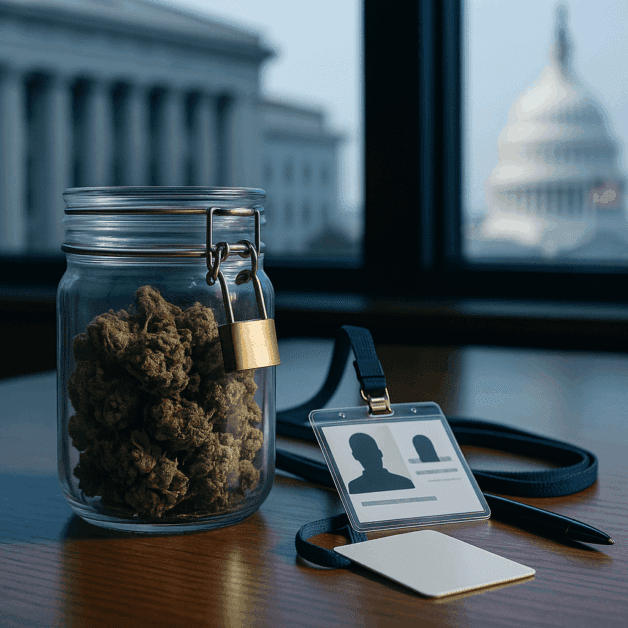
Federal Employees and Marijuana – The Rule Nobody Changed in 2026
In 2026, marijuana remains a Schedule I drug under federal law, so federal employees are still prohibited from using it. State legalization doesn’t override federal workplace rules or drug-testing policies for federal workers. This article explains the risks, enforcement, and practical compliance tips for federal employees.
Still Illegal at the Federal Level
A lot has changed when it comes to marijuana laws across the United States. Many states have legalized it for medical use, recreational use, or both. But here is something that surprises a lot of people: if you work for the federal government, none of that matters. As of 2026, marijuana is still classified as a Schedule I controlled substance under federal law. That classification has not changed. And for federal employees, that means the rules are still the same as they were years ago.
This is not a small or technical issue. It affects hundreds of thousands of workers across dozens of federal agencies. It touches on hiring decisions, security clearances, drug testing policies, and employee rights. Understanding where things stand is important for anyone who works for the federal government or is thinking about doing so.
Why State Laws Do Not Protect Federal Workers
One of the most common misunderstandings out there is that if you live in a state where marijuana is legal, you are protected from any consequences at work. For most private-sector employees, that conversation is more complicated and depends on the employer and the state. But for federal employees, there is a clear answer: state law does not override federal law when it comes to federal employment.
Federal employment law is governed by federal rules and regulations, not state ones. This means that even if you live in Colorado, California, or any other state that has fully legalized recreational marijuana, using it can still cost you your federal job. Your employer, in this case the federal government, follows federal compliance standards. And under those standards, marijuana use is not permitted.
This disconnect between state and federal law creates real confusion for workers. Someone might legally purchase marijuana from a licensed store, use it at home on their own time, and still face serious consequences at their federal job. That situation has not been resolved by any legislation or executive order as of 2026.
Drug Testing in Federal Workplaces
Federal agencies are required to maintain drug-free workplace programs. This is not optional. The Drug-Free Workplace Act and executive orders going back decades require federal agencies to test employees in certain positions and to take action when someone tests positive.
Here is what that looks like in practice:
- Pre-employment testing: Most federal job applicants are tested before they are officially hired. A positive test for marijuana can disqualify a candidate entirely.
- Random testing: Employees in safety-sensitive or security-sensitive positions are subject to random drug tests. This includes people who work with classified information, operate heavy machinery, or hold law enforcement roles.
- Reasonable suspicion testing: If a supervisor has good reason to believe an employee is impaired or has been using drugs, they can require a test.
- Post-incident testing: After a workplace accident or safety incident, testing is typically required.
A positive test result can lead to removal from the job, especially for those in sensitive roles. Even first-time positive results are treated seriously under federal compliance standards.
Security Clearances and Marijuana Use
For federal employees who hold or are applying for security clearances, the stakes are even higher. Security clearance decisions involve a review of an applicant’s entire background, including past drug use. Marijuana use, even if it happened legally under state law, can raise red flags in this process.
The adjudicative guidelines used to evaluate clearance applications look at things like the frequency of drug use, how recent it was, and whether the person has shown a willingness to follow the law. Since marijuana is still illegal under federal law, using it — even legally under state law — can be seen as a willingness to disregard laws and regulations. That concern alone can be enough to deny or revoke a clearance.
Many federal agencies have softened their approach slightly over the past few years, allowing applicants to disclose past marijuana use without automatic disqualification. But current or very recent use is still treated as a serious issue, especially for positions that require a high level of trust and access to sensitive information.
What Has Actually Changed in Recent Years
Even though the core federal policy has not changed, there have been some shifts worth knowing about.
Some agencies have updated their guidance to say that past marijuana use alone will not automatically disqualify someone from a job or a clearance. This is a meaningful shift from older, stricter policies. In 2021, the Biden administration clarified that some White House staffers who had used marijuana in the past would not automatically lose their jobs, though this was more of a case-by-case policy than a formal rule change.
There has also been ongoing Congressional debate about federal marijuana reform. Legislation like the MORE Act and the SAFE Banking Act have been introduced multiple times. But as of 2026, none of these bills have become law in a way that changes the employment rules for federal workers.
The bottom line is that while the conversation has evolved, the actual legal framework has not moved as far as many people believe.
Positions Most Affected by This Policy
Not every federal employee faces the same level of scrutiny. Some roles are far more affected by these marijuana policies than others. Understanding which positions carry the highest risk can help workers and job seekers make informed decisions.
- Law enforcement roles: Federal law enforcement officers, including those at agencies like the FBI, DEA, and Border Patrol, are held to strict standards. Drug use of any kind is typically disqualifying.
- Security clearance holders: As discussed above, anyone who holds or needs a clearance faces elevated scrutiny around drug use.
- Transportation workers: Employees at the Federal Aviation Administration (FAA) and Department of Transportation (DOT) are subject to some of the most rigorous drug testing programs in the federal government.
- Military personnel: Members of the armed forces face a zero-tolerance policy that is even stricter than civilian federal employment rules.
- Healthcare workers at VA facilities: Those who provide care to veterans are typically subject to regular testing and strict compliance requirements.
Employee Rights in This Situation
It is fair to ask whether federal employees have any rights when it comes to these policies. The answer is yes, but those rights are limited when it comes to marijuana specifically.
Federal employees do have the right to due process. If a positive drug test leads to disciplinary action, employees have the right to be notified, to respond, and to appeal decisions through the proper channels. The Merit Systems Protection Board (MSPB) exists precisely to hear appeals from federal workers who believe they have been treated unfairly.
However, the underlying rule — that marijuana use is not permitted — is not something that employee rights protections can change. You can appeal the process, but you generally cannot successfully argue that you had a right to use marijuana as a federal employee under current law.
Medical marijuana presents a particularly difficult situation. Even though many states allow medical use, and even though some private employers have begun accommodating employees who use marijuana for medical reasons, federal agencies are not required to do the same. Federal compliance requirements do not include an exception for medical marijuana.
What This Means If You Are Considering a Federal Job
If you are thinking about applying for a federal position, here are some practical things to keep in mind:
- Be honest about past marijuana use on application forms. Dishonesty is often treated more harshly than the drug use itself.
- Understand that a history of recent and regular use may make it harder to get certain positions, especially those requiring a clearance.
- Plan ahead if you currently use marijuana. Many applicants stop using it well before applying to ensure their system is clear and to demonstrate a commitment to following federal rules going forward.
- Research the specific agency and role you are interested in. Different agencies apply these rules with different levels of strictness.
- Talk to a legal professional if you have questions about your specific situation, especially if past use or a past positive test is part of your history.
The Bigger Picture
There is a real tension in American policy right now. A majority of states allow marijuana in some form. Public opinion has shifted significantly toward acceptance. Several presidents and members of Congress have publicly acknowledged using marijuana at some point in their lives. And yet the federal employment rules have not caught up with any of that.
For federal employees, this gap between public attitude and actual law creates a difficult situation. The rule nobody changed in 2026 is still sitting right where it has always been. Workers who do not know about it, or who assume state-level legalization protects them, can find themselves facing very real consequences.
The best approach is a simple one: know the rules that apply to your specific situation, make informed choices, and do not assume that what is legal in your state is also acceptable in your federal workplace. Until Congress passes and a president signs legislation that changes the federal classification of marijuana, or until executive policy formally shifts the employment rules, federal workers are operating under a system that still treats marijuana the same way it did decades ago.
Staying Informed Matters
Federal employment law is not static. Policies get updated, guidance documents are revised, and court decisions can change how rules are interpreted. Staying informed about developments in federal compliance and marijuana policy is important for anyone in this space.
Following reliable news sources that cover federal workforce issues, checking agency-specific policies regularly, and consulting with an employment attorney when needed are all good habits. Employee rights organizations and federal employee unions can also be useful resources for understanding how policies apply in real-world situations.
The landscape may eventually change. But for now, the rule nobody changed in 2026 is still the rule you need to follow.














