
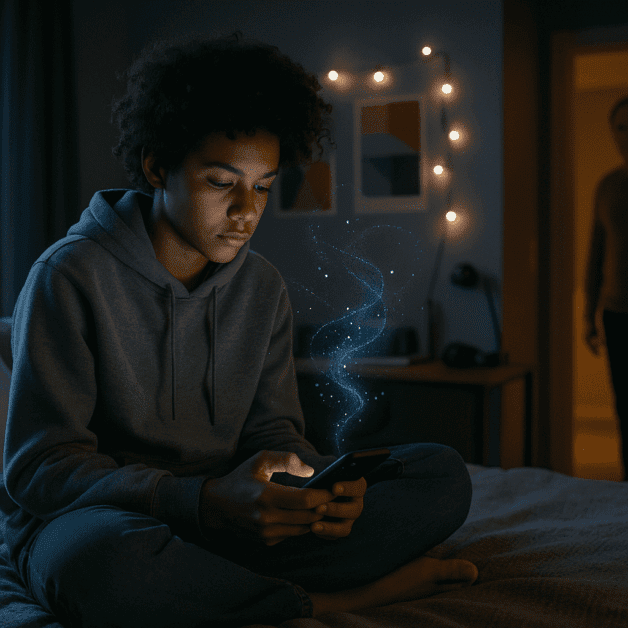
Parents, Read This Before Your Teen Starts Talking to a Companion AI Tonight
Companion AI apps are chatbots that simulate friendship or romance, and millions of teens use them daily. They can feel supportive, but also raise risks around privacy, grooming-like manipulation, and emotional dependency. This article explains what companion AI is, why teens are drawn to it, and practical steps parents can take tonight.
What Is a Companion AI, and Why Are Teens So Drawn to It?
If you have a teenager at home, there is a good chance they have already heard about companion AI apps — or are already using one. These are artificial intelligence programs designed to hold conversations, offer emotional support, and act like a friend or even a romantic partner. Apps like Character.AI, Replika, and similar platforms have grown massively popular with young people, and it is easy to understand why.
Teens today face enormous social pressure. They worry about fitting in, being judged, and saying the wrong thing. A companion AI never laughs at them, never shares their secrets, and is always available at two in the morning when anxiety is at its worst. That kind of unconditional availability feels genuinely comforting to a young person who is still figuring out who they are.
But before your teen dives into that world tonight, there are some very important things every parent needs to know.
The Real Risks You Need to Understand
Companion AI is not inherently evil, but it does come with risks that are specific to teenagers. Here is a breakdown of the most important ones.
1. Emotional Dependency Can Develop Quickly
Teenagers are at a stage in life where they are learning how to form real human relationships. That process is messy and sometimes painful, but it is also essential for healthy development. When a teen can replace that discomfort with a perfectly agreeable AI that always says the right thing, they may start avoiding the harder work of real human connection.
Over time, some teens report that talking to their AI feels more comfortable than talking to actual friends or family. While that might sound harmless, it can quietly make real-world social skills harder to develop and maintain.
2. Content Filters Are Not Always Reliable
Many companion AI platforms have safety filters built in, but these filters are imperfect. There have been well-documented cases where teens were exposed to inappropriate sexual content, encouraged to engage in risky behavior, or even received responses that normalized self-harm. Researchers and journalists have tested these systems and found that persistent users can sometimes work around safeguards without much effort.
This is a major concern for AI safety when it comes to young users. What starts as an innocent chat can move in a direction that no parent would be comfortable with.
3. The Line Between Real and Artificial Gets Blurry
Adults generally understand that an AI is not a real person. Teens, especially younger ones, can sometimes lose sight of that distinction. Some users develop deep emotional attachments, treating their AI companion as a genuine relationship rather than a product. This can create unrealistic expectations about how real people should behave and make actual human relationships feel disappointing by comparison.
4. Privacy and Data Collection
When your teen tells a companion AI their deepest fears, relationship problems, or mental health struggles, that information is typically stored on company servers. Depending on the platform’s privacy policy, that data could be used to train future AI models, shared with third parties, or simply stored in a way that could be breached. Teens rarely read privacy policies, and most do not realize how much personal information they are handing over in a single conversation.
5. Mental Health Can Be Affected in Both Directions
This is a nuanced point. For some teens, especially those dealing with social anxiety or loneliness, a companion AI can provide a low-pressure space to express feelings. That is not always harmful. But for teens who are already struggling with depression, isolation, or suicidal thoughts, an AI that responds imperfectly — or even one that responds too agreeably — can sometimes make things worse rather than better.
There have been tragic cases where teens in mental health crises were interacting with AI companions in the hours before harming themselves. This does not mean AI caused those outcomes, but it raises serious questions about whether AI should be a substitute for professional mental health support.
What the Research Is Starting to Show
The science here is still young because these apps are relatively new. But early findings are giving researchers reason to pay close attention. Studies on social media have already shown that heavy use during teenage years is linked to increased anxiety and depression, particularly in girls. Researchers believe companion AI could carry similar or even stronger effects, given that the interaction is far more personal and emotionally immersive than scrolling through a feed.
One thing that experts broadly agree on is that teens who already have strong offline social connections and open communication with parents are better equipped to use these tools without being negatively affected. That makes parental guidance one of the most powerful protective factors available.
How to Have the Conversation With Your Teen
Telling a teenager they cannot use something is rarely the most effective approach. Curiosity and peer pressure will usually win out eventually. A more effective strategy is to have an honest, open conversation that respects their intelligence while also being clear about your concerns.
Here are some ways to start that conversation without it turning into an argument:
- Ask before you lecture. Find out if they are already using a companion AI and what they like about it. Listen without immediately jumping to warnings.
- Share what you have read. Tell them about the privacy concerns and the cases where content filters failed. Teens respond better to specific examples than to general warnings.
- Talk about what makes real relationships valuable. Not in a preachy way, but as a genuine conversation. Help them understand what they might be missing if they start replacing human connection with artificial ones.
- Set clear expectations together. Rather than imposing rules from above, try to agree on guidelines that feel fair to both of you. This might include keeping AI chat to a certain number of hours per day, not using it as a replacement for talking to you or a counselor when something serious is going on, and never sharing personally identifying information.
- Keep the door open. Let them know they can come to you if something they encountered in an AI conversation made them uncomfortable or confused. You want to be the safe adult in that situation, not the person they hide things from.
Practical Steps for Teen Protection Right Now
Beyond the conversation, there are concrete actions you can take to protect your teen while still allowing them some independence.
Review the App Before They Use It
Download the app yourself and spend some time with it. Try pushing the conversation in directions that a troubled teen might go. See how the AI responds. This firsthand experience will give you a much better sense of what your teen is actually interacting with.
Check the Platform’s Age Policies
Many companion AI platforms technically require users to be 18 or 13 with parental consent, but enforcement is weak. Know what the rules are and whether your teen meets the requirements. If a platform is designed for adults, that matters.
Use Parental Controls and Screen Time Tools
Most smartphones and tablets have built-in tools for limiting app usage or setting screen time limits. These are not perfect solutions, but they help support healthy boundaries around digital wellness in general.
Watch for Warning Signs
Be alert if your teen becomes noticeably more withdrawn from family and friends, if they seem emotionally distressed after using the app, if they are secretive about what they are doing on their device, or if they start talking about their AI as though it were a real person who loves them. These are signs to take seriously and discuss openly.
Connect Them With Real Support
If your teen is using a companion AI primarily for emotional support, that is a signal that they might benefit from talking to a school counselor, a therapist, or even just a trusted adult they feel comfortable with. AI is not equipped to provide real mental health care, and it is important that your teen has access to actual human support when they need it.
A Note on Not Overreacting
It would be easy to read all of this and want to ban every AI app in your household immediately. That reaction is understandable, but it is worth pausing before you go that route. Technology is not going away, and teenagers who are completely shielded from it often end up less prepared to navigate it safely as adults.
The goal is not to create fear around every new tool but to help your teen become a thoughtful, informed user of technology. That is a skill that will serve them for the rest of their lives. Your job is not to eliminate risk entirely — it is to make sure they have the knowledge and support they need to handle it wisely.
The Bottom Line for Parents
Companion AI is powerful, appealing, and still largely unregulated when it comes to protecting young users. As a parent, you are one of the most important lines of defense between your teen and potential harm — not because you need to be a gatekeeper, but because your relationship with them is something no AI can replicate or replace.
Stay informed, stay curious, and stay in the conversation. That is the most effective thing you can do for your teenager’s digital wellness right now.














