
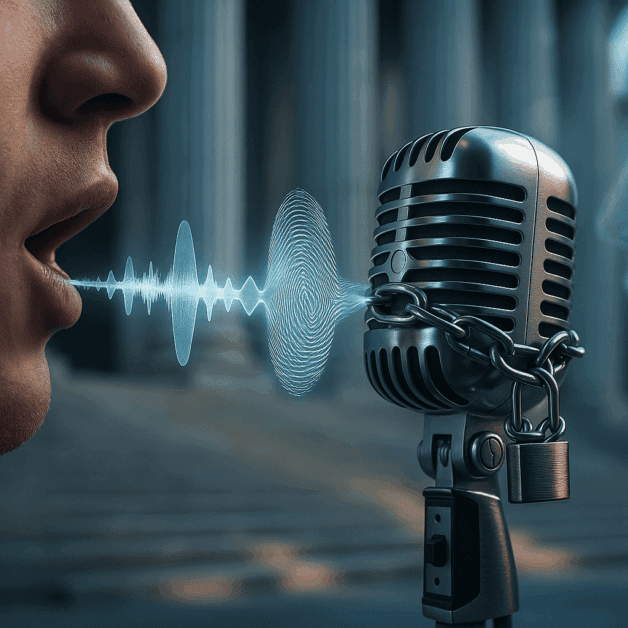
The Supreme Court Case That Will Decide If Your Voice Belongs to You
The Supreme Court is poised to decide whether AI voice cloning can be stopped under existing rights like publicity and privacy, potentially setting a nationwide standard. That ruling would clarify what claims and remedies apply when your voice is copied without consent. This article explains the case, what’s at stake, and practical steps to protect your voice.
When Your Voice Is No Longer Your Own
Imagine waking up one day to find that an AI system has copied your voice and is using it to sell products, spread misinformation, or say things you would never say. This is not a scene from a science fiction movie. It is a reality that millions of people now face, and the United States Supreme Court may soon decide what legal protections, if any, exist to stop it.
A landmark case is making its way through the legal system, and its outcome could reshape how we think about voice rights, personal identity, and the limits of artificial intelligence. The question at the heart of this case is simple but profound: does your voice belong to you?
The Rise of AI Voice Replication
In recent years, AI replication technology has advanced at a breathtaking pace. Software tools can now analyze just a few seconds of someone speaking and produce a near-perfect digital copy of that person’s voice. These tools are cheap, widely available, and incredibly powerful.
At first, this technology seemed like a fun novelty. People used it to create entertaining videos or to hear famous voices read funny scripts. But the darker uses quickly followed. Scammers began using cloned voices to trick elderly people into sending money. Political operatives created fake audio clips of candidates saying things they never said. And in the entertainment industry, recording studios began using deepfake voice technology to reproduce the voices of deceased artists or to replace voice actors without their consent.
The technology has outpaced the law, leaving millions of ordinary people and public figures with very little protection against the misuse of their own voices.
What the Case Is Actually About
The Supreme Court case centers on a group of plaintiffs, including musicians, actors, and everyday citizens, who argue that companies using AI to copy and commercialize their voices are violating their fundamental rights. The plaintiffs are pushing for recognition that a person’s voice is a form of personal property, protected under both existing intellectual property law and broader constitutional rights.
On the other side, technology companies and free speech advocates argue that regulating AI voice replication could stifle innovation, limit creative expression, and set a dangerous precedent for government control over emerging technologies.
The legal debate touches on several important areas of law, including:
- Right of publicity: The legal right of individuals to control how their name, image, and likeness are used commercially.
- Copyright law: Whether a person’s voice can be considered an original creative work worthy of copyright protection.
- First Amendment protections: Whether laws restricting AI voice use could be seen as unconstitutional limits on free speech.
- Federal vs. state jurisdiction: Whether individual states can pass their own voice protection laws, or whether federal law should govern this area.
Why This Matters to Ordinary People
You might think this issue only affects celebrities and public figures. After all, why would anyone bother cloning the voice of an ordinary person? But that assumption is becoming dangerously outdated.
With so much of our lives recorded on social media, video calls, podcasts, and voice messages, almost anyone now has enough audio data online for an AI system to replicate their voice. Criminals have already used deepfake voice technology to impersonate regular people in phone scams, fake emergency calls, and even attempts to manipulate family members into sending money during fake crises.
For public figures like musicians and actors, the stakes are even higher. Several well-known artists have already seen unauthorized AI-generated songs released under their names, complete with cloned vocals. These releases not only damage reputations but can directly impact a person’s career and income.
The Current State of the Law
Right now, the legal landscape around voice rights is a patchwork of incomplete protections. Some states have passed laws specifically targeting the use of AI-generated voices, particularly in political advertising. A handful of states have updated their right of publicity laws to address digital replicas. But there is no consistent national standard, and enforcement has been spotty at best.
Existing intellectual property law offers some limited protections. For example, a professional voice actor may have contractual rights over specific recordings they have made. A musician may hold copyright over a particular performance. But these protections do not cover the voice itself as a general attribute. If someone trains an AI on your recordings and uses it to generate entirely new audio, current law often provides little recourse.
The Supreme Court case could change all of that by establishing a clear federal standard that either strengthens protections for individuals or, alternatively, limits what states can do to regulate this space.
Arguments on Both Sides
Supporters of stronger voice rights protections argue that a person’s voice is one of the most intimate and identifying aspects of who they are. It carries emotion, personality, and identity in ways that even a written signature cannot. Allowing corporations to freely copy and profit from someone’s voice without consent, they say, is a violation of basic human dignity.
They also point to the very real harm being done. Fraud, reputation damage, emotional distress, and financial loss are all documented consequences of unauthorized AI replication of voices. Without clear legal protections, these harms will only grow as the technology becomes more advanced and more accessible.
Opponents of strict regulation take a different view. They argue that voices, like accents, speech patterns, and styles, cannot be owned in the traditional sense. They also warn that overly broad protections could have unintended consequences, such as limiting parody, journalism, education, and artistic commentary. A comedian doing an impression, a documentary using reconstructed audio from historical figures, or a film studio digitally preserving a beloved actor’s voice for future projects could all potentially be affected by sweeping voice protection laws.
Technology companies also raise practical concerns. They argue that building compliance systems capable of verifying whether every voice used in AI training data has proper consent would be technically and financially burdensome, potentially limiting smaller developers and startups from competing in the AI space.
What a Ruling Could Look Like
Legal experts have outlined several possible outcomes from the Supreme Court’s review. The Court could:
- Rule in favor of the plaintiffs, establishing a federal right of individuals to control the commercial use of their voices, effectively creating a new category of protected intellectual property.
- Rule in favor of the technology companies, finding that existing law does not support such protections and leaving the matter to Congress to address through new legislation.
- Issue a narrow ruling that addresses specific aspects of the case without setting a broad nationwide precedent.
- Remand the case to lower courts for further review, delaying a definitive answer by months or even years.
Each of these outcomes would send a very different signal to lawmakers, technology companies, and the public about what the future of voice rights will look like in America.
The Broader Conversation About AI and Identity
This case does not exist in isolation. It is part of a much bigger conversation about what it means to have a personal identity in an age of artificial intelligence. Courts and lawmakers around the world are wrestling with similar questions about the use of AI-generated images, written styles, and even personality traits.
The voice case is particularly significant because it touches something deeply human. Our voices are how we connect with the people we love, how we express our thoughts and feelings, and how we present ourselves to the world. The idea that a machine could take that voice and use it for any purpose without our knowledge or permission raises serious questions about personal freedom and dignity.
Some legal scholars believe this case could be to the age of AI what early copyright cases were to the age of the printing press. Just as those early rulings shaped the rights of authors and publishers for centuries, this ruling could define how we balance technological progress with personal rights for generations to come.
What You Can Do Right Now
While the courts work through these complex issues, there are practical steps you can take to protect yourself from unauthorized AI replication of your voice.
- Be mindful of what you post online. Audio and video recordings on social media provide raw material for voice cloning. Consider keeping sensitive recordings private.
- Use voice authentication carefully. Many banking and customer service systems now use voice recognition. Be aware of how your voice data is stored and used by these companies.
- Stay informed about your state’s laws. Several states have passed or are considering laws that offer some protection against unauthorized voice replication. Know what rights you already have.
- Support legislative action. Contact your elected representatives and let them know that voice rights matter to you. Public pressure has historically played a major role in shaping technology policy.
- Read terms of service carefully. Many apps and platforms include clauses that allow them to use your voice data. Understanding what you are agreeing to is an important first step in protecting yourself.
A Decision for the Digital Age
The Supreme Court does not often get the chance to weigh in on issues that feel this immediate and this personal. When the justices eventually deliver their ruling, it will not just be a legal decision. It will be a statement about what kind of society we want to be as artificial intelligence continues to reshape every aspect of our lives.
Do we live in a world where the most intimate parts of who we are can be copied, sold, and used without our consent? Or do we draw a clear line that says some things belong to the individual, no matter how advanced our technology becomes?
The answer to that question will affect every person who has ever spoken a word, told a story, or laughed out loud in a world where someone, or something, was listening. Your voice may be one of the most personal things about you. Whether it truly belongs to you is now for the highest court in the land to decide.














