
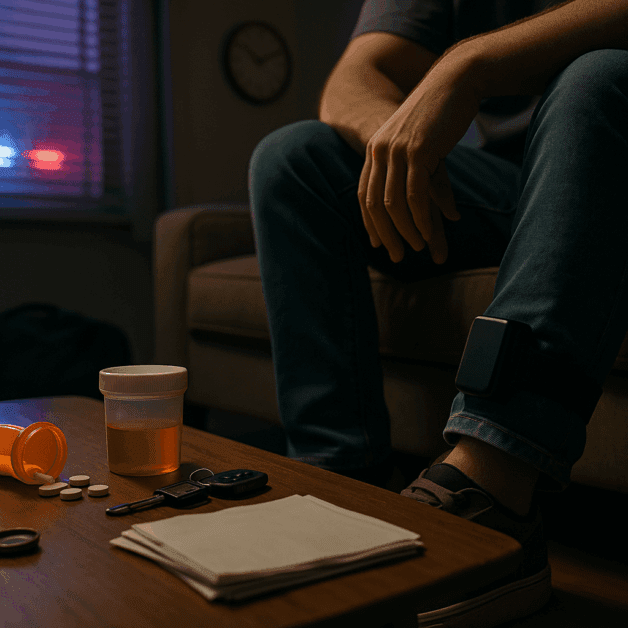
Probation Violations – The 5 Mistakes That Get People Sent Back
A probation violation can send you back to jail immediately, often with no new criminal conviction required. Most revocations stem from avoidable missteps like missed check-ins, failed drug tests, unpaid fees, new arrests, or breaking special conditions. This article explains the five most common mistakes that trigger probation violations, how the process works, and what to do to protect your freedom.
What You Need to Know About Probation and Why It Matters
Probation gives people a chance to stay out of jail while serving their sentence in the community. It sounds like a good deal — and it is. But it comes with strict rules, and breaking those rules can land someone back behind bars faster than they might expect.
Every year, thousands of people on probation make mistakes that result in serious legal consequences. Some of these mistakes happen out of carelessness. Others come from a simple misunderstanding of what probation law actually requires. Either way, the result is often the same — a violation hearing, possible jail time, and a much harder road ahead.
This article breaks down the five most common mistakes that get people sent back to jail or prison. If you or someone you know is on probation, understanding these pitfalls could make all the difference.
How Probation Works in Simple Terms
When a judge sentences someone to probation instead of jail, they are essentially saying: “You can stay in the community, but you must follow these conditions.” Those conditions are not suggestions. They are legal requirements enforced through the criminal procedure system.
A probation officer monitors compliance. They check in regularly, review records, and can report violations to the court at any time. Once a violation is reported, the judge has the power to revoke probation and impose the original jail sentence — sometimes with added time.
The stakes are high. Legal compliance is not optional. And yet, people make avoidable mistakes all the time.
The 5 Mistakes That Most Often Lead to Probation Violations
1. Missing Check-Ins with the Probation Officer
This is one of the most common — and most preventable — mistakes. When someone fails to show up for a scheduled meeting with their probation officer, it raises an immediate red flag. Probation officers are required to report missed check-ins to the court, and judges take these absences seriously.
People sometimes miss appointments because of work, transportation problems, or simply forgetting. But probation law does not make exceptions for inconvenience. If a conflict arises, the only right move is to contact the probation officer as early as possible and reschedule.
Repeated missed check-ins can be treated as willful non-compliance, which makes violation consequences much worse. A single missed meeting might result in a warning. Multiple missed meetings often result in an arrest warrant.
2. Failing a Drug or Alcohol Test
Most probation agreements include a requirement to stay clean from drugs and alcohol. Testing is routine, and it is designed to catch violations. Even one failed test can trigger a violation hearing.
Some people mistakenly believe that certain substances will not show up on tests or that they will not be tested frequently. That kind of thinking leads to serious trouble. Drug testing under probation law is often random, meaning there is no predictable schedule to plan around.
It is also worth noting that prescription medications can sometimes cause false positives. If someone is taking prescribed medication, they should inform their probation officer in advance and keep documentation from their doctor. This protects them if questions arise about a test result.
3. Getting Arrested for a New Crime
Being arrested for a new offense while on probation creates a double problem. The person now faces the new criminal charge and a probation violation at the same time. Judges view new arrests as evidence that the person has not taken their probation conditions seriously.
Even a minor arrest — something that might result in a small fine for someone not on probation — can lead to much harsher violation consequences for someone under supervised release. Courts expect people on probation to stay out of legal trouble completely.
In many cases, the probation can be revoked before the new case is even resolved. The standard of proof at a probation violation hearing is lower than at a criminal trial. A judge does not need proof beyond a reasonable doubt to send someone back to jail. That lowers the bar significantly and increases the risk.
4. Leaving the Jurisdiction Without Permission
Probation conditions almost always include geographic restrictions. People on probation are typically required to stay within a specific county, state, or region. Leaving that area — even for a short trip — without getting prior approval from a probation officer is a clear violation.
This mistake catches people off guard more often than you might think. Someone gets invited to a family event in another state. They figure it is just a weekend trip and no one will notice. But probation officers do check, and travel records are easy to verify.
If someone needs to travel for work, family emergencies, or any other reason, the correct step is to request permission in writing ahead of time. Most probation officers will approve legitimate travel when asked properly. The mistake is not asking at all.
5. Failing to Pay Required Fines or Fees
Probation often comes with financial obligations. These can include court fines, supervision fees, restitution to victims, and program costs. Falling behind on these payments can be treated as a violation of probation terms.
Some people assume that financial hardship gives them a pass on these requirements. That is not always the case. While courts can sometimes make accommodations for people who genuinely cannot pay, the person must proactively communicate their situation to the court or their probation officer. Ignoring the payments and hoping the issue goes away is a serious mistake.
Staying current on payments — or at least showing a consistent good-faith effort — is part of legal compliance under probation law. Judges look at payment history when evaluating whether someone has been taking their obligations seriously.
What Happens at a Probation Violation Hearing
When a probation officer reports a violation, the court schedules a hearing. This is different from a regular criminal trial in several important ways:
- Lower burden of proof: The prosecution only needs to show that a violation probably occurred, not prove it beyond a reasonable doubt.
- No jury: A judge makes the decision alone.
- Fast process: These hearings move quickly compared to full criminal trials.
- Serious outcomes: The judge can revoke probation entirely, extend it, add conditions, or impose the original jail sentence.
Having a lawyer at a probation violation hearing is not just helpful — it can be the difference between staying free and going back to jail. An attorney can challenge the evidence, present mitigating factors, and negotiate with the prosecution.
How to Stay on the Right Side of Probation Law
Following probation conditions does not have to be complicated. It mostly comes down to a few basic habits:
- Keep every scheduled appointment with your probation officer.
- Stay away from drugs and alcohol if that is a condition of your probation.
- Avoid any situation that could lead to a new arrest.
- Always ask for permission before traveling outside your allowed area.
- Stay on top of all financial obligations and communicate openly if you are struggling to pay.
- Read your probation agreement carefully and know exactly what is required of you.
- Contact your attorney if you are unsure whether something could be considered a violation.
The criminal procedure system does not assume that violations are intentional. But it also does not offer much sympathy for careless mistakes. The conditions of probation exist for a reason, and courts expect them to be followed.
Final Thoughts
Probation is a real opportunity. It keeps people out of jail, allows them to maintain their jobs and family relationships, and gives them a chance to show the court that they can be trusted. But that opportunity disappears quickly when violations occur.
Understanding the most common mistakes is the first step toward avoiding them. The five issues covered in this article — missed check-ins, failed drug tests, new arrests, unauthorized travel, and unpaid fees — are all preventable with the right awareness and habits.
If you are currently on probation, take your conditions seriously. If you think you may have already violated a condition, speak with a criminal defense attorney right away. Acting quickly and honestly is almost always better than waiting and hoping the problem resolves on its own.
Legal compliance under probation law is not just about following rules. It is about protecting your freedom and your future.














