
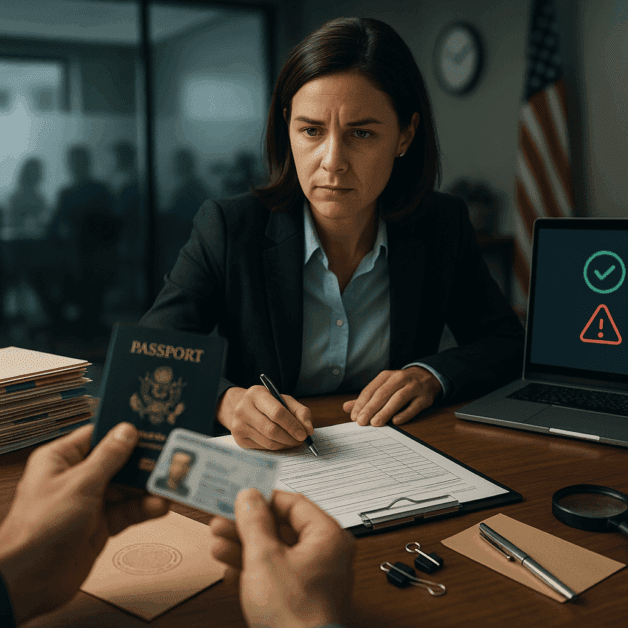
The Real Reason Your Employer Suddenly Needs an I-9 Audit
Many employers are ramping up I‑9 audits because ICE worksite enforcement and penalties for I‑9 paperwork violations can be significant—often hundreds to thousands of dollars per form—making noncompliance a costly risk. Recent enforcement trends, internal compliance programs, mergers, and remote‑work onboarding gaps are also prompting companies to review Form I‑9 records. This article explains what’s driving the sudden audit push, what employers are looking for, and how to respond without creating new liability.
What’s Behind the Sudden Push for I-9 Audits?
If your employer recently announced an I-9 audit, you might be wondering what prompted it. You are not alone. Across the country, businesses of all sizes are scrambling to review their employment verification records, and there are some very clear reasons why this is happening right now.
Understanding what drives these audits can help both employees and employers feel less anxious about the process. More importantly, it sheds light on why immigration compliance and employment verification have become top priorities for so many companies.
What Is an I-9 Form and Why Does It Matter?
The I-9 form is a document that every employer in the United States is legally required to complete for each person they hire. It verifies that an employee is authorized to work in the country. The form collects basic information and requires employees to provide specific documents proving their identity and work eligibility.
Employers must keep these forms on file and make them available for inspection if requested by federal authorities. Failing to maintain proper I-9 records can result in serious penalties, even if the employer had no intention of breaking the law.
The Real Reasons Your Employer Is Auditing I-9 Records
1. Increased Government Enforcement Activity
One of the biggest reasons employers are conducting internal I-9 audits is the rise in government enforcement. Federal agencies, particularly Immigration and Customs Enforcement (ICE), have significantly increased the number of worksite inspections and I-9 audits in recent years. When enforcement goes up, smart employers take a closer look at their own records before the government does it for them.
An employer who finds and corrects their own mistakes before an official audit is in a much better position than one who gets caught off guard. A self-audit gives companies the chance to fix problems voluntarily, which can reduce penalties significantly.
2. Avoiding Heavy Financial Penalties
Employer liability for I-9 violations is no small matter. Fines for paperwork errors alone can range from hundreds to thousands of dollars per violation. If an employer is found to have knowingly hired workers who are not authorized to work in the United States, the penalties are even steeper and can include criminal charges.
With fines that can quickly add up to hundreds of thousands of dollars, it makes financial sense for businesses to invest in a thorough review of their records. An I-9 audit is essentially a protective measure against potentially devastating financial consequences.
3. Changes in Company Ownership or Structure
When a company is acquired, merged with another business, or goes through major internal restructuring, I-9 compliance often becomes a pressing concern. New ownership inherits the legal responsibilities that come with existing employee records. If those records are incomplete or incorrect, the new owners can still be held liable.
This is why many mergers and acquisitions include an I-9 audit as part of the due diligence process. It is a way of understanding what potential legal risks are already baked into the business before the deal is finalized.
4. Shifts in Immigration Policy
Changes in national immigration policy directly affect how employers handle employment verification. When new rules are introduced or enforcement priorities shift, companies need to update their processes to stay compliant. An audit helps employers identify whether their current I-9 procedures still align with the latest legal requirements.
Immigration compliance is not a one-time task. It requires ongoing attention, and policy changes are one of the most common triggers for a full review of employment verification practices.
5. Industry-Specific Scrutiny
Certain industries tend to attract more attention from enforcement agencies than others. Construction, agriculture, hospitality, manufacturing, and food processing are among the sectors that have historically been subject to more frequent worksite inspections. If your employer operates in one of these industries, the audit may simply be a proactive response to the higher level of scrutiny that comes with the territory.
6. A Previous Violation or Warning
Sometimes an audit is not entirely voluntary. If a company has received a notice of inspection, a warning, or was previously cited for I-9 violations, conducting an internal audit is often a required or strongly recommended next step. Employers in this situation need to demonstrate that they have taken corrective action and put better processes in place.
7. Advice From Legal Counsel
Many employers conduct I-9 audits simply because their lawyers told them to. Employment attorneys regularly advise their clients to review I-9 records as part of a broader risk management strategy. It is standard legal advice, especially for companies that have not reviewed their records in a few years or that have recently gone through a period of rapid hiring.
What Happens During an I-9 Audit?
During an internal I-9 audit, the employer or a designated compliance officer reviews each I-9 form on file. They are looking for several common issues, including:
- Missing or incomplete forms for current and former employees
- Documents that were not properly verified or recorded
- Forms that were completed late or incorrectly
- Expired work authorization documents that were never re-verified
- Inconsistencies between the I-9 form and the employee’s actual documents
Once problems are identified, the employer can make certain corrections to the forms. Some errors can be fixed by adding a note and initialing the change. Others may require additional documentation from the employee. Serious issues may need to be reported or addressed with the help of legal counsel.
What Does This Mean for Employees?
If your employer asks you to participate in an I-9 audit, it does not automatically mean you are in trouble. In many cases, it simply means the company needs to update outdated information or correct minor administrative errors.
You may be asked to provide new or updated documents, especially if your work authorization was temporary and has since expired. It is important to respond promptly and provide accurate information. Ignoring the request or providing false documents can create much bigger problems than the original issue.
If you are unsure about what documents you need or whether your work authorization is still valid, speaking with an immigration attorney before responding to your employer is always a smart move.
How Employers Can Stay Ahead of I-9 Issues
Rather than waiting for a problem to surface, employers can take several practical steps to maintain ongoing immigration compliance:
- Conduct regular internal audits: Do not wait years between reviews. A yearly check of I-9 records helps catch errors before they become serious.
- Train HR staff consistently: The rules around I-9 verification can be confusing. Regular training ensures that everyone handling these forms knows what they are doing.
- Use E-Verify: While not required for all employers, E-Verify is an online system that allows employers to electronically confirm a new hire’s work authorization. It adds an extra layer of verification and documentation.
- Set up re-verification reminders: For employees with temporary work authorization, employers need a system in place to flag upcoming expiration dates and re-verify eligibility on time.
- Work with legal counsel: Having an employment attorney review your I-9 process can identify weaknesses you might not notice on your own.
The Bottom Line on I-9 Audits
An I-9 audit is rarely a sign of panic. More often, it is a sign that an employer is taking their legal responsibilities seriously. With enforcement activity on the rise and employer liability for I-9 violations remaining significant, conducting a thorough review of employment verification records is simply good business practice.
Whether it is driven by government pressure, a change in company structure, shifting immigration policy, or straightforward legal advice, the goal of an I-9 audit is the same: to make sure the company is playing by the rules and is protected from unnecessary risk.
If you are an employer, the time to find and fix problems is before a federal inspector shows up at your door. If you are an employee, understanding why these audits happen can help ease any concerns you might have about the process. Either way, immigration compliance is not something to put off until tomorrow.














