Who Is Responsible When a Driver Causes an Accident While Making a U-Turn?
A driver slows down, begins a U-turn, and crosses into the path of an approaching vehicle. The other driver brakes but cannot avoid the collision. Both drivers believe they had the right of way.
Who is responsible?
In California, a driver making a U-turn can be responsible for a collision if they fail to yield or make the turn where it is prohibited. However, fault is not automatic. The approaching driver’s speed, attention, and actions also matter.
U-turn accident liability in California depends on whether the maneuver was lawful, whether the turning driver yielded, and whether either driver contributed to the collision.
Understanding these factors helps explain why similar accidents can produce different liability decisions.
Who Is Usually at Fault in a U-Turn Accident?
A driver making a U-turn must ensure the maneuver can be completed safely.
The turn can require crossing lanes carrying approaching traffic. This creates a collision risk when a driver misjudges another vehicle’s speed or distance.
California Vehicle Code Section 21801 requires drivers making U-turns to yield to oncoming vehicles close enough to present a hazard. They must continue yielding until the maneuver can be completed with reasonable safety.
However, the law also addresses the approaching driver’s responsibilities.
Under Section 21801(b), once a turning driver has properly yielded and signaled as required, approaching drivers must yield to that vehicle.
This distinction matters when a driver begins a lawful U-turn after allowing approaching traffic to pass.
If another motorist subsequently approaches at an unsafe speed or fails to yield when required, that conduct could affect responsibility.
The point of impact alone does not establish which driver was negligent.
What Does California Law Say About Making a U-Turn?
California law restricts where U-turns can occur and establishes conditions for completing them safely.
Vehicle Code Section 22102 generally limits U-turns in business districts to intersections or designated openings on divided highways.
Section 22103 prohibits U-turns in residential districts when another vehicle is approaching from either direction within 200 feet. An exception applies at intersections where the approaching vehicle is controlled by an official traffic-control device.
Section 22105 prohibits U-turns on highways when the driver lacks an unobstructed view of traffic for 200 feet in both directions.
Signs, signals, and other traffic-control requirements can impose additional restrictions.
These rules help establish whether a driver acted negligently.
Someone injured in a disputed collision can consult a Santa Barbara car accident attorney to evaluate how California traffic laws and accident evidence affect responsibility.
A traffic violation can support a negligence claim, but it does not automatically resolve liability. The violation must be considered alongside the circumstances and its connection to the collision.
Can a Driver Be Liable Even If the U-Turn Was Legal?
A permitted U-turn is not necessarily a safe U-turn.
Even where the roadway allows the maneuver, drivers must follow right-of-way requirements and exercise reasonable care.
Consider a driver attempting a U-turn at an intersection without a prohibiting sign.
The driver sees an approaching vehicle but assumes there is enough time to complete the turn. The approaching vehicle reaches the intersection before the maneuver is finished, and the vehicles collide.
Although U-turns were permitted at that location, the turning driver’s failure to judge the available distance could establish negligence.
An investigation would examine whether a reasonably careful driver should have recognized the danger.
Relevant factors include traffic speed, visibility, lane configuration, and the time required to complete the maneuver.
The absence of a No U-Turn sign does not establish that the turn was performed safely.
What If the Other Driver Was Speeding or Distracted?
Approaching drivers have responsibilities too.
California motorists must obey applicable speed limits, remain attentive, and operate their vehicles with reasonable care.
Suppose a driver begins a U-turn after checking for approaching traffic. Another motorist approaches substantially faster than expected and strikes the turning vehicle.
The turning driver could have misjudged the situation, but the approaching driver’s speed might also have contributed.
Distraction presents a similar issue.
A motorist looking at a phone or failing to observe surrounding traffic could react too late to avoid a collision.
However, speeding or distraction must be established through evidence.
The fact that a driver failed to stop does not prove they were speeding or inattentive.
Investigators examine whether each driver’s actions contributed to the crash. This matters because California allows fault to be divided rather than requiring one person to bear all responsibility.
How Does California’s Comparative Fault Rule Apply?
California follows a pure comparative negligence system.
An injured person’s compensation is reduced according to their percentage of responsibility for an accident.
The California Supreme Court adopted this approach in Li v. Yellow Cab Co. (1975).
For example, suppose a U-turn accident results in $100,000 in legally recoverable damages.
The evidence establishes that the turning driver was 80% responsible for failing to yield. The approaching driver was 20% responsible for traveling at an unsafe speed.
If the approaching driver pursues compensation, their recovery would be reduced by 20%, resulting in $80,000 before considering other applicable issues.
California’s rule also allows an injured person to recover damages when their responsibility exceeds 50%, although compensation is reduced by their share of fault.
These percentages are not predetermined by the type of collision.
They depend on the evidence and each driver’s conduct.
What Evidence Can Help Establish Responsibility?
U-turn accident investigations can involve conflicting accounts.
One driver might claim the roadway was clear when the turn began. The other might insist there was no reasonable opportunity to avoid the collision.
Evidence can help establish the sequence of events.
Useful information includes:
- Traffic camera or surveillance footage: Video showing vehicle movements before the collision.
- Dashcam recordings: Footage capturing the U-turn, approaching traffic, or traffic signals.
- Witness statements: Independent observations about speed, visibility, and driver behavior.
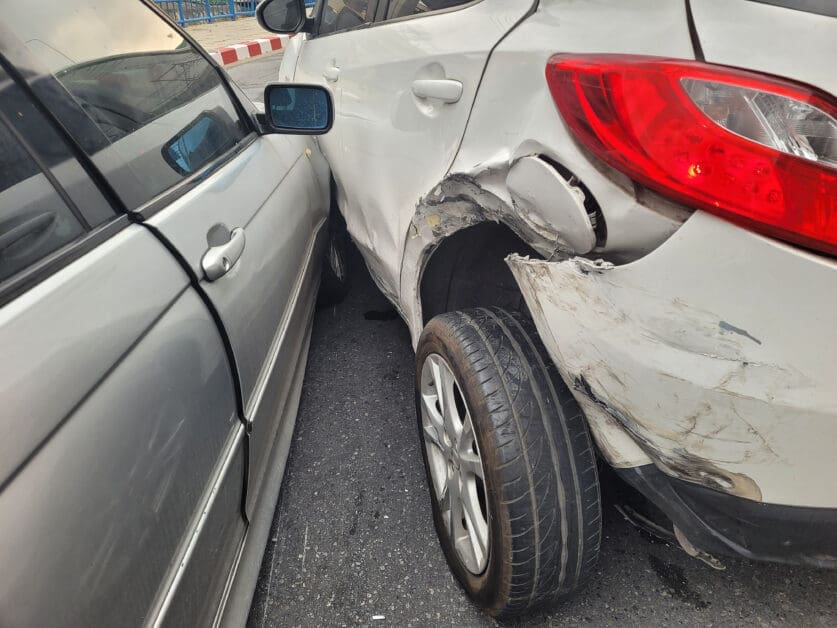
- Vehicle damage: Impact locations and damage patterns considered alongside other evidence.
- Scene photographs: Images of lane markings, signs, sight obstructions, and road conditions.
- Electronic vehicle data: Available information about speed, braking, or other vehicle activity.
A police collision report can document observations, statements, and suspected traffic violations.
However, an officer’s conclusions do not automatically determine civil liability.
The evidence must be evaluated together to establish how the collision occurred and whether a driver’s conduct caused the resulting injuries.
Can Road Conditions or Visibility Affect Fault?
Roadway conditions influence whether a U-turn can be completed safely.
Curves, hills, parked vehicles, landscaping, and other obstructions can limit visibility.
California Vehicle Code Section 22105 prohibits U-turns on highways unless the driver has an unobstructed view for 200 feet in both directions.
A driver attempting a U-turn near a blind curve could create a foreseeable collision risk.
Weather and lighting also matter.
Heavy rain, darkness, or glare can make it difficult to judge another vehicle’s speed and distance.
These conditions do not eliminate the duty to drive carefully. Instead, they can require additional caution.
In certain circumstances, roadway design or traffic-control conditions could raise separate questions about responsibility. Claims involving public agencies require additional legal analysis.
The central issue remains whether the drivers responded reasonably to the conditions they encountered.
What Happens When Both Drivers Disagree About the Collision?
Drivers can remember the same accident differently.
The turning driver might believe the approaching vehicle was far enough away. The other driver might say the U-turn began suddenly, leaving no time to react.
Insurance companies review the available evidence when evaluating responsibility, but their conclusions can differ.
One insurer might assign primary fault to the turning driver. Another might argue that the approaching driver contributed through excessive speed or distraction.
A disagreement does not automatically require litigation.
Additional photographs, video recordings, witness information, or accident reconstruction evidence can help clarify what happened.
If the dispute cannot be resolved through negotiation, liability can become an issue in court.
The outcome depends on the evidence rather than which driver provides the more confident account.
How Can an Injured Driver Pursue Compensation?
A person injured in a U-turn collision can pursue compensation when another party’s negligence caused the accident and resulting losses.
Depending on the circumstances, recoverable damages can include medical expenses, lost income, property damage, and pain and suffering.
Serious injuries can involve future medical treatment or reduced earning capacity.
The injured person must establish the connection between the collision and the claimed damages.
Medical records, employment documentation, repair estimates, and other evidence can support those losses.
California generally provides two years to file a personal injury lawsuit, although exceptions and different deadlines can apply. Claims involving public entities can have substantially shorter administrative claim deadlines.
Preserving relevant evidence early is important because video recordings, witness information, and physical evidence can become harder to obtain.
An attorney can evaluate disputed fault, insurance coverage, and the damages supported by the available evidence.
Understanding Responsibility After a U-Turn Accident
U-turn accident liability in California is not determined solely by which vehicle was turning.
The turning driver must follow traffic restrictions and yield when approaching vehicles present a hazard. Once the driver has properly yielded and signaled, approaching motorists also have right-of-way responsibilities.
When both drivers contribute to a collision, California’s comparative negligence rule allows responsibility to be divided according to fault.
Determining liability requires examining the traffic laws, vehicle movements, roadway conditions, and available evidence.
For someone injured in a disputed U-turn collision, a legal evaluation can help clarify responsibility and determine what compensation the evidence supports.
Published with permission from Galine, Frye, Fitting & Frangos Law Firm – California