
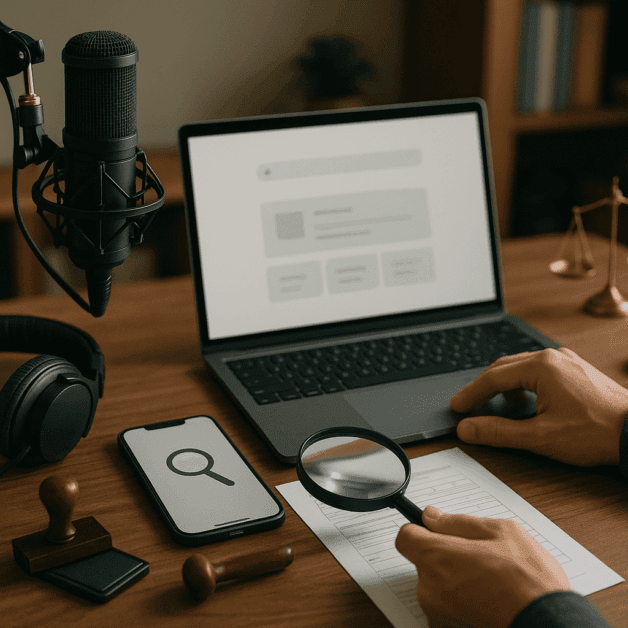
Your Podcast Name Might Be Trademarked by Someone Else — Here’s How to Check
You can check if a podcast name is trademarked in minutes by searching the USPTO’s TESS database for identical and confusingly similar marks. A clearance search helps avoid infringement claims, takedowns, and costly rebrands before you publish. This article explains how to search, what results mean, and when to consult a trademark attorney.
Why Your Podcast Name Could Already Belong to Someone Else
You spent weeks brainstorming the perfect name for your podcast. It feels original, it rolls off the tongue, and you’re ready to hit record. But before you launch, there’s one important step that most new podcasters skip entirely — checking whether that name is already trademarked by someone else.
This isn’t a rare problem. With millions of podcasts now available across platforms like Spotify, Apple Podcasts, and Amazon Music, the chances of accidentally using a name that’s already been claimed — legally or informally — are higher than ever. And the consequences can range from a cease-and-desist letter to having your entire podcast taken down after you’ve built an audience around it.
Understanding the basics of trademark law doesn’t require a law degree. It just requires knowing where to look and what to look for.
What Is a Trademark and Why Does It Matter for Podcasters?
A trademark is a word, phrase, symbol, or design that identifies the source of a product or service. When someone registers a trademark, they get the legal right to use that name or brand within a specific industry or category — and they can take action against others who use something confusingly similar.
Podcasts fall under the category of entertainment services and media content, which means podcast names can absolutely be trademarked. If someone has registered the name of their podcast as a trademark, they have legal protection over it in that space. Using a similar or identical name — even innocently — could put you at risk of a trademark infringement claim.
Here’s what makes this tricky for podcasters:
- You don’t have to file a formal registration for a trademark to exist. Common law trademark rights can develop simply through consistent use of a name in commerce.
- A name doesn’t have to be identical to yours to cause a legal problem — it just has to be close enough to confuse listeners.
- Trademark disputes can be expensive and time-consuming, even if you’re ultimately in the right.
How to Search for Existing Trademarks
The most important tool available for checking registered trademarks in the United States is the USPTO’s TESS database — the Trademark Electronic Search System. It’s free to use and contains records of all federally registered trademarks and pending applications.
Here’s how to use it effectively:
- Go to the USPTO website at tmsearch.uspto.gov and access the TESS search tool.
- Search for your exact podcast name first. Use the “Basic Word Mark Search” to enter your proposed name and see if any direct matches come up.
- Search for similar names. Try variations, abbreviations, and phonetic equivalents of your name. A trademark that sounds like yours can still be a legal problem.
- Look at the class of goods and services. Trademarks are registered in specific categories. For podcasts, you’ll want to focus on Class 38 (broadcasting and communication services) and Class 41 (entertainment and education services).
- Check the status of each result. A trademark that was once registered but has since been abandoned may not be a threat, but an active registration is a red flag.
If you’re outside the United States, similar databases exist in other countries. The European Union Intellectual Property Office (EUIPO) maintains a searchable database for EU trademark registrations, and the World Intellectual Property Organization (WIPO) offers a global brand database that covers international filings.
Don’t Stop at Official Databases
Trademark databases only show you registered or pending marks. They won’t show you every podcaster who might have common law trademark rights based on actual use. This is where your search needs to go beyond official records.
Here are additional places you should check:
- Podcast platforms: Search your proposed name on Spotify, Apple Podcasts, and Google Podcasts. If someone is already using that name for an active show, they may have common law rights to it even without a formal registration.
- Social media platforms: Search Instagram, Twitter/X, Facebook, TikTok, and YouTube for your proposed name. An established presence under that name can signal prior use in commerce.
- Domain name registries: Use a domain search tool to see if a website with your podcast name is already registered. While this alone doesn’t prove trademark use, it’s another indicator that someone got there first.
- Google search: A basic internet search can surface a lot. Look for shows, brands, or businesses using the name in a context that overlaps with yours.
The goal here is to build a full picture of the landscape. Even if someone doesn’t have a registered trademark, their prior use of a name in your space can still cause complications — both legally and from a branding perspective.
What Happens If You Find a Conflict?
Finding a potential conflict doesn’t automatically mean you can’t move forward. It means you need to think carefully and, in some cases, get professional advice. Here’s how to approach it:
If the name is identical or very similar to an active registered trademark in the same category: This is the most serious situation. You should strongly consider choosing a different name. Proceeding could expose you to a formal infringement claim, and rebranding after you’ve built an audience is much more painful than doing it before you launch.
If the name is similar but in a completely different industry: This is more nuanced. Trademark protection is generally tied to specific categories of goods and services. A podcast called “Ironclad” probably won’t conflict with a hardware company called “Ironclad” — but it might conflict with another media or entertainment brand using the same name. This is where consulting a trademark attorney can help you assess the actual risk.
If an active podcast is using the name without a registered trademark: Common law rights are real but limited. The person using the name has protection in the geographic areas and channels where they’ve built their audience. If you’re planning to operate in a clearly different niche or region, the risk may be lower — but it’s still worth proceeding with caution and getting legal advice if you’re unsure.
Should You Register Your Own Podcast Name as a Trademark?
Once you’ve confirmed your name is clear, you might want to take the next step and register it yourself. This gives you much stronger legal protection than simply using the name without registration.
Registering a trademark in the United States involves filing an application with the USPTO, paying a filing fee (which varies depending on the type of application), and going through an examination process that typically takes several months to over a year. If approved, your trademark gives you nationwide rights to the name within your registered categories.
The benefits of registration include:
- A public record that puts others on notice of your claim
- The legal presumption that you own the mark and have the exclusive right to use it
- The ability to use the ® symbol, which signals registered protection
- The ability to take legal action in federal court if someone infringes on your mark
- Protection against imports of infringing content through U.S. Customs
Many independent podcasters skip this step because of the cost and complexity. That’s a reasonable decision, especially in the early stages of a show. But if you’re building a brand with merchandise, live events, sponsorships, or other revenue streams, registration becomes much more important as a form of intellectual property protection.
Common Mistakes Podcasters Make with Branding and Trademark Law
Understanding what to avoid is just as important as knowing what to do. Here are some of the most common missteps in podcast branding and name protection:
- Assuming availability because the name isn’t on a podcast platform: Not being listed on Spotify doesn’t mean the name is legally available. Always check trademark databases separately.
- Waiting until launch to do any research: The time to check is before you invest in branding, artwork, domain names, and social media handles — not after.
- Choosing a name that’s a slight variation of a well-known brand: This can actually be more dangerous than accidentally using an obscure name. Large brands often have dedicated legal teams actively monitoring for infringement.
- Ignoring international markets: If you plan to distribute your podcast globally, you may want to check trademark availability in key markets beyond just your home country.
- Treating this as a one-time check: Trademark landscapes change. Someone could register a similar name after you’ve launched. Periodic monitoring of your brand name is a good habit to develop.
When to Bring in a Professional
Trademark law has a lot of nuance, and while the basic search steps outlined here are well within reach for any podcaster, there are situations where it really pays to consult a trademark attorney.
Consider getting professional help if:
- Your search turns up results that are similar but not identical, and you’re not sure how much risk they represent
- You’re planning to build significant commercial activity around your podcast name
- You want to file a trademark registration and want to do it correctly the first time
- You’ve received a cease-and-desist letter from another party claiming rights to a name
- You’re acquiring an existing podcast and want to understand what intellectual property rights come with it
Many trademark attorneys offer flat-fee services for searches and registrations, which makes the cost more predictable. The investment is usually small compared to the cost of rebranding or dealing with a legal dispute later.
Protecting Your Podcast Brand for the Long Term
Building a podcast is an investment of time, energy, and often money. Your name is the foundation of that investment. It’s the thing people search for, talk about, and recommend to others. Protecting it isn’t just a legal formality — it’s a basic part of treating your podcast like a real brand.
The good news is that the tools to check trademark availability are free and accessible. The process doesn’t have to be intimidating. With a couple of hours of careful research before you launch, you can make sure the name you’ve chosen is actually yours to use — and set yourself up to protect it going forward.
Start with the USPTO database, extend your search to podcast platforms and social media, and be honest with yourself about what you find. If the coast is clear, move forward with confidence. If there are potential conflicts, address them early rather than hoping for the best. Your future audience — and your future self — will thank you for it.














