
Bodycam Footage Disappeared? Here’s the Motion Your Lawyer Should File.
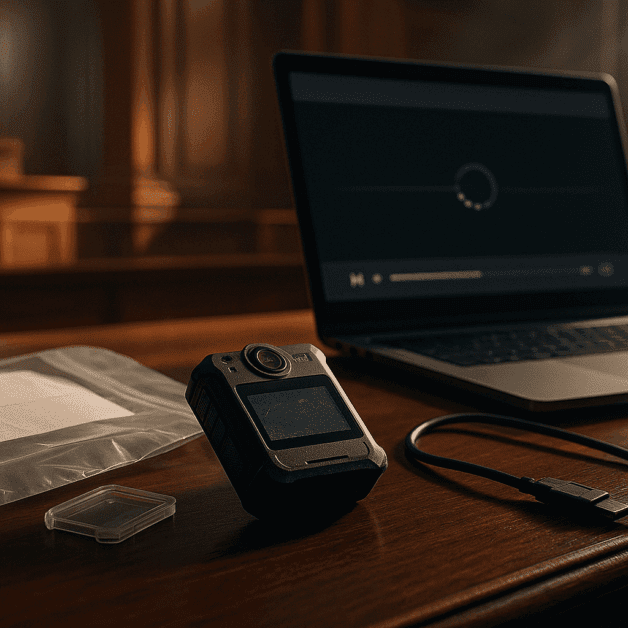
Your lawyer should file a motion to preserve and compel production of bodycam footage (and related metadata) and request spoliation sanctions if it was destroyed. Courts can order recovery efforts, adverse-inference instructions, or other remedies when evidence is lost after a duty to preserve. This article explains why footage disappears, what to request, and how to use the missing video in your case.
When Bodycam Footage Goes Missing
You were there. You know what happened. But now the police are saying the bodycam footage is gone, unavailable, or never recorded in the first place. If this sounds familiar, you are not alone — and you are not out of options.
Missing or destroyed bodycam footage is a serious issue in police accountability cases. Whether it disappeared due to “technical failure,” was overwritten, or was never preserved despite a clear obligation to do so, your attorney has a powerful legal tool to fight back: a discovery motion targeting that missing evidence.
This article breaks down exactly what that motion looks like, why it matters, and how it fits into a broader litigation strategy designed to hold law enforcement accountable.
Why Bodycam Footage Is So Important
Body-worn cameras were introduced largely as a transparency measure. They were meant to provide an objective record of police-citizen encounters. When that footage exists and tells the full story, it can make or break a case.
But when it disappears, two things become immediately relevant in evidence law:
- Was there a legal duty to preserve that footage?
- And what are the legal consequences of failing to meet that duty?
Courts have repeatedly recognized that evidence destruction — especially when it is convenient for the party that held it — raises serious red flags. The legal system has developed specific rules to deal with exactly this kind of situation.
The Legal Concept of Spoliation
The word “spoliation” refers to the destruction, loss, or significant alteration of evidence. Under evidence law, when a party destroys evidence that was relevant to a legal claim, courts can impose serious penalties.
In the context of missing bodycam footage, spoliation arguments are often the backbone of a strong discovery motion. Here is what your lawyer needs to establish:
- The evidence existed. Bodycam footage must have been recorded or should have been recorded under standard policy.
- The other party had a duty to preserve it. Once a complaint is filed, a lawsuit is threatened, or it is otherwise reasonably foreseeable that the footage would be needed in litigation, the duty to preserve kicks in.
- The evidence was destroyed or lost. This includes being overwritten, deleted, or simply “unavailable.”
- The loss was not accidental or in good faith. Courts look carefully at whether the destruction was negligent, reckless, or intentional.
When these elements are met, a court may impose what are called “spoliation sanctions” — punishments that can dramatically shift the outcome of a case.
What a Discovery Motion for Missing Bodycam Footage Looks Like
A well-crafted discovery motion in a case involving missing police footage typically serves several purposes at once. It is not just about getting the footage back — it is about creating a legal record and forcing accountability.
1. A Motion to Compel Production
The first step is often a motion to compel. This asks the court to order the police department or municipality to hand over all footage, metadata, storage logs, camera assignment records, and any documentation related to the footage in question.
Even if the footage is “gone,” the logs, upload records, and maintenance records may still exist. These documents can tell the story of what happened to the footage and when.
2. A Motion for Spoliation Sanctions
If the footage was destroyed or lost in violation of a preservation duty, your attorney should file a motion for spoliation sanctions. Depending on the jurisdiction and severity of the conduct, these sanctions can include:
- Adverse inference instructions: The jury is told they can assume the missing footage would have been unfavorable to the police.
- Evidence preclusion: The police may be barred from presenting certain evidence or arguments.
- Default judgment: In the most egregious cases, the court may rule in favor of the plaintiff outright.
- Monetary sanctions: The court may order the opposing party to pay attorney fees and costs.
These are not minor penalties. An adverse inference instruction alone can be devastating for the defense in a jury trial.
3. A Motion for an Evidentiary Hearing
In some cases, your lawyer may ask the court to hold a separate hearing specifically to examine what happened to the footage. Officers, IT staff, and records custodians can be compelled to testify under oath about the chain of custody and what steps, if any, were taken to preserve the recording.
This kind of hearing puts the responsible parties on the record — which can be powerful both in the current case and in future accountability efforts.
What Your Lawyer Should Ask For in Discovery
A strong litigation strategy does not stop at asking for the footage itself. Your attorney should submit detailed discovery requests that include:
- All camera assignment logs showing which officer wore which camera on the day of the incident
- All upload and sync records from the camera system
- Any “flagging” or hold notices that were issued — or should have been issued — for the footage
- Internal communications about the footage, including emails and text messages
- The department’s written bodycam policy and any records showing compliance or deviation from that policy
- Any prior incidents involving the same camera or officer where footage was also unavailable
This kind of thorough discovery request serves a dual purpose. It either produces evidence that strengthens your case, or it reveals a pattern of missing footage that raises even deeper concerns about police accountability.
The Role of Department Policies in Your Case
Most police departments have written policies governing bodycam use, storage, and retention. These policies often require footage to be uploaded within a certain time frame, flagged for legal holds when complaints are made, and retained for a minimum period.
When a department fails to follow its own policy, that failure becomes evidence in itself. Your lawyer can argue that the deviation from policy was negligent or intentional and that it directly resulted in the loss of material evidence.
Courts take this seriously. A department that adopts a transparency policy and then fails to follow it cannot simply shrug and move on — especially when someone’s legal rights are at stake.
Federal Rules and Local Procedures Matter
The specific motions your attorney files will depend on whether you are in federal or state court, and the rules governing each jurisdiction. Under the Federal Rules of Civil Procedure, Rule 37(e) specifically addresses the failure to preserve electronically stored information — which includes digital video footage.
Under Rule 37(e), if a party failed to take reasonable steps to preserve electronically stored information, and it cannot be restored or replaced, a court may:
- Order measures to cure the prejudice caused to the opposing party
- Instruct the jury that it may draw adverse inferences, if the court finds the loss was intentional
Many state courts have adopted similar frameworks. Your attorney needs to know the specific rules of the jurisdiction where the case is filed and craft the motion accordingly.
Building a Stronger Case Even Without the Footage
Missing footage does not mean a missing case. In fact, the absence of footage — when it should have existed — can itself become a central part of your narrative at trial.
Here is how a smart litigation strategy turns missing evidence into a talking point:
- Witness testimony: Bystanders, passengers, and other witnesses who saw the incident can fill in the gaps.
- Other camera sources: Security cameras from nearby businesses, traffic cameras, and cell phone footage from bystanders may have captured what the bodycam did not.
- Dispatch records and audio: Radio communications and 911 call recordings can establish what officers said and when.
- Medical records: Physical injuries are their own form of evidence and tell a story the footage would have supported.
- Expert testimony: Technology experts can speak to whether the claimed technical failure was plausible or suspicious.
Taken together, this evidence can paint a compelling picture — even in the absence of video.
Why This Matters Beyond Your Individual Case
Police accountability is not just a personal issue for the people directly involved in an incident. Every time a court holds a department responsible for missing footage, it sends a message that evidence destruction has consequences.
Discovery motions that succeed in these cases create legal precedent and public records. They put pressure on departments to take their own policies seriously. And they make it harder for the next department to claim that footage simply “disappeared” without scrutiny.
In this sense, the motion your lawyer files is more than a procedural tool. It is a statement that accountability matters and that the legal system has real mechanisms to enforce it.
What You Should Do If You Are in This Situation
If you believe bodycam footage of your encounter with police has been lost, destroyed, or withheld, time matters. Here is what you should do:
- Contact a lawyer immediately. The earlier a preservation demand letter is sent, the harder it becomes for the department to claim the footage was lost before any obligation to save it arose.
- Document everything you remember. Write down every detail of the encounter while your memory is fresh. Include names, badge numbers, times, and what was said.
- Gather any available evidence. Reach out to potential witnesses, look for nearby security cameras, and preserve any physical evidence you have.
- File a public records request. In many states, you can request bodycam footage under public records or freedom of information laws, which can help establish when the footage went missing and who handled it.
- Do not wait. Evidence retention periods vary, and footage can be overwritten if no hold is placed on it. Acting quickly can make a real difference.
The Bottom Line
When bodycam footage disappears, it does not have to mean the end of your case. Evidence law gives courts real power to address the loss of important evidence, and a well-crafted discovery motion can shift the dynamics of your case significantly.
The key is having a lawyer who understands not just how to ask for the footage, but how to use its absence as part of a larger litigation strategy. Spoliation arguments, adverse inference requests, and thorough discovery demands are all tools that exist for exactly this kind of situation.
Accountability does not end when a video file gets deleted. With the right legal approach, the deletion itself becomes part of the story — and part of the case.














