
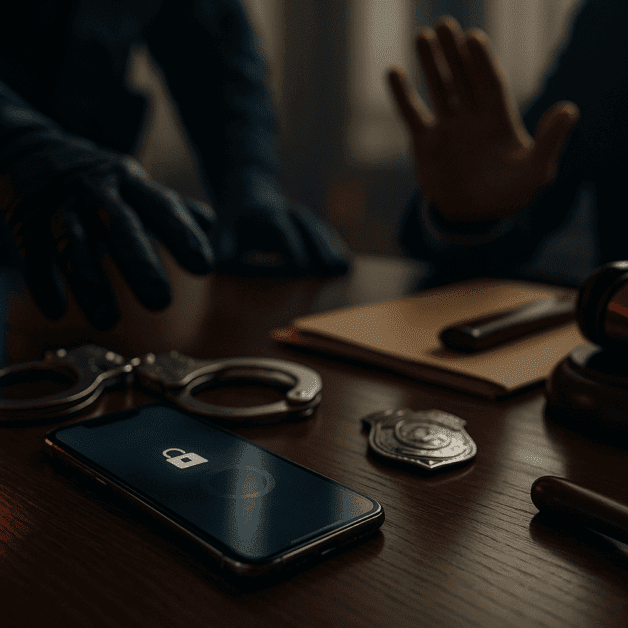
Can Police Search Your Phone Without a Warrant? 2026’s New Answers
In most cases, police need a warrant to search the contents of your phone in 2026, with consent and a few narrow exceptions. Officers may seize a phone temporarily, but searching messages, photos, or apps generally requires judge approval under Fourth Amendment rules. This article explains the latest standards, common exceptions, and steps to protect your rights.
What You Need to Know About Your Phone and Police Searches in 2026
Your smartphone holds your entire life — your messages, photos, bank accounts, medical records, and private conversations. So what happens when a police officer asks to look through it? Can they just take it and start scrolling? The answer has changed a lot over the years, and 2026 brings some important new developments worth understanding.
Whether you’ve been pulled over, arrested, or simply stopped on the street, knowing your digital privacy rights is no longer optional. It’s essential. Let’s break this down in plain, simple terms so you know exactly where you stand.
The Basic Rule: Police Generally Need a Warrant
The short answer is this — in most situations, police cannot search your phone without a warrant. This protection comes from the Fourth Amendment of the U.S. Constitution, which guards Americans against “unreasonable searches and seizures.”
The landmark 2014 Supreme Court case Riley v. California made this crystal clear. The Court ruled unanimously that law enforcement must obtain a warrant before going through the contents of a cell phone seized during an arrest. Chief Justice John Roberts famously wrote that cell phones are “not just another technological convenience” but rather hold “the privacies of life.”
That ruling was a huge win for digital privacy. But like most legal rules, it comes with exceptions — and those exceptions are where things get complicated.
When Can Police Search Your Phone Without a Warrant?
Even with Riley v. California as the standard, there are specific situations where law enforcement may legally access your phone without getting a warrant first. Here are the most common ones:
- Your Consent: If you voluntarily hand over your phone or say “go ahead,” you’ve waived your Fourth Amendment protection. Police are allowed to ask for your consent, and many people give it without realizing they don’t have to.
- Exigent Circumstances: If officers believe there’s an immediate emergency — like someone’s life is in danger or evidence is about to be destroyed — they may search without waiting for a warrant.
- National Security and Border Searches: Customs and Border Protection (CBP) agents have broad authority to search devices at ports of entry, including airports and land borders, without a warrant in many cases.
- Third-Party Data: Information you’ve already shared with apps, companies, or social media platforms may be accessed through those companies without directly searching your device.
- Probation or Parole Conditions: People on probation or parole often have reduced privacy rights as part of their supervision terms.
What’s Changed in 2026?
Digital privacy law continues to evolve rapidly, and 2026 has brought several notable shifts in how courts and lawmakers are approaching phone searches and warrant requirements.
Stronger State-Level Protections
Several states have passed or strengthened laws that go beyond federal protections. States like California, Illinois, and Colorado have introduced stricter rules requiring law enforcement to obtain warrants even in situations where federal law might allow exceptions. If you live in one of these states, your digital privacy protections may be stronger than the federal baseline.
Geofence Warrants Under Scrutiny
One of the biggest ongoing debates involves so-called “geofence warrants.” These allow police to request data from companies like Google about every device that was in a specific location during a specific time window. In 2025, the Fourth Circuit Court of Appeals ruled that geofence warrants require strict limitations to be constitutional. In 2026, several other courts are following that lead, making it harder for police to use these broad digital dragnets.
AI-Assisted Searches and New Legal Questions
Police departments are increasingly using artificial intelligence tools to sift through digital data quickly. Courts in 2026 are wrestling with whether the use of AI to scan phone contents changes the legal analysis under warrant requirements. So far, judges have been cautious about letting automated searches substitute for proper judicial oversight.
Tighter Rules on Stingrays and Cell-Site Simulators
Stingrays are devices that mimic cell towers and trick your phone into connecting with them, allowing police to track your location. Multiple federal courts have now ruled that using these devices without a warrant violates the Fourth Amendment. New federal guidance issued in early 2026 reinforces that law enforcement agencies must apply for warrants before deploying these tools.
Can Police Force You to Unlock Your Phone?
This is one of the most frequently asked questions — and the answer depends on how your phone is locked.
Passcodes and Passwords
Courts have generally held that police cannot force you to reveal your passcode. This falls under the Fifth Amendment, which protects you from being compelled to be a witness against yourself. Giving up your passcode is considered “testimonial” — meaning it involves your knowledge — so it’s protected.
Biometrics: Fingerprints and Face ID
This is where things get murkier. Some courts have ruled that biometric unlocking (like a fingerprint or facial scan) is not “testimonial” in the same way a passcode is, because it’s more like a physical act than sharing knowledge. This means police may, in some jurisdictions, be able to compel you to unlock your phone with your fingerprint or face — especially if they already have a valid warrant.
However, in 2025 and into 2026, more courts have begun pushing back on this. Several rulings have extended Fifth Amendment protection to biometric unlocking, arguing that the outcome — giving police access to your private data — is functionally the same regardless of the method used.
What About Your Data Stored in the Cloud?
Here’s something many people overlook: even if police can’t directly search your phone, they can sometimes get your data another way — by going to the cloud.
Under the Electronic Communications Privacy Act (ECPA) and related laws, law enforcement can send subpoenas or court orders to companies like Apple, Google, or Microsoft to obtain data stored on their servers. This includes emails, photos backed up to iCloud or Google Photos, and messages stored in cloud services.
The warrant requirements for this type of data access have been strengthened in recent years, but the process still largely happens behind the scenes and without direct notification to you.
Border Searches: A Different Set of Rules
If you’re entering or leaving the United States, the rules change significantly. The government has long claimed broad authority to search travelers and their belongings at the border without a warrant — and courts have largely upheld this when it comes to devices.
CBP agents can and do ask travelers to unlock their phones. You have the right to refuse, but doing so could result in your device being confiscated for further inspection. This is a gray area that courts are still actively sorting out, and it’s especially relevant for journalists, lawyers, and activists who may carry sensitive information.
In 2026, advocacy groups continue to push for clearer legal protections for travelers, but Congress has not yet passed comprehensive legislation addressing this issue.
Your Practical Rights: What to Do If Police Ask to Search Your Phone
Knowing the law is one thing. Knowing what to do in the moment is another. Here’s a straightforward guide:
- Stay calm and be polite. Being respectful doesn’t mean giving up your rights.
- Do not hand over your phone voluntarily. Clearly and calmly say, “I do not consent to a search of my phone.”
- Ask if you are free to leave. If you’re not under arrest, you may be free to walk away.
- Do not resist if police take your phone. If they seize it by force and you believe it’s unlawful, you can challenge it in court later. Resisting in the moment can escalate the situation dangerously.
- Don’t unlock your phone or provide your passcode. Politely decline and explain you’re exercising your Fifth Amendment rights.
- Contact a lawyer as soon as possible. If your phone has been seized, an attorney can help you challenge the search or demand its return.
Why Digital Privacy Matters More Than Ever
We carry more personal information on our phones than most people kept in their entire homes just a generation ago. Your phone knows where you sleep, who you love, what you believe, and what you’re afraid of. That’s not an exaggeration — that’s just what modern smartphones do.
The courts, lawmakers, and law enforcement agencies are all racing to catch up with technology that moves faster than legal systems were designed to handle. That means there are gaps, contradictions, and unanswered questions in the law right now.
Understanding your basic rights — that police generally need a warrant, that you don’t have to consent, and that you have the right to stay silent — puts you in a much stronger position, no matter where the law ends up next year.
The Bottom Line
Police searching your phone without a warrant is generally not allowed under the Fourth Amendment, thanks in large part to the Supreme Court’s ruling in Riley v. California. But exceptions exist, the law varies by state, border searches operate differently, and 2026 continues to bring new court decisions and legislation that shape these rules.
Stay informed, know your rights, and remember: you do not have to consent to a phone search. That simple decision can make a major difference if you ever find yourself in that situation.
This article is for informational purposes only and does not constitute legal advice. If you are facing a specific legal situation, consult a qualified attorney in your jurisdiction.














