
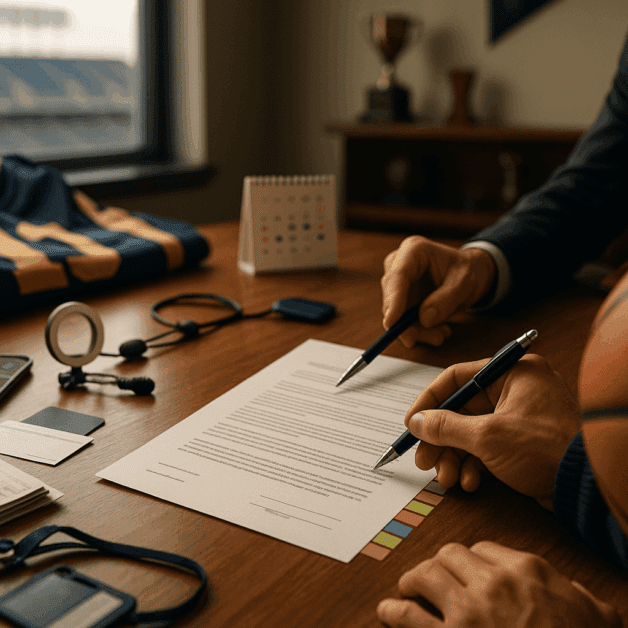
NIL Deals for Student Athletes – The 12 Clauses That Really Matter
The 12 most important NIL contract clauses cover payment terms, deliverables, exclusivity, IP rights, term/termination, and compliance. Student-athletes should confirm school/NCAA/state policy alignment and ensure clear scope, approval, and dispute terms before signing. This article explains each clause, red flags to avoid, and what to negotiate for safer NIL deals.
What Every Student Athlete Needs to Know Before Signing an NIL Deal
The world of college sports changed forever when the NCAA opened the door to Name, Image, and Likeness (NIL) deals. For the first time, student athletes can now earn real money from endorsements, sponsorships, social media partnerships, and more — without losing their eligibility. But with opportunity comes risk, especially when you are signing a legal contract for the first time.
NIL contracts are not simple documents. They are binding legal agreements that can affect your income, your reputation, your eligibility, and even your future career. Many student athletes sign deals without fully understanding what they are agreeing to. That can lead to serious problems down the road.
This article breaks down the 12 most important clauses you will find in NIL contracts. Understanding these sections before you sign could save you from costly mistakes and help you build a stronger foundation for your athletic and professional future.
A Quick Look at NIL Rights and Sports Law
NIL rights refer to an athlete’s ability to profit from the use of their name, image, and likeness. Before 2021, NCAA rules strictly prohibited this. After legal pressure and a landmark Supreme Court ruling, the NCAA updated its policies, and individual states began passing their own NIL laws.
Because NIL is still a relatively new area of sports law, the rules continue to change. State laws vary widely. Some schools have compliance offices that help athletes navigate deals, while others offer little support. This is why understanding the actual contract language matters so much. You cannot rely on outside guidance alone.
The 12 Clauses That Really Matter in NIL Athlete Contracts
1. Scope of Rights Granted
This clause defines exactly what the company is paying for. It outlines which aspects of your name, image, and likeness they are allowed to use. This could include your photo, your voice, your social media handle, video footage, or your signature.
Pay close attention to how broad this language is. Some contracts grant very wide rights that allow the brand to use your image in ways you never expected. A narrow and specific scope of rights protects you better.
- Does the deal cover only social media posts or also television commercials?
- Can they use your image in print ads or billboards?
- Are they allowed to use old photos or only new content you create?
2. Exclusivity Terms
An exclusivity clause tells you whether you are allowed to work with competing brands during the term of the contract. If a deal is exclusive, you may be locked out of other sponsorship opportunities in that same product category.
For example, if you sign an exclusive deal with a sports drink company, you probably cannot accept another offer from a competing beverage brand. This could cost you significant income if a better offer comes along later.
Always negotiate exclusivity carefully. If you agree to it, make sure the compensation reflects the lost opportunity. Limited exclusivity — restricted only to direct competitors — is often a smarter approach.
3. Compensation Structure and Payment Terms
This section covers how much you will be paid, when you will be paid, and in what form. NIL deals can involve flat fees, per-post payments, royalties, free products, or a mix of all of these.
Key questions to ask about this clause include:
- Is payment tied to specific deliverables like posts or appearances?
- What happens if the brand delays payment?
- Are there performance bonuses or incentives?
- Will you receive cash, merchandise, or a combination?
Make sure payment timelines are clear and that there are consequences for late payments. Vague payment terms are one of the most common sources of disputes in athlete contracts.
4. Term and Duration
The term clause tells you how long the agreement lasts. This sounds simple, but it can have big implications. A deal that runs for two years might prevent you from working with other brands during that entire period.
Also look for automatic renewal language. Some contracts will renew automatically unless you send written notice to cancel within a specific window. Missing that window could lock you in for another full term without realizing it.
Short-term deals with renewal options are often better for student athletes who are still building their brand and don’t yet know where their career will take them.
5. Deliverables and Performance Requirements
This clause spells out exactly what you are expected to do. It might require a certain number of Instagram posts per month, attendance at specific events, podcast appearances, or the creation of other promotional content.
Be realistic about what you can deliver while also managing your academic schedule and athletic commitments. Failing to meet your deliverables could put you in breach of contract, which could trigger financial penalties or allow the brand to terminate the deal without paying you.
Make sure all expectations are listed clearly and that the timeline for completing each task is reasonable.
6. Approval Rights and Creative Control
Some brands want full control over the content you create. Others give you more freedom. This clause defines who gets to approve the final content before it goes live.
From a practical standpoint, you want to maintain as much creative control as possible. Content that feels authentic to your voice will perform better and protect your personal brand. Deals that require heavy editorial control from the brand can result in content that feels forced or out of character.
Look for language that gives you at least some level of approval rights, and be cautious of clauses that allow the brand to create content using your likeness without your direct input or sign-off.
7. Morality and Conduct Clauses
Also known as morals clauses, these sections give the brand the right to terminate the contract if you engage in behavior they consider damaging to their reputation. This is one of the most hotly negotiated sections in sports law and for good reason.
These clauses can be written very broadly. A vague morals clause might allow a brand to cancel your deal based on a controversial social media post, an arrest, or even just bad press — regardless of whether you did anything actually wrong.
Try to negotiate specific language that clearly defines what conduct triggers this clause. You should also push for mutual morals clauses, meaning the brand must also behave in ways consistent with your values.
8. Disclosure and FTC Compliance
Federal law requires that sponsored content be clearly labeled as advertising. The Federal Trade Commission (FTC) has strict guidelines about how influencers and athletes must disclose paid partnerships on social media.
Most NIL contracts will include language requiring you to follow FTC disclosure rules. This is important because if you fail to disclose a paid partnership properly, you could face personal legal consequences — not just the brand.
Look for language that explains exactly how disclosures should be made and who is responsible for ensuring compliance. Never assume the brand will handle this for you.
9. NCAA and School Compliance
Even though the NCAA now allows NIL deals, specific rules still apply. Your school may also have its own policies that go beyond NCAA requirements. Some schools require athletes to report deals to the compliance office. Others may restrict certain types of deals entirely.
Your NIL contract should include language acknowledging that the deal complies with applicable NCAA rules and your school’s athletic department policies. If a deal later turns out to violate those rules, you could face eligibility consequences.
Before signing anything, run the deal by your school’s compliance office or a qualified sports law attorney. This step is not optional — it’s essential.
10. Intellectual Property Ownership
Who owns the content you create? This clause answers that question. It can also address things like your personal logo, your catchphrase, or any original creative work produced during the partnership.
Be careful about clauses that assign ownership of content to the brand after creation. Once you hand over intellectual property rights, you may not be able to use that content again — even for your own personal brand.
Ideally, you should retain ownership of the content you create and grant the brand only a limited license to use it during the term of the deal.
11. Termination Rights
Termination clauses explain how and when either party can end the contract early. This includes both the brand’s right to terminate and your own right to walk away.
Look for the following in this section:
- How much notice is required before termination?
- Can the brand terminate without cause?
- What happens to payment if the contract ends early?
- Are there penalties for early termination?
You want to make sure you have an exit path if something goes wrong — for example, if the brand becomes involved in a controversy that could harm your reputation. Without strong termination rights on your side, you could be stuck representing a brand that no longer aligns with your values.
12. Dispute Resolution and Governing Law
If something goes wrong with an NIL deal, how will the disagreement be handled? This clause answers that question. It typically specifies whether disputes will go to court or be handled through arbitration or mediation. It also identifies which state’s laws will govern the contract.
Arbitration can be faster and cheaper than going to court, but it also limits your legal options. Make sure you understand what you are agreeing to. If the brand is headquartered in another state, you may find yourself dealing with unfamiliar laws and legal processes.
Having a sports law attorney review this section is especially important, as the governing law clause can significantly affect the outcome of any legal dispute.
Tips for Negotiating NIL Athlete Contracts
Knowing what to look for is the first step. Knowing how to push back is the next. Here are a few practical tips for negotiating better terms in your NIL deals:
- Get everything in writing. Verbal agreements are nearly impossible to enforce. Make sure every promise the brand makes is reflected in the written contract.
- Work with a sports law attorney. An attorney who specializes in athlete contracts can spot red flags that you might miss and help you negotiate better terms.
- Know your value. Research what other athletes with similar followings and engagement rates are earning. Don’t accept the first offer without knowing your market worth.
- Don’t rush to sign. Pressure tactics are common in deal negotiations. Take the time you need to review the contract carefully before putting your name on it.
- Ask questions. If any clause is unclear, ask for clarification. Never sign a contract you don’t fully understand.
Common Mistakes Student Athletes Make with NIL Deals
Even with the best intentions, student athletes often make avoidable errors when entering NIL agreements. Being aware of these common pitfalls can help you stay protected.
- Signing without reading the full contract
- Accepting deals that conflict with NCAA or school rules
- Agreeing to overly broad exclusivity terms that block future income
- Ignoring FTC disclosure requirements
- Failing to keep records of all payments and communications
- Not reporting deals to their school’s compliance office
The Bottom Line on NIL Rights and Athlete Contracts
NIL deals represent a genuine opportunity for student athletes to build income and a personal brand while still competing at the college level. But the contracts behind these deals are serious legal documents. Every clause matters, and the details can make a significant difference in how a deal plays out.
Understanding these 12 key contract sections gives you a stronger foundation before you sit down at the negotiating table. Combined with proper legal support and school compliance guidance, this knowledge can help you make smarter decisions, protect your NIL rights, and set yourself up for long-term success — both on and off the field.
Take your time, ask for help when you need it, and never sign anything you don’t fully understand. Your name, image, and likeness have real value. Make sure your contracts reflect that.














