
Can You Sue an Algorithm for Pushing Your Kid Toward Self-Harm? A Jury Just Said Yes.
Yes—one jury returned a plaintiff verdict, finding a social media company financially liable for harms tied to its recommendation algorithm. That ruling signals parents may sue when algorithmic feeds allegedly push minors toward self-harm, though appeals and Section 230 defenses still matter. This article explains the verdict, legal theories, and what it means for future platform liability cases.
A Landmark Verdict That Could Change Social Media Forever
For years, parents have watched helplessly as their children spiraled into depression, anxiety, and self-harm — often tracing the turning point back to something they saw on a social media feed. They complained. They begged platforms to do something. Most of the time, nothing changed. Now, a jury has done something no court had done before: it held a social media company financially responsible for the harm its algorithm caused a child.
This verdict is not just a legal milestone. It is a signal that the way we think about algorithmic liability, teen protection, and social media harm is shifting — fast.
What Actually Happened in the Case
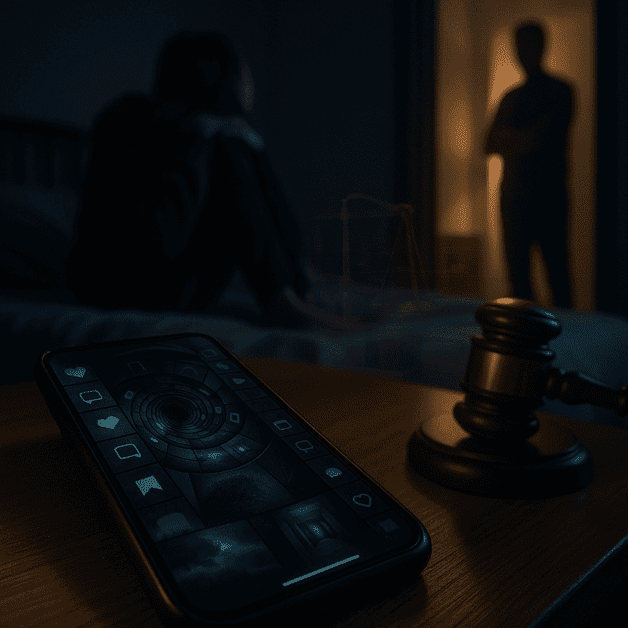
The case centered on a teenage girl who was repeatedly pushed content related to self-harm and suicide by a social media platform’s recommendation algorithm. Her family argued that the platform did not accidentally show her this content once or twice. Instead, its system learned what kept her engaged and fed her more of it — darker and darker material over time.
The family sued, claiming that the algorithm functioned like a machine designed to exploit a vulnerable child. They presented evidence showing that the platform’s own internal research had flagged similar risks to teens, particularly young girls, years before the incident. Despite knowing the dangers, the company did not make meaningful changes to protect users like their daughter.
After hearing the evidence, the jury sided with the family and awarded significant damages. It was a verdict that sent shockwaves through Silicon Valley and into courtrooms across the country.
Why This Case Is Different From Others
Social media companies have long shielded themselves behind a federal law known as Section 230 of the Communications Decency Act. This law generally protects online platforms from being held legally responsible for content that their users post. In plain terms, it meant that if someone posted harmful content and another person saw it, the platform was not the one you could sue.
But this case took a different angle. The argument was not that the platform created harmful content. The argument was that the algorithm — the system the company built and operated — actively chose to push that content to a vulnerable teenager again and again. That recommendation engine is not user-generated. It is a product the company designed, tested, and deployed on purpose.
This distinction matters enormously. Courts are beginning to recognize that there is a difference between hosting content and actively promoting it. When a platform uses its own technology to decide what a child sees next, it takes on a level of responsibility that a passive hosting service does not.
The Role of the Algorithm in Teen Mental Health
To understand why this verdict resonates so deeply, it helps to understand how recommendation algorithms actually work — and what they do to young users.
Social media platforms use algorithms to keep users on the app as long as possible. These systems track everything: what you pause on, what you like, how long you watch, what you skip. Over time, the algorithm builds a profile of your interests and emotional triggers and serves you content designed to keep you hooked.
For most adults, this might mean an endless scroll of cooking videos or sports highlights. For struggling teenagers, it can mean something far more dangerous. Research has shown that teens who are already feeling low are more likely to engage with content about depression, eating disorders, or self-harm. The algorithm picks up on this engagement and serves more of it. The cycle can accelerate quickly and quietly, often without parents having any idea what their child is seeing.
Here is what makes this especially troubling:
- Teenagers are still developing emotionally and are more susceptible to harmful content than adults.
- Algorithms do not have a conscience. They optimize for engagement, not wellbeing.
- Platforms have known about these risks for years, based on their own internal studies.
- Changes that would protect teens often reduce engagement, which reduces advertising revenue.
In short, the business model of many social media companies is at odds with the safety of their youngest users.
What the Jury’s Decision Means for Algorithmic Liability
The concept of algorithmic liability is still relatively new in the legal world. But this verdict pushes it firmly into the mainstream conversation. It tells companies that the tools they build and deploy can make them liable for the harm those tools cause — even if the harmful content itself came from another user.
Legal experts are calling this a potential turning point for several reasons:
- It pierces the Section 230 shield in a new way. By focusing on the algorithm as the product rather than the content, plaintiffs found a path that bypasses one of the tech industry’s most powerful legal protections.
- It puts the internal research in the spotlight. Companies can no longer claim ignorance. If their own data showed that the algorithm was harming teens, that evidence becomes powerful in court.
- It creates real financial consequences. Damages in cases like this are not just symbolic. Large verdicts get the attention of boards and shareholders in ways that public criticism often does not.
- It may encourage more lawsuits. Other families in similar situations now have a legal blueprint to follow.
The Damages Awarded and What They Signal
The damages in this case were substantial. Without going into the specific numbers, the award included both compensatory damages — meant to cover the real harm the family suffered — and punitive damages, which are designed to punish the company for its behavior and deter it from doing the same thing in the future.
Punitive damages are not handed out lightly. Juries award them when they believe a company acted recklessly or with knowing disregard for the safety of others. In this case, the jury clearly felt that the evidence met that bar. The company knew its algorithm could harm children. It continued using that algorithm anyway. That decision, in the eyes of the jury, deserved more than just a slap on the wrist.
This kind of financial punishment is exactly what many advocates have been calling for. When the cost of protecting users is lower than the cost of not doing so, companies have a strong incentive to make changes. Right now, for many platforms, the math has not worked out in favor of child safety. Verdicts like this one start to change that math.
How Social Media Companies Are Responding
Predictably, the platform at the center of this case has signaled plans to appeal. Their legal team argues that the verdict misapplies the law and that holding platforms responsible for algorithmic recommendations would have a chilling effect on free expression online.
Other social media companies are watching closely. Some have quietly begun updating their policies around teen users, adding more restrictions on the type of content that can be recommended to minors. Whether these changes are genuine or simply a response to growing legal and public pressure is a question that researchers and advocates are paying close attention to.
What is clear is that the industry can no longer afford to treat lawsuits over teen safety as a manageable cost of doing business. The legal landscape is shifting, and companies that do not adapt face growing exposure.
What Parents and Advocates Are Saying
For many families who have lived through the nightmare of watching a child harmed by social media content, this verdict feels like the first real moment of accountability. Parent advocacy groups have been fighting for years to get lawmakers and courts to take the issue seriously. Many of them see this jury decision as validation that the fight is not over.
Child safety advocates are urging several things in the wake of this verdict:
- Stronger federal and state laws that specifically address algorithmic harm to minors.
- Required transparency from platforms about how their recommendation systems work.
- Independent audits of algorithms to assess their impact on vulnerable users.
- Default safety settings for any account held by a user under 18.
These are not radical ideas. Many of them have already been implemented in some form in countries in Europe, where digital safety regulations for children are significantly stricter than in the United States.
The Bigger Picture: Who Is Responsible for What Kids See Online?
This case raises a question that society as a whole is still working through: if a company builds a system that harms a child, and the company knew it could cause harm, who is responsible?
The old answer was essentially no one — or at least, no one you could successfully sue. Section 230 made platforms nearly untouchable in civil court. But the legal creativity shown in this case, and the willingness of a jury to hold a company accountable, suggests that the old answer is no longer satisfying to the public.
We hold car manufacturers responsible when a design defect causes injury. We hold drug companies responsible when they hide evidence that their product is dangerous. The argument being made — and now supported by a jury — is that social media companies should face the same kind of accountability when their deliberately designed systems cause measurable harm to children.
What Comes Next
This verdict will almost certainly be appealed, and the legal fight is far from over. Higher courts will have their say, and the ultimate legal standard for algorithmic liability in cases involving teen protection and social media harm will likely take years to fully settle.
But something has shifted. A jury of ordinary people listened to the evidence, understood what an algorithm does, and decided that a company should pay real money for the harm it caused a real child. That is not a small thing.
More cases are being filed. More families are speaking out. More lawmakers are paying attention. And more platforms are being forced to reckon with the fact that their most profitable features may also be their most dangerous ones.
The question is no longer whether algorithms can cause harm to children. That has been established. The question now is whether the legal system, the tech industry, and society at large will act accordingly — or wait for more children to be hurt before doing something about it.














