
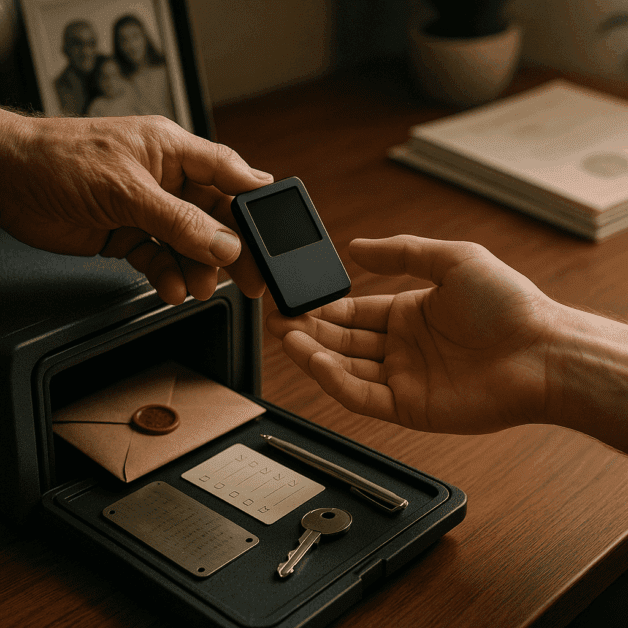
Crypto Inheritance – The Exact Steps to Pass Down a Cold Wallet
To pass down a cold wallet, heirs typically need 1) the device and 2) the seed phrase (12–24 words) plus any PIN/passphrase. Because blockchain assets bypass banks and courts without those credentials, you must document access and authority in an estate plan. This article outlines the exact legal and security steps to transfer a cold wallet safely.
Why Crypto Inheritance Is Different From Everything Else
When someone passes away, their bank accounts, property, and investments can usually be transferred to loved ones through a legal process. A lawyer gets involved, paperwork gets filed, and assets move from one person to another. It is not always simple, but there is a system in place.
Cryptocurrency does not work that way. A cold wallet — a physical device that stores your digital assets offline — does not care about a death certificate. It does not respond to a court order. If your family does not have the right information at the right time, everything stored on that device could be gone forever.
This is not a rare problem. Billions of dollars worth of cryptocurrency has already been permanently lost because owners died without leaving proper instructions. Planning your cryptocurrency estate is not just smart — it is necessary if you want your digital assets to actually reach the people you intend to leave them to.
Understanding What a Cold Wallet Actually Is
Before diving into the steps, it helps to understand exactly what your heirs will be dealing with. A cold wallet is a hardware device — something that looks similar to a small USB drive or a tiny calculator. Popular brands include Ledger, Trezor, and Coldcard.
The device itself does not actually store your cryptocurrency. Your coins live on the blockchain, which is a public digital ledger. What the cold wallet stores is your private key — a unique set of data that proves ownership and allows you to move funds. Without the private key, no one can access or transfer those assets.
The most important thing your heirs need is your seed phrase, also called a recovery phrase. This is a series of 12 to 24 ordinary words — things like “apple,” “river,” or “mountain” — that were generated when you first set up your wallet. Anyone who has those words, in the correct order, can restore your wallet on any compatible device and access everything inside it.
Think of the seed phrase as the master key. Lose it, and the assets are locked away forever. Give it to the right person at the right time, and your inheritance plan works exactly as intended.
Step 1 — Write Down Your Seed Phrase on Paper or Metal
Your first task is making sure your seed phrase is recorded somewhere permanent and physical. Never store it only in a digital file, in your email, or in a cloud service. Digital storage can be hacked, deleted, or become inaccessible.
Write your seed phrase by hand on paper first, then consider copying it onto a metal backup plate. Metal plates are fireproof and waterproof, which paper is not. Products like Cryptosteel or Bilodeau offer solid options for this purpose.
When writing down the phrase:
- Write each word clearly and in the exact correct order
- Number each word so there is no confusion
- Double-check the spelling of every single word
- Never take a photo of the phrase or type it into any device
Make at least two physical copies and store them in separate secure locations. This protects against fire, flood, or theft in any one location.
Step 2 — Store the Seed Phrase Securely and Separately From the Device
This step is critical and often skipped. Many people store their cold wallet device and their seed phrase in the same place. If someone finds or steals both, they have everything they need to take your funds. Worse, if there is a fire and both are destroyed together, your heirs have nothing to work with.
Keep the seed phrase and the physical device in different locations. Good options for storing your seed phrase include:
- A fireproof home safe
- A bank safety deposit box
- With a trusted attorney as part of your estate documents
- In a sealed envelope with a notary as a witness
Some people split the seed phrase into two parts and store each half in a separate location, requiring access to both parts to reconstruct the full phrase. This adds a layer of security but also adds complexity for your heirs, so make sure your instructions are extremely clear if you choose this method.
Step 3 — Write Clear Instructions for Your Heirs
Your family or designated heirs are likely not cryptocurrency experts. Even if they know what a seed phrase is, they may not know what to do with it. You need to write out a plain, step-by-step guide that anyone can follow.
Your instruction document should include:
- What type of cold wallet device you own and the brand name
- Where the physical device is located
- Where the seed phrase is located
- What cryptocurrencies are stored in the wallet
- How to set up a new device using the seed phrase
- Instructions on how to check the wallet balance
- Guidance on finding a reputable cryptocurrency exchange to convert assets if needed
- A note about consulting a tax professional, since selling inherited crypto may have tax implications
Write this document in plain language. Use simple numbered steps. Pretend you are writing instructions for someone who has never used a computer before. The clearer you are, the less chance of a costly mistake.
Step 4 — Include Crypto Details in Your Legal Estate Plan
A proper digital asset inheritance plan does not replace a legal will — it works alongside one. Talk to an estate attorney about your cryptocurrency holdings. Many attorneys now have experience with digital assets and can help you structure things properly.
Your legal will should mention that digital assets exist, but it should not include the actual seed phrase. A will becomes a public document in many places once it goes through probate. Putting your seed phrase in a public document would expose it to anyone who looks up the filing.
Instead, reference your cryptocurrency estate plan within your will. Something like: “I have digital assets documented in a separate letter of instruction stored with my attorney.” This keeps the legal process and the sensitive security information separate but connected.
You may also want to consider setting up a trust if your cryptocurrency holdings are significant. A trust can sometimes allow assets to pass to heirs without going through probate at all, which speeds up the process and keeps details private.
Step 5 — Choose the Right Person to Inherit or Manage the Wallet
Not every heir is the right person to receive a cold wallet directly. Managing cryptocurrency requires at least some technical comfort. If your spouse or child is not confident with technology, handing them a hardware device and a list of words may cause more confusion than help.
Consider whether your heir would benefit from:
- Having a trusted, tech-savvy friend or family member assist them
- Working with a professional digital asset manager or fiduciary
- Converting the cryptocurrency to cash through an exchange before or as part of the inheritance process
If you want your heirs to actually keep and hold the cryptocurrency rather than sell it, take the time to teach them the basics now, while you are still alive. Walk them through what a seed phrase is. Show them how the device works. Familiarity now means confidence later.
Step 6 — Keep Your Information Up to Date
Cryptocurrency estate planning is not a one-time task. Your holdings change. You might move funds to a new wallet, switch to a different device, add new currencies, or change where documents are stored. If your instruction document becomes outdated, it can cause just as much confusion as having no plan at all.
Set a reminder to review your inheritance documents at least once a year. Common times to review include:
- When you buy a new cold wallet device
- When you move funds between wallets
- After any major life change, such as marriage, divorce, or the birth of a child
- When you update your legal will or trust documents
Each time you review, make sure the physical locations of your device and seed phrase are accurate, your instruction document reflects your current holdings, and the right people know where to find everything.
What Happens If You Skip This Process
The consequences of poor planning are permanent. Unlike a bank account where a family can call customer service and work through a recovery process, there is no customer service for a cold wallet. There is no company to call. There is no password reset.
If someone dies without leaving their seed phrase, and no one can find it, the funds stay on the blockchain forever. They do not disappear — they just sit there, unreachable. This has already happened to a significant portion of all Bitcoin ever mined. Researchers estimate that millions of Bitcoin are permanently inaccessible for exactly this reason.
Beyond the loss of assets, your family could also face legal confusion. Some countries and states are still developing rules around digital asset succession. Without proper documentation, your heirs might not even be able to prove the cryptocurrency existed or was intended for them.
A Quick Summary of the Exact Steps
Here is a simple overview of the full process so you can see everything in one place:
- Write your seed phrase on paper and ideally also on a metal backup
- Store the seed phrase separately from your cold wallet device, in a secure location
- Write clear, plain-language instructions for your heirs explaining exactly what to do
- Work with an estate attorney to reference your crypto plan within your legal will or trust
- Choose the right person to manage or inherit the wallet, and educate them now if possible
- Review and update your plan at least once per year or after any major change
Taking Action Now Protects Your Legacy
Most people put off this kind of planning because it feels complicated or because thinking about death is uncomfortable. But the actual steps involved are not as difficult as they might seem. Writing down a seed phrase, drafting a simple instruction document, and having a conversation with an estate attorney can be done in a single afternoon.
The people you leave behind will already be dealing with loss. A clear, complete cryptocurrency estate plan means they will not also have to deal with confusion, frustration, and the heartbreak of watching a meaningful inheritance slip away because of missing information.
Your digital assets have real value. Treat them the same way you would treat a house, a savings account, or any other part of what you are leaving behind. Plan ahead, document everything, and give the people you love the best possible chance of receiving what you intended for them.














