
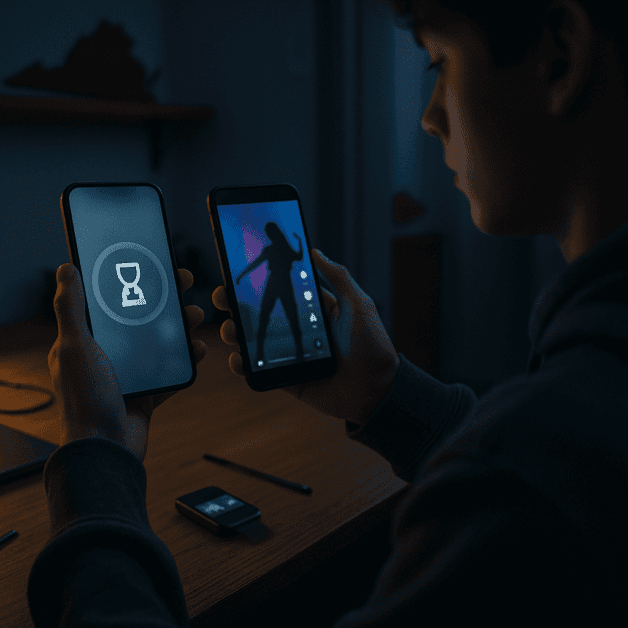
Virginia Teens Now Get 1 Hour of TikTok a Day — Here’s How Kids Are Already Hacking It
Virginia now limits teens to 1 hour of TikTok per day under a new social media rule. Early workarounds include using multiple accounts, reinstalling the app, or switching devices to reset or bypass time controls. This article explains what the law requires, how enforcement works, and how kids are already hacking it.
Virginia’s New Social Media Law for Teens
Virginia has become one of the first states in the country to put a hard limit on how much time teenagers can spend on platforms like TikTok. Under the new rule, teens are capped at one hour of TikTok use per day. The goal is straightforward — protect young people from spending too many hours scrolling through short videos and exposing themselves to content that may not be good for their mental health.
But here is the thing. Almost as soon as the rule went into effect, teens started finding ways around it. And many of them are sharing those methods openly online, which raises a very real question: does the law actually work?
What the Virginia Law Actually Says
Virginia’s social media legislation targets minors and focuses on screen time limits and age restrictions for platforms with addictive design features. The law requires platforms like TikTok to enforce daily time limits for users identified as teens. Once a teen hits that one-hour mark, the app is supposed to lock them out for the rest of the day.
Parents can also step in through parental control settings to monitor usage, set additional limits, or unlock more time if they choose. The law puts some responsibility on the platforms themselves to verify user ages and enforce these boundaries automatically.
How Teens Are Already Getting Around It
It did not take long for teenagers to start sharing workarounds on — you guessed it — TikTok itself. Some of the most common methods include:
- Creating a second account: Teens are simply making a new TikTok profile once their main account gets locked. Since age verification is not foolproof, many sign up using a slightly different birthdate that places them outside the teen category.
- Switching devices: Screen time limits on one phone or tablet do not automatically carry over to another device. Teens with access to a parent’s old phone or a tablet are using those to keep watching after their primary device locks them out.
- Using a VPN: Some tech-savvy teens are using virtual private networks to mask their location or identity, making it harder for platforms to flag them as Virginia users subject to the new rules.
- Logging into a parent’s account: When their own account locks, some teens simply log into a parent or older sibling’s account to keep scrolling without any restrictions.
- Clearing app data: On some devices, clearing the app’s stored data can reset usage tracking, giving teens a fresh start on their daily limit.
Why Kids Are So Motivated to Get Around the Rules
This is not really a surprise to most parents or experts. Teens have always found ways to push back against restrictions, especially when those restrictions touch something they care about deeply. TikTok is not just entertainment for many young people — it is how they communicate with friends, stay up with trends, and even build their own audiences.
Teen social media use is deeply social in nature. Cutting off access mid-conversation, mid-series, or mid-trend feels disruptive and unfair from a teen’s point of view. That emotional drive to stay connected is more powerful than most adults realize, and it fuels the creativity teens put into bypassing these limits.
Do Parental Controls Actually Help?
Parental control tools are getting better, but they are still far from perfect. Most require a parent to actively set them up, monitor them regularly, and update them as their child finds new workarounds. That is a lot of ongoing effort, especially for busy families.
Research on screen time limits and parental control effectiveness shows mixed results. In some cases, strict limits without open conversation can actually increase a teen’s desire to use the restricted platform. Experts often suggest that rules work better when teens understand why they exist, rather than just being handed a hard cutoff with no explanation.
Some families have found success by using parental control apps that go beyond just time limits. These tools can track which apps are being used, block specific content, and even alert parents when a teen tries to work around restrictions. But even these tools are not invincible against a determined teenager.
What Platform Responsibility Looks Like Right Now
The Virginia law puts a real burden on platforms like TikTok to do better with age verification. Right now, the process of confirming a user’s age is largely based on self-reporting. A teenager can simply type in a birth year that makes them appear to be an adult, and the platform has no reliable way to catch that immediately.
Some platforms are experimenting with more advanced age verification methods, including ID checks or AI-based tools that try to estimate a user’s age from behavioral patterns. However, privacy concerns around collecting identification from minors make this a complicated issue to solve.
TikTok does have its own built-in screen time tools called Screen Time Management, which allow users or parents to set daily limits. But these are optional features that rely on users or parents to actively turn them on — they are not automatically enforced based on location or age in the same way Virginia’s law envisions.
The Bigger Conversation About Teen Social Media Use
Virginia’s law is part of a much larger national and global conversation about teen social media use and its effects on young people’s mental health. Studies have linked heavy social media use in teens to increased anxiety, sleep problems, and issues with body image. At the same time, social media also provides connection, creativity, and community — especially for teens who may feel isolated in their offline lives.
Age restrictions and screen time limits are one approach, but many experts argue they need to go hand in hand with digital literacy education. Teaching teens to think critically about how these platforms work, why they are designed to be addictive, and how to use them in a healthier way may be more effective in the long run than rules alone.
What Parents Can Do Right Now
Whether you live in Virginia or not, the situation there is a useful reminder that laws and app settings only go so far. Here are some practical steps parents can take today:
- Talk openly about social media use: Ask your teen what they actually like about TikTok and other platforms. Understanding their perspective builds trust and opens the door for honest conversations about limits.
- Set boundaries together: Teens are more likely to follow rules they helped create. Let them have a say in what reasonable screen time looks like for your family.
- Use built-in app tools: Platforms like TikTok, Instagram, and YouTube all have some form of screen time management built in. Learn how to use them and turn them on.
- Charge devices outside the bedroom: This one simple habit can significantly cut down on late-night scrolling and improve teen sleep quality.
- Check in regularly: The online world changes fast. What worked six months ago may not be enough today. Keep the conversation going as new platforms and workarounds emerge.
Is One Hour Enough — Or Too Little?
The one-hour daily limit has drawn mixed reactions. Some parents feel it does not go far enough, while some mental health advocates think it is a meaningful step in the right direction. Many teens, of course, think it is far too restrictive.
There is no universal answer to how much social media time is the right amount for a teenager. Age, maturity, what they are using social media for, and how it affects their daily life all matter. What experts tend to agree on is that passive, mindless scrolling for hours is the most harmful pattern, while more active and social use tends to be less damaging.
Virginia’s approach is a real-world experiment, and the way teens are already working around it tells us something important: technology-based restrictions are a starting point, not a complete solution. The conversation between parents, teens, lawmakers, and platforms needs to keep going — because the kids are clearly paying attention, and they are always one step ahead.














