
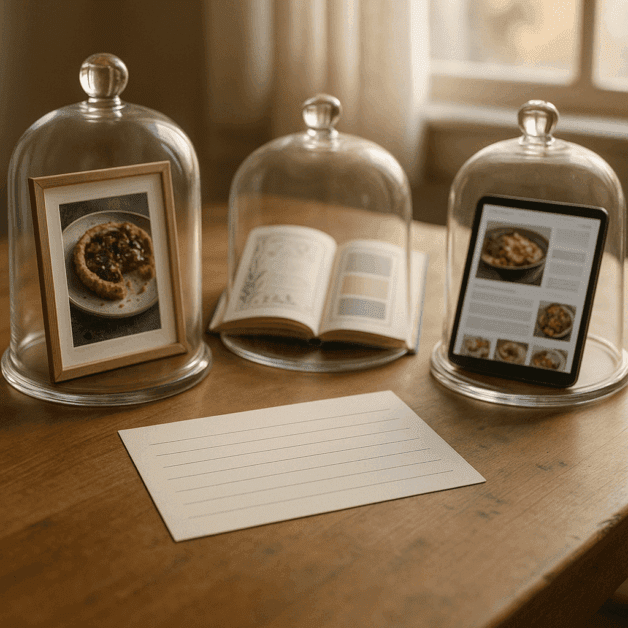
Your Recipe Can’t Be Copyrighted — But These 3 Things Can Be
No—recipes generally aren’t protected by copyright because ingredient lists and basic instructions are considered facts and processes under U.S. law. You may still protect original written descriptions, photographs, and branding/trade dress tied to how you present or market the recipe. This article explains the three protectable elements and practical options for stopping copycats.
Why Your Secret Recipe Isn’t as Protected as You Think
You spent years perfecting your grandmother’s lasagna recipe. You tested it dozens of times, tweaked the spice ratios, and finally nailed the perfect version. Now someone else is making it and selling it as their own. You’re furious — and you want to know if the law is on your side.
Here’s the hard truth: in most cases, it isn’t. Copyright law does not protect recipes. That might feel unfair, but understanding exactly why — and what can actually be protected — puts real power back in your hands.
Why Recipes Can’t Be Copyrighted
Copyright law protects creative expression. It covers things like novels, songs, paintings, and films. What it does not cover are facts, ideas, procedures, or systems — and recipes fall squarely into that unprotected category.
The U.S. Copyright Office has made this very clear. According to their guidance, a simple list of ingredients does not have enough creative expression to qualify for copyright protection. The steps involved in combining those ingredients are considered a functional process, not a creative work.
Think of it this way: a recipe is closer to a set of instructions than it is to a poem. The law treats it the same way it would treat a math formula or a scientific method — useful, yes, but not something one person can own exclusively.
This rule exists for good reason. If recipes could be copyrighted, cooking itself would become incredibly complicated. One person could lock down the idea of making a chocolate chip cookie, and nobody else could legally bake one the same way. Society benefits when food knowledge stays open and shared.
The 3 Things Connected to Your Recipe That CAN Be Protected
Just because the recipe itself isn’t protected doesn’t mean you’re completely without options. Copyright law and other areas of intellectual property law can still work in your favor — but only for specific elements attached to your recipe.
1. The Written Story or Narrative Around the Recipe
Here’s where things get interesting. While the list of ingredients and the basic steps cannot be copyrighted, the creative writing surrounding a recipe absolutely can be.
If you write a detailed blog post or cookbook entry that includes personal stories, vivid descriptions, cultural background, cooking tips, flavor notes, or any other expressive content around the recipe, that writing is protected. Someone can legally reproduce your ingredient list, but they cannot copy your words.
For example, imagine you wrote this introduction to your lasagna recipe:
“Every Sunday morning, my grandmother would wake up before sunrise and begin layering this lasagna by hand. The smell of slow-cooked beef and fresh basil would drift through the entire apartment building, and neighbors would linger in the hallway just to breathe it in.”
That paragraph is protected. Anyone who copies it word for word is infringing on your copyright. The key is that the more original, personal, and expressive your writing is, the stronger your protection becomes.
This is why food bloggers and cookbook authors have more legal standing than they might realize. Their recipes aren’t protected, but their voice, stories, and descriptions are.
2. Original Photographs and Visual Presentation
Food photography is its own creative art form, and copyright law treats it that way. If you take an original photograph of your finished dish, that image is protected the moment you click the shutter.
Copyright protection for photographs is automatic. You don’t need to register anything or put a copyright symbol on the image (though registration does strengthen your legal position if you ever need to take action). The creative choices you make — the lighting, the angle, the props, the styling, the background — are all forms of original expression that belong to you.
This is especially important in the age of social media. Food content spreads fast, and image theft is extremely common. If someone takes your food photo and uses it without permission — whether on their own blog, in an advertisement, or on a menu — that is copyright infringement, and you have real legal recourse.
Here’s what that protection covers:
- Original photos you take of your food
- Custom graphics or illustrations you create for your recipe
- Unique visual layouts or designs in a printed or digital cookbook
- Video content you produce showing the cooking process
It does not cover the appearance of the food itself. If someone else plates their dish the same way you plate yours, that’s not infringement — as long as they’re not copying your actual photograph.
3. A Full Cookbook or Recipe Collection as a Whole
Here’s a protection that many people overlook: even if each individual recipe inside a cookbook cannot be copyrighted, the cookbook itself can be.
This is called compilation copyright. When you select, arrange, and organize a group of recipes in a creative way, that overall work qualifies for copyright protection. The creative decisions you make about what to include, how to group recipes, what order to present them in, and how to structure the whole book are all expressions that the law recognizes.
So if someone photocopies your entire cookbook or reproduces the full collection on a website, they are infringing on your copyright — even though each individual recipe, taken alone, would be free for anyone to use.
This protection applies to:
- Physical cookbooks with original organization and editorial choices
- Digital recipe collections and e-books
- Recipe blogs with original structure, categories, and creative layout
- Curated recipe newsletters or guides
The more creative thought that goes into the selection and arrangement, the stronger the compilation copyright becomes. A simple alphabetical list of every recipe you’ve ever made would be harder to protect than a thoughtfully curated collection organized around a theme, a season, or a culinary tradition.
What About Trade Secrets?
Copyright isn’t the only legal tool available to protect recipes. Trade secret law is actually a much stronger option in many situations — and it’s the route taken by some of the most famous recipes in the world.
The formula for Coca-Cola is a trade secret. KFC’s “11 herbs and spices” is a trade secret. These recipes are not patented or copyrighted. Instead, they’re kept strictly confidential, and the law protects them as long as their owners take reasonable steps to keep them secret.
For trade secret protection to work, you need to:
- Keep the recipe genuinely confidential
- Use non-disclosure agreements with anyone who has access to it
- Take active steps to prevent the information from becoming public
The downside is obvious — once your recipe is public, trade secret protection is gone. This is why it works best for commercial food producers and restaurants, not for recipes shared on a public blog or in a published cookbook.
How to Actually Protect Your Culinary Work
Now that you understand where the law stands, here are some practical steps you can take to protect what you’ve created:
- Write richly around your recipes. Put real effort into the stories, descriptions, and context you share. That creative writing is yours, and it’s protected.
- Watermark your food photos. Make it harder for people to steal your images without attribution.
- Register your copyright. In the U.S., you can register your written content and photos with the Copyright Office. Registration isn’t required for protection, but it makes legal action much easier and more effective.
- Use clear licensing terms. If you share recipes online, state clearly how others may or may not use your content.
- Consider trade secrets for truly proprietary recipes. If you run a food business and have a recipe that gives you a competitive edge, keep it private and use legal agreements to protect it.
The Bottom Line
Copyright law doesn’t protect your recipe — but it does protect the creative work that surrounds it. Your writing, your photography, and your curated collections are all legitimate intellectual property that deserves to be taken seriously.
Understanding these boundaries doesn’t just help you protect yourself. It also means you can share your food knowledge freely without worrying that you’re somehow stealing from someone else just by cooking a similar dish.
Food has always been shared. The law reflects that. But your creative voice, your images, and your original work? Those belong to you — and the law is ready to back you up on that.














