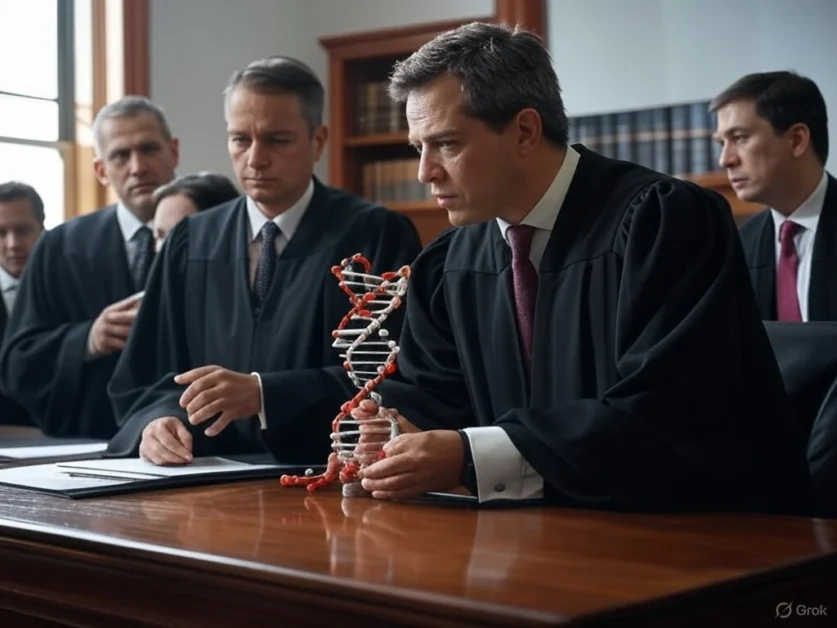
Forensics

<a href="https://attorneys.media"><img class="aligncenter size-full wp-image-32445" src="http://attorneys.media/wp-content/uploads/2023/12/Forensics.jpg" alt="The Precision of Forensics: A Glimpse into Crime Scene Analysis" width="1024" height="1024" /></a> <h4>Forensic Science in Law: Unveiling Truth in Criminal Investigations</h4>   In the realm of legal issues, <strong>forensic science</strong> stands as a crucial intersection between science and law. Its role in uncovering the truth behind criminal cases has redefined the way legal investigations are conducted. Forensic science encompasses various scientific disciplines applied in the context of the law. It involves the collection, preservation, and analysis of evidence from crime scenes. This scientific process helps in establishing facts that can be used in legal proceedings. One of the most notable aspects of forensic science is DNA analysis. The ability to match DNA samples from crime scenes with suspects has revolutionized criminal investigations, leading to the resolution of cases that were once deemed unsolvable. Besides DNA analysis, forensics includes fingerprinting, ballistics, digital forensics, and forensic pathology, among other fields. Each of these disciplines provides unique insights into criminal cases, aiding in piecing together what transpired. The reliability and accuracy of forensic evidence are paramount. Hence, forensic experts must adhere to strict protocols and use advanced technology to ensure the integrity of their findings. The evidentiary value of forensic science is widely recognized in courts worldwide. In addition to solving crimes, forensic science plays a pivotal role in exoneration. Innocent individuals wrongly accused or convicted of crimes have been freed based on forensic evidence, emphasizing the importance of accuracy and justice in legal processes. Forensic science continues to evolve with technological advancements. Developments in areas like trace evidence analysis and toxicology are constantly enhancing the capabilities of forensic investigations. In conclusion, forensic science is an indispensable part of the legal system. It bridges the gap between scientific inquiry and legal justice, playing a critical role in both convicting the guilty and exonerating the innocent. The ethical dimensions of forensic science are also significant. The responsibility to handle evidence ethically and avoid contamination is paramount in ensuring that justice is served correctly. Mismanagement of evidence can lead to miscarriages of justice, highlighting the need for stringent ethical standards in forensic work. Furthermore, the field of forensics is continuously adapting to new challenges, such as cybercrime. Digital forensics has become increasingly important in solving crimes committed in the digital realm, from fraud to cyberterrorism. Training and education in forensic science are critical for legal professionals. Understanding the capabilities and limitations of forensic evidence helps lawyers, judges, and law enforcement officers make informed decisions in legal cases. In summary, forensic science stands at the forefront of legal investigations, combining scientific rigor with legal acumen. It is a dynamic field that is integral to the pursuit of truth and the administration of justice.

13 posts
What Legal Strategies Challenge Forensic Evidence in Court?

What Legal Strategies Challenge Forensic Evidence in Court?

Forensic evidence plays a critical role in the justice system, impacting both criminal and civil cases by providing scientifically-backed data to support or refute claims. Understanding forensic evidence laws is essential for legal professionals, as these laws govern the collection, analysis, and presentation of evidence in court. This comprehensive guide delves into the complexities of […]
Read More
How Can Attorneys Challenge Fingerprint Evidence in Court?

How Can Attorneys Challenge Fingerprint Evidence in Court?

Fingerprinting is a crucial process in the criminal justice system, providing a reliable method of identifying individuals involved in criminal activities. Whether it’s during an arrest or for background checks, fingerprinting services play a significant role in maintaining accurate records and ensuring the integrity of legal processes. This article delves into the comprehensive aspects of […]
Read More
How Can Attorneys Challenge DNA Testing Evidence in Court?

How Can Attorneys Challenge DNA Testing Evidence in Court?

DNA testing has become an integral part of modern legal systems, playing a crucial role in criminal investigations, paternity disputes, and even immigration cases. As its use becomes more widespread, understanding the legal rights and implications associated with DNA testing is essential. This comprehensive guide will explore the various aspects of DNA testing, focusing on […]
Read More
Inside The Laci Peterson Murder

Inside The Laci Peterson Murder

An Interview with Michael Fleeman – Author of “Laci – Inside the Laci Peterson Murders” by the late Bill Bickel – former Managing Editor of Crime, Justice and America magazine. Originally published in 2004 and reposted with permission from Crime, Justice and America magazine On May 17, assuming no further delays, Scott Peterson will stand […]
Read More
DNA Evidence Challenges: Reliability in Criminal Cases

DNA Evidence Challenges: Reliability in Criminal Cases

The promise of DNA evidence in criminal cases has long been heralded as a breakthrough in forensic science, offering the potential for both exonerating the innocent and convicting the guilty with scientific precision. Yet, beneath the surface of this powerful tool lies a complex web of challenges that can undermine its reliability and, in some […]
Read More
What Evidence is Crucial in Cybercrime Defense Cases?

What Evidence is Crucial in Cybercrime Defense Cases?

In the rapidly evolving landscape of criminal law, digital evidence has become the cornerstone of both prosecution and defense strategies in cybercrime cases. As we navigate through 2025, the complexity of these cases continues to increase, with technological advancements creating both new opportunities and challenges for legal practitioners. The critical nature of properly collected, preserved, […]
Read More
DNA Evidence in Criminal Cases: Reliability and Challenges

DNA Evidence in Criminal Cases: Reliability and Challenges

The use of DNA evidence in criminal cases has revolutionized forensic science and the criminal justice system. Since its introduction in the 1980s, DNA analysis has become a powerful tool for both prosecutors and defense attorneys, offering unprecedented accuracy in identifying or exonerating suspects. However, while DNA evidence is often portrayed as infallible, it comes […]
Read More
Comprehensive Legal Guide to Autopsies: Rights, Procedures, and Legal Insights

Comprehensive Legal Guide to Autopsies: Rights, Procedures, and Legal Insights

Autopsy is a crucial procedure used to determine the cause of death. It involves a thorough examination of a deceased individual’s body by a qualified medical professional, typically a forensic pathologist. Understanding the legal framework surrounding autopsies is essential for individuals who may need to navigate these procedures, whether due to the death of a […]
Read More
Legal Process of Toxicology: Understand Your Rights and Guidelines

Legal Process of Toxicology: Understand Your Rights and Guidelines

The legal process of toxicology involves applying toxicological principles in legal contexts, often providing critical evidence in criminal cases, workplace safety disputes, and public health issues. This article will delve into the essential aspects of toxicology in the legal sphere, highlighting key rights, guidelines, and practical considerations for navigating this complex field. The Role of […]
Read More
Navigating Ballistics Evidence in Legal Cases: Your Rights

Navigating Ballistics Evidence in Legal Cases: Your Rights

It’s crucial for law enforcement professionals and legal experts to understand the rights and procedures associated with ballistics evidence. This informative post will examine into the legal aspects of handling ballistics evidence, highlighting important rights of individuals, proper procedures to follow, and the authority involved in collecting and analyzing such crucial forensic information. Whether you’re […]
Read More
DNA GOES TO COURT – ll

DNA GOES TO COURT – ll

Second Of A Three-Part Series By John Riley. Originally printed in 2004 and reposted with permission from Crime, Justice and America magazine. The importance of DNA (deoxyribonucleic acid) in law enforcement has grown since the use was discovered in 1985. Everyone is made of cells that contain DNA (among other things). But DNA gives us […]
Read More
Kobe Bryant: What Really Happened, and Where Does It Go From Here?

Kobe Bryant: What Really Happened, and Where Does It Go From Here?

A Review of Jeffrey Scott Shapiro’s Kobe Bryant; The Game of His Life, and an Interview With the Author An Interview with Jeffrey Scott Shapiro – Author of “Kobe Bryant; The Game of His Life” by the late Bill Bickel – former Managing Editor of Crime, Justice and America magazine. Originally published in 2004 and […]
Read More
Scroll to Top