
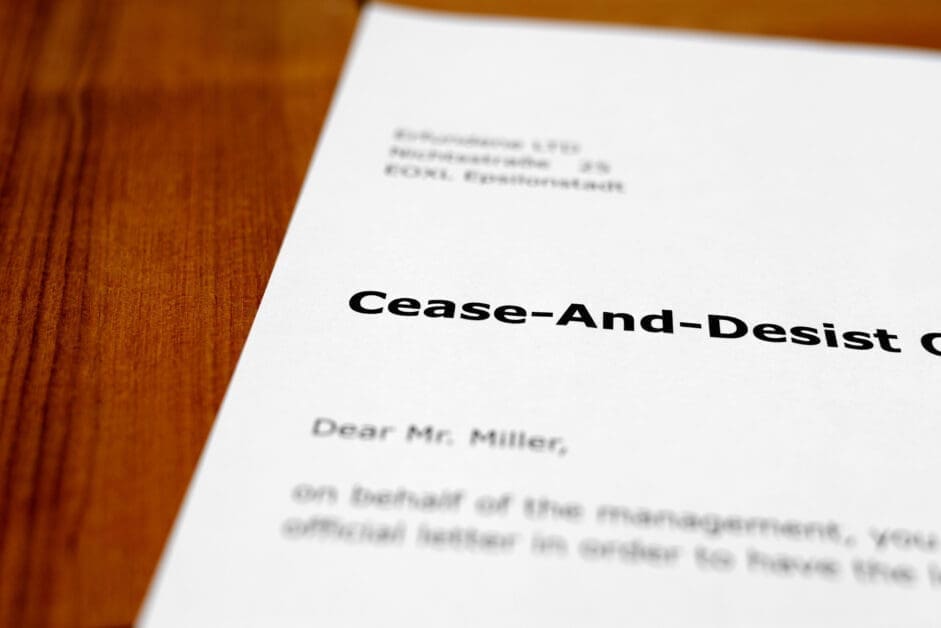
Cease and Desist Letters: When to Send One, What to Include, and When to Wait
A cease and desist letter is a formal written demand to stop specific conduct and preserve your rights, but it is not a court order. It works best when it clearly states the facts, legal basis, demanded actions, and a firm deadline. This article explains when to send one, what to include, and when waiting or filing suit is the better move.
Not every legal conflict needs to begin with a lawsuit. Many disputes start with a warning: stop the conduct, take down the material, return the property, or correct the statement. That warning is usually delivered through a cease and desist letter.
But here is the part that gets overlooked: a cease and desist letter is not a court order. It does not compel anyone to do anything. Its power is more practical. It puts the other side on notice that someone is paying attention, that the facts are being documented, and that escalation is a real possibility if the conduct continues.
When a letter like this is done well, it can sometimes resolve a dispute before litigation becomes necessary. When it is done poorly, it can weaken the sender’s position, invite a counterclaim, or turn a manageable situation into a larger problem.
What the Letter Is Really Meant to Do
In practice, the first job of a cease and desist letter is simple: put the other side on notice. The letter makes it difficult for the recipient to later claim they did not know what conduct was being challenged or what they were being asked to stop.
That matters in intellectual property disputes especially. In trademark cases under the Lanham Act, courts may look at whether the recipient continued the same conduct after being informed of the conflict. In copyright disputes, written notice can shape how both sides frame later arguments over infringement, damages, and good faith.
The second thing a good letter does is create evidence. If the dispute reaches court, the correspondence may help show when the sender discovered the problem, what was demanded, what evidence existed at the time, and how the other side responded. A clean, factual letter is more useful in that context than one filled with threats or insults.
And the third purpose, which is often the most important, is resolution. Litigation is expensive, slow, and uncertain. A well-drafted letter gives the recipient a realistic path to fix the issue without a lawsuit. That path might be removal of content, a retraction, a licensing discussion, a written undertaking, or simply an agreement to stop the conduct.
When a Letter Makes Sense Before Litigation
A cease and desist letter works best when the violation is specific, documentable, and capable of being stopped voluntarily. The strongest letters are not the angriest ones. They are the ones where the sender clearly owns the right, the evidence is solid, and the ask is reasonable.
Trademark misuse.
A competitor or another business uses a confusingly similar name, logo, slogan, or product presentation. The letter identifies the protected mark, describes the confusion, and demands that the recipient stop. The best letters in these cases attach concrete evidence: screenshots, marketplace listings, registration details, or examples of actual customer confusion.
Copyright infringement.
Someone copies text, images, video, software, or other protected content. The letter demands removal and preservation of evidence. For material hosted by a platform, a DMCA takedown notice under 17 U.S.C. § 512 may be the right tool. A direct cease and desist letter still makes sense when the issue involves a business relationship, repeated copying, or misuse that goes beyond a single webpage.
Defamation or false statements.
A person or company publishes a false statement of fact that causes reputational or business harm. The letter demands removal, correction, or retraction. Precision matters here more than anywhere else. The letter needs to quote the exact statement, identify where it appeared, explain why it is false, and avoid treating protected opinion as defamation.
Harassment or unwanted contact.
Someone continues to contact, message, or approach the sender after being told to stop. The letter sets a clear boundary and preserves a record of that boundary. But if there is any immediate risk of violence, stalking, or physical harm, a letter is not enough. The safer step is to contact law enforcement or seek a protective order.
Contract or confidentiality breaches.
Someone violates a non-disclosure agreement, misuses confidential information, or ignores restrictive contract terms. The letter cites the contract clause, explains the breach, and states what cure is required.
When Sending the Letter May Be a Bad Idea
The fact that cease and desist letters are common does not mean they are always smart. There are situations where sending one can backfire.
Do not rely on a letter when there is an immediate safety risk. If the situation involves threats, stalking, or physical danger, the priority is protective action, not written correspondence. A letter can also escalate a volatile situation if it is sent without a safety plan.
Be careful with weak or trivial claims. A formal legal demand over a minor issue can look disproportionate. If the alleged violation is unclear, protected by fair use, protected opinion, or simply too small to justify escalation, the recipient may push back aggressively. In some IP disputes, the recipient may even file a declaratory judgment action asking a court to confirm that their conduct is lawful.
Do not contact a represented party directly if you know they have a lawyer. Professional conduct rules, including ABA Model Rule 4.2, restrict direct communication with represented persons about the matter. Non-lawyers should also be cautious, because bypassing counsel creates friction and procedural problems.
And do not threaten action you are not willing to take. A cease and desist letter should be firm, not theatrical. Empty threats of lawsuits, criminal prosecution, or ruinous damages undermine credibility. If the sender is not prepared to follow through, the letter should not pretend otherwise.
What the Recipient Needs to See
A strong cease and desist letter is usually built from six elements. Not every letter needs all of them in equal detail, but leaving any out entirely tends to weaken the message.
Who is making the demand and why they are standing.
The letter identifies the sender and explains why they have the right to complain. That might be trademark ownership, copyright authorship, a contractual relationship, or a privacy right.
What conduct is at issue, described with specificity.
“You are violating my rights” is too vague to act on. The letter needs to describe the exact conduct, with dates, locations, URLs, screenshots, product names, or communications. The recipient should understand precisely what must stop.
The legal or contractual basis for the demand.
The letter does not need to read like a law school exam, but it should identify the source of the right being asserted. A statute, a contract clause, a trademark registration, a copyright ownership claim, or another recognized legal basis.
A clear, specific demand.
Remove a post. Stop using a mark. Cease contact. Return confidential files. Issue a correction. Confirm compliance in writing. The recipient should know exactly what is being asked of them.
A reasonable deadline.
Most civil disputes allow 10 to 30 days, depending on urgency and complexity. A very short deadline may be appropriate in a fast-moving online infringement case, but it can seem unreasonable in a complex business dispute.
The consequences of non-compliance, in measured language.
The letter can reserve the sender’s rights and explain that further action may include litigation, injunctive relief, or regulatory complaints. It should not overstate remedies or threaten consequences that are not legally available.
Mistakes That Make the Letter Easier to Ignore

The most common mistake is aggression without substance. A hostile letter may feel satisfying to send, but if a judge, mediator, platform reviewer, or opposing lawyer later reads it, the sender wants it to look reasonable. The strongest letters are the ones that sound prepared, not angry.
The second mistake is failing to preserve evidence before sending the demand. Once the recipient receives the letter, they may remove the material. If the sender has not already captured screenshots, downloads, archived pages, or other dated records, the best proof of the original violation may be lost.
A third problem is sending the letter to the wrong party. In online disputes, the responsible party might be the content creator, the website owner, the platform, the domain registrant, or a company behind the account. Sending a demand to the wrong target wastes time and reduces leverage.
And a fourth mistake that is common with templates: using a generic form without adapting it to the facts. A template can help with structure, but the strength of a cease and desist letter comes from the specifics. What happened, why it violates a legal right, what evidence supports the claim, and what precise remedy is being demanded.
What Happens After the Letter Is Sent
The recipient usually responds in one of four ways.
The best outcome is compliance. The content comes down, the conduct stops, the material is returned, or the issue is otherwise corrected. The sender should preserve that confirmation and continue monitoring if the problem could recur.
The second outcome is negotiation. The recipient may dispute part of the claim but offer a compromise: a licensing fee, modified use, phased removal, correction language, or a written undertaking. Many business and IP disputes end here, and often that is the best result for both sides.
The third outcome is rejection. The recipient denies wrongdoing, asserts fair use, claims truth or opinion in a defamation dispute, or challenges ownership. At that point, the sender has to decide whether the claim is strong enough to escalate.
The fourth outcome is silence. No response does not mean agreement. It means the sender has to decide whether to follow up, use a platform procedure, involve counsel, report the matter to a regulator, or file a claim.
When a Drafting Tool or Template Can Help
Not every cease and desist situation requires an attorney from the start. Many senders already know the basic facts: what happened, who did it, what right was violated, and what they want to happen. What they often lack is a way to organize those facts into a clear, professional format.
For people who are still assembling the facts, tools such as DocuGov.ai can help organize a structured draft, while a cease and desist letter template can help separate the key parts of the demand: the conduct at issue, the legal basis, the evidence, the requested action, and the compliance deadline.
A template should not decide whether the claim is legally strong. Its value is more practical: helping the sender present the facts clearly and completely before deciding whether the matter requires an attorney.
For straightforward situations, such as a clear copyright infringement, a trademark conflict with solid evidence, or a contractual breach with a documented paper trail, a well-structured letter may be enough to move the issue toward resolution. For complex disputes, regulated industries, or cases involving significant financial exposure, attorney review before sending is almost always the better investment.
The Bottom Line
A cease and desist letter is often the right first step when a dispute is real, the evidence is available, and the sender wants to give the other side a chance to stop before the situation escalates. It is most effective when it is specific, documented, legally grounded, and calm.
It is not a substitute for emergency protection, legal advice, or a court order. It is also not a place for exaggeration or empty threats. The best letters do not sound angry. They sound prepared.














