
The OpenAI vs. NYT Verdict Will Decide If Every News Article Is Now Free
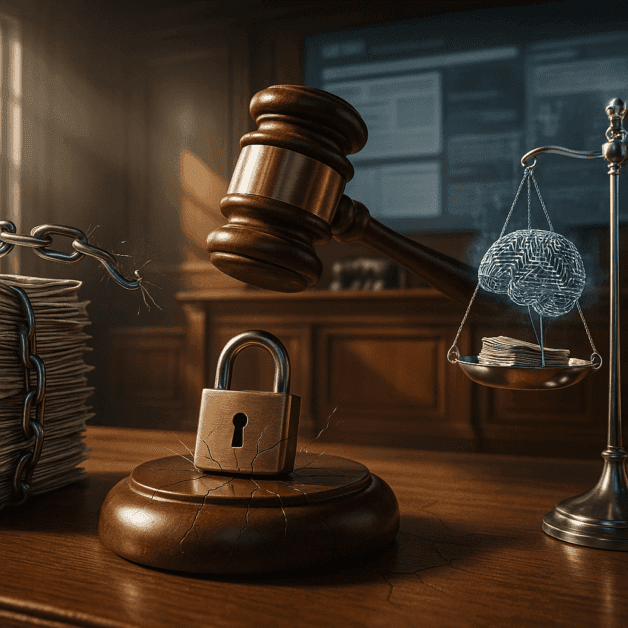
The OpenAI vs. New York Times lawsuit could decide whether AI training on copyrighted news is fair use or requires licensing and payment. A ruling for either side will shape how publishers get compensated and what AI models can lawfully ingest. This article explains the claims, likely legal tests, and the internet-wide implications for news and blogs.
A Lawsuit That Could Change the Internet Forever
The legal battle between OpenAI and The New York Times is not just another corporate dispute. It is one of the most important copyright cases in modern history. The outcome could determine whether every news article, blog post, and piece of written content published online is now essentially free for artificial intelligence companies to use without permission or payment.
At the heart of this case is a simple but profound question: Can AI companies train their models on copyrighted content without paying for it? The answer will affect writers, publishers, tech companies, and everyday internet users for decades to come.
What Exactly Is the Lawsuit About?
In December 2023, The New York Times filed a copyright lawsuit against OpenAI and its major backer, Microsoft. The Times claimed that OpenAI used millions of its articles as training data to build ChatGPT and other AI tools without permission and without compensation.
The complaint included striking examples where ChatGPT reproduced entire paragraphs from Times articles almost word for word. This was not just about using ideas or general information. The lawsuit showed that the AI had memorized and could repeat specific, original text that the Times spent significant resources creating.
The Times is seeking billions of dollars in damages and wants OpenAI to destroy any AI models trained on its copyrighted content. This is one of the strongest legal challenges that any major media outlet has brought against an AI company so far.
Understanding the Fair Use Argument
OpenAI’s main defense rests on the concept of fair use. Under United States copyright law, fair use allows certain limited uses of copyrighted material without permission. It is commonly used in situations like criticism, commentary, news reporting, and education.
To decide whether something qualifies as fair use, courts look at four main factors:
- The purpose and character of the use, including whether it is commercial or nonprofit
- The nature of the copyrighted work
- The amount of the original work that was used
- The effect of the use on the market for the original work
OpenAI argues that training AI models on publicly available text is transformative. Their position is that the AI does not simply copy articles but learns patterns, language, and knowledge from them. They compare it to how a human reads thousands of books to become a better writer.
The Times disagrees strongly. The newspaper argues that AI companies are building billion-dollar commercial products directly from their intellectual property. According to the Times, this is not transformative at all. It is pure exploitation of content that journalists worked hard to produce.
Why Training Data Is the Core of the Debate
Modern AI language models like ChatGPT are only as good as the data they are trained on. To build a model that can write intelligently about law, medicine, finance, or current events, companies like OpenAI need massive amounts of high-quality text.
News articles, especially from credible sources like The New York Times, represent some of the best written content available online. They are accurate, well-structured, and cover an enormous range of topics. It is no surprise that AI companies found them highly valuable as training data.
The problem is that this content was created at enormous cost. Investigative journalists spend months on single stories. Editors, photographers, and fact-checkers all contribute. The Times and similar organizations depend on subscription revenue and licensing fees to keep operating. If AI companies can freely harvest this content, the entire business model of professional journalism could collapse.
The Bigger Picture for Intellectual Property
This case goes far beyond The New York Times. If OpenAI wins on fair use grounds, it would essentially mean that any publicly available text can be used as training data without compensation. That includes magazine articles, academic papers, books, screenplays, and even personal blog posts.
Publishers, authors, and creators of all kinds are watching this case closely. Several other copyright lawsuits have already been filed against AI companies by authors, visual artists, and music creators. A ruling in favor of OpenAI could set a powerful precedent that shuts down all of these claims at once.
On the other hand, a ruling in favor of The Times could force AI companies to either license content at significant cost or completely rebuild their models. Some experts believe this could slow down AI development dramatically or make only the largest and wealthiest companies capable of competing in the space.
What Happens If The Times Wins?
A victory for The New York Times would send immediate shockwaves through the technology industry. Here is what could follow:
- Mandatory licensing deals: AI companies would need to negotiate and pay for content they use as training data, similar to how music streaming services pay royalties to artists.
- Model rebuilding: Existing AI models trained on unlicensed content might need to be retrained or taken offline entirely.
- Higher costs for AI products: The added expense of licensing could raise prices for AI tools and services.
- More power for publishers: News organizations and content creators would gain significant legal leverage to demand payment from AI firms.
Some see this as a healthy correction that would properly value human creative work. Others worry it could stifle innovation and give a small number of wealthy media companies enormous power over the future of AI development.
What Happens If OpenAI Wins?
If the court sides with OpenAI, the consequences would be just as sweeping but in the opposite direction. A fair use victory would essentially confirm that publicly accessible text is open for AI training purposes.
This could mean:
- News organizations lose a potential major revenue stream from AI licensing
- Smaller publishers with fewer legal resources may struggle to survive as their content is absorbed into AI systems
- AI companies can continue scaling their models freely using the existing library of human-created content
- Journalists and writers face an increasingly difficult market as AI generates similar content at near-zero cost
Many journalists and writers fear this outcome would devalue their work and accelerate job losses across the media industry. The concern is not just philosophical. It is deeply practical and financial.
Has This Kind of Case Been Decided Before?
Copyright law has faced technological disruptions before. When Google began scanning books for its Google Books project, it faced major lawsuits from publishers. The courts ultimately ruled in Google’s favor, deciding that creating searchable summaries of books was transformative and qualified as fair use.
OpenAI and its supporters often point to this case as evidence that their use of text for AI training should also be considered fair use. However, critics argue that the situations are very different. Google Books created a searchable index. OpenAI created a system that can generate new text that competes directly with the original sources.
There is no perfect precedent for what AI language models do. This case may ultimately require courts to develop entirely new frameworks for thinking about intellectual property in the age of artificial intelligence.
The Role of Congress and Regulation
While the lawsuit moves through the courts, there are growing calls for Congress to step in and clarify the law. Current copyright statutes were written long before AI existed. Many legal experts agree that they were never designed to handle the complexities of machine learning and training data.
Proposed solutions range from creating a new licensing system for AI training data to establishing a government-managed fund that compensates creators whose work is used. Some countries in Europe are already exploring similar frameworks as part of broader AI regulation efforts.
Without clear legislation, every ruling in every AI-related copyright case will be made by judges trying to apply old rules to a technology that did not exist when those rules were written. That is an uncertain and inconsistent way to handle something this important.
Why Everyone Should Pay Attention
You do not have to be a journalist, a lawyer, or a tech executive to care about this case. If AI companies can freely use all published content as training data, the internet as we know it will change.
Many websites survive on advertising revenue tied to traffic. If AI tools can answer any question using content from those sites, fewer people will visit the original sources. Revenue drops. Newsrooms shrink. Quality journalism becomes harder to sustain.
At the same time, a world where AI development is locked behind expensive licensing walls could also have negative consequences. Access to AI tools could become limited to large corporations and wealthy individuals, increasing existing inequalities.
There are no easy answers here. But the decision that comes out of the OpenAI versus New York Times case will set the direction. It will define the relationship between human creativity and machine intelligence for years to come.
The Verdict Is Still Ahead
As of now, the case is still working its way through the legal system. Both sides have filed extensive arguments. Courts will need time to carefully examine the evidence and the applicable laws before reaching a conclusion.
What is clear is that this is not just a fight between a newspaper and a tech company. It is a defining moment for copyright law, intellectual property rights, and the future of how information is created, shared, and valued in a world increasingly shaped by artificial intelligence.
Whatever the verdict, it will matter. And it will matter to almost everyone who reads, writes, or consumes information online.














