
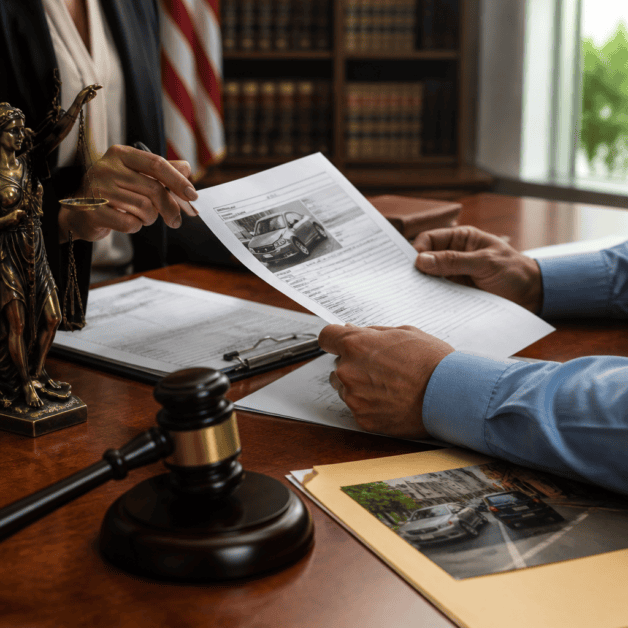
How to Get a Copy of a Police Accident Report in Miami-Dade County for a Florida Car Accident Claim
You can usually get a Miami-Dade police crash report within 10 days of the accident, and it typically costs about $10 from the Florida Crash Portal. In Miami-Dade County, reports may come from Miami-Dade Police, the City of Miami, or other local agencies depending on where the crash happened. This guide explains where to request the report, eligibility under Florida law, fees, timing, and how the report helps a Florida car accident claim.
After a car accident in Miami-Dade County, the police crash report is often the first document an insurance adjuster, injury lawyer, or court looks for. It can identify the parties and vehicles involved, list witnesses, note citations, and document the officer’s initial observations—information that can materially affect fault and damages in a Florida car accident claim.
But getting the correct report quickly is not always straightforward in Miami-Dade, where multiple law enforcement agencies may respond depending on the exact location of the collision. Below is a step-by-step, Miami-focused guide to locating the right agency, requesting the report legally, and using it strategically for your claim.
Why the police crash report matters in a Miami-Dade car accident claim
In Florida, most injury claims start as insurance claims (PIP and property damage) and may later escalate to a bodily injury claim or lawsuit if the injuries meet Florida’s “serious injury” threshold. The crash report can support your claim by:
- Confirming identities and insurance details for drivers and vehicle owners (when available).
- Documenting location, time, weather, and roadway conditions—important for liability and comparative fault arguments.
- Listing witnesses and sometimes witness statements or contact info.
- Noting traffic citations (e.g., failure to yield, careless driving), which insurers often treat as persuasive evidence.
- Recording the officer’s observations (skid marks, point of impact, debris field), which can align with photos, vehicle damage, and black-box data.
At the same time, a crash report is not the final word on what happened. Florida law generally restricts how crash reports are used as evidence at trial, and insurers may dispute conclusions. Still, it is a critical early piece of the puzzle.
When the report becomes available (and why “10 days” matters)
In Florida, crash reports are typically not released to most requesters until a short confidentiality period expires. As a practical rule, many people can obtain the report after about 10 days from the date of the crash, though processing times vary by agency and the Florida Crash Portal.
If you need information before the report is released—such as a case number or confirmation the report is being prepared—an attorney can often help you make the right inquiries without wasting time requesting from the wrong office.
Step 1: Identify the agency that investigated the crash in Miami-Dade County
Miami-Dade County has overlapping jurisdictions. Your crash report will typically be held by the agency that responded and completed the report. Common agencies include:
Miami-Dade Police Department (MDPD)
Many crashes in unincorporated Miami-Dade are handled by MDPD. If the crash occurred outside a city’s limits, MDPD is often the investigating agency.
City police departments (e.g., City of Miami, Miami Beach, Hialeah, Doral, Coral Gables)
If the crash occurred within a municipality, that city’s police department may have taken the report. For example, a collision on Ocean Drive might be handled by Miami Beach Police, while a crash in Downtown could be handled by the City of Miami Police Department.
Florida Highway Patrol (FHP)
Crashes on major highways and certain state roads—such as portions of I-95, the Turnpike, or other high-speed corridors—may be investigated by FHP.
Miami-Dade Sheriff/other agencies
Depending on location and circumstances, other agencies may be involved, but most routine traffic crashes fall into the categories above.
Tip: If you have a “case number,” “report number,” “incident number,” or the officer’s name, it is much easier to locate the correct report. If you don’t, your attorney can often track it down using the crash date, location, parties, and vehicle information.
Step 2: Choose the best way to request the report (Portal vs. local records)
Option A: Order through the Florida Crash Portal (FLHSMV)
The Florida Department of Highway Safety and Motor Vehicles (FLHSMV) provides an online ordering system commonly called the Florida Crash Portal. For many Miami-Dade crashes, this is the fastest and simplest option once the report is available.
Typical features of portal ordering:
- Convenient online access (no in-person visit needed).
- Standard statewide format and delivery.
- Fees commonly around $10 (plus any applicable portal/service charges).
You will generally need identifying details such as the crash date, county, report number (if available), and party information.
Option B: Request directly from the local investigating agency (records unit)
If the report is not yet on the portal, if you need a certified copy, or if there is a mismatch in portal results, you may request the report from the investigating agency’s records division.
Local requests may be useful when:
- The portal cannot locate the report due to data entry differences.
- You need related materials (sometimes available separately), such as photos, body-worn camera references, CAD logs, or supplemental narratives—subject to public records rules and exemptions.
- The crash involved special circumstances that slow portal posting.
Practical note: Agency procedures and turnaround times vary. Some accept online or mail requests; others require specific forms, ID verification, or in-person pickup.
Step 3: Make sure you are legally eligible to obtain the report
Florida crash reports are governed by state law, including confidentiality restrictions that apply for a limited period after the crash and limit who can obtain the report. Generally, eligible requesters include people such as:
- A driver involved in the crash
- A passenger involved in the crash
- The vehicle owner
- A parent/guardian of a minor involved
- An insurance company for a party involved
- An attorney representing a party involved
- Other parties authorized under Florida law
To protect privacy and prevent solicitation, requesters are commonly required to provide a signed statement or check a certification box confirming eligibility and that the report will be used for lawful purposes. If you request the report without proper eligibility during the confidential period, your request may be denied.
Attorney advantage: If you hire counsel early, your lawyer can request the report under the appropriate legal category and can also help prevent missteps that delay your claim.
Step 4: Gather what you need before ordering (to avoid delays)
Before you order, collect as much of the following as possible:
- Full names of drivers (as they appeared on licenses)
- Date and approximate time of crash
- Exact location (street, intersection, mile marker, or landmark)
- Agency that responded (if known)
- Report number/case number (best if you have it)
- Vehicle plate numbers and states
- Your ID and proof you are an eligible requester (if required)
Example: If a crash occurred near NW 36th Street and Le Jeune Road, it could be in the City of Miami, unincorporated Miami-Dade, or another jurisdiction depending on the exact coordinates. Having the nearest intersection plus a photo showing a recognizable business or sign can help the records unit confirm jurisdiction.
Costs, certified copies, and turnaround times
Many standard (non-certified) crash reports are available through the Florida Crash Portal at a relatively low cost—often around $10—though service fees may apply. Local agencies may have their own fee schedules for copies, certifications, or additional pages.
Turnaround time depends on:
- How quickly the officer finalizes and submits the report
- Whether the report is flagged for review or has supplemental pages
- Whether you request through the portal or by a local records process
If you need the report urgently for an insurance deadline, ask your attorney about interim steps—such as obtaining the report number, confirming the agency, and preserving time-sensitive evidence (vehicle data, surveillance video, and witness recollection) while the report is pending.
Common problems Miami-Dade drivers run into (and how to fix them)
Problem 1: Ordering from the wrong agency
Because of the number of municipalities, people often request from MDPD when the City of Miami (or another city department) actually handled the crash.
Fix: Verify jurisdiction using the exact crash address/intersection and confirm which agency’s officer responded.
Problem 2: Name spelling or data mismatch
Portal searches can fail if a name is misspelled, includes a suffix, or differs from how it was entered on the report.
Fix: Try searching by report number if available, or broaden the search inputs (date/county) and confirm spelling from driver’s license/insurance card.
Problem 3: The report is “not ready”
Even














