employment discrimination

Discover insightful articles and video interviews with experienced attorneys addressing workplace bias, harassment, and unlawful treatment issues under this category. Visitors will find comprehensive resources on federal and state laws governing fair employment practices, including the Civil Rights Act and the Americans with Disabilities Act. This section serves as an informative guide for understanding legal protections and rights related to unequal treatment in the workplace.

Building Your Case: The Essential Evidence Needed for Workplace Bias Claims

To prove workplace bias, you generally need evidence showing you’re in a protected class, you suffered an adverse job action, and the decision was motivated by discrimination—often supported by documents, comparator proof, and witness testimony. Strong cases include a clear timeline, consistent records (emails, reviews, policies), and examples of similarly situated coworkers being treated more […]

Building Your Case: The Essential Evidence Needed for Workplace Bias Claims Read More »

Robot hand reviewing job application documents

If AI Made the Hiring Decision, You May Have a Case

Yes—AI hiring tools can violate anti-discrimination laws even without human intent, and lawsuits and EEOC scrutiny are rising nationwide. Resume screeners, video analysis, and scoring algorithms may disproportionately exclude protected groups. This article explains common AI hiring systems, warning signs, and steps to preserve evidence and evaluate a legal claim. When a Computer Says No:

If AI Made the Hiring Decision, You May Have a Case Read More »

Federal agencies ICE, DOL, and EEOC collaborating

Project Firewall Explained – The Partnership Between ICE, DOL, and EEOC

Project Firewall is a federal interagency initiative that coordinates ICE, the Department of Labor, and the EEOC to prioritize labor and civil-rights enforcement while limiting immigration enforcement actions that could deter workers from reporting violations. It’s designed to help employees—regardless of immigration status—come forward about wage theft, unsafe conditions, discrimination, or retaliation without fearing immediate

Project Firewall Explained – The Partnership Between ICE, DOL, and EEOC Read More »

Workplace religious accommodation scales of justice

Religious Accommodation at Work – What the Supreme Court Changed in 2026

In 2026, the Supreme Court strengthened religious accommodation at work by requiring employers to show a substantially higher “undue hardship” before denying a request. This shift means more scheduling, dress, and practice-related accommodations must be considered and documented. This article explains the new standard, common request types, and compliance steps for employers and employees. A

Religious Accommodation at Work – What the Supreme Court Changed in 2026 Read More »

Workplace harassment documentation checklist

How to Document Workplace Harassment — The Exact Format Lawyers Want

To document workplace harassment in the format lawyers want, record each incident with the date/time, location, people involved, exact quotes, and any witnesses or evidence. Keeping a contemporaneous, chronological log—and preserving emails, texts, screenshots, and reports—strengthens credibility and helps establish patterns and employer notice. This article provides the exact incident-entry template, evidence checklist, and best

How to Document Workplace Harassment — The Exact Format Lawyers Want Read More »

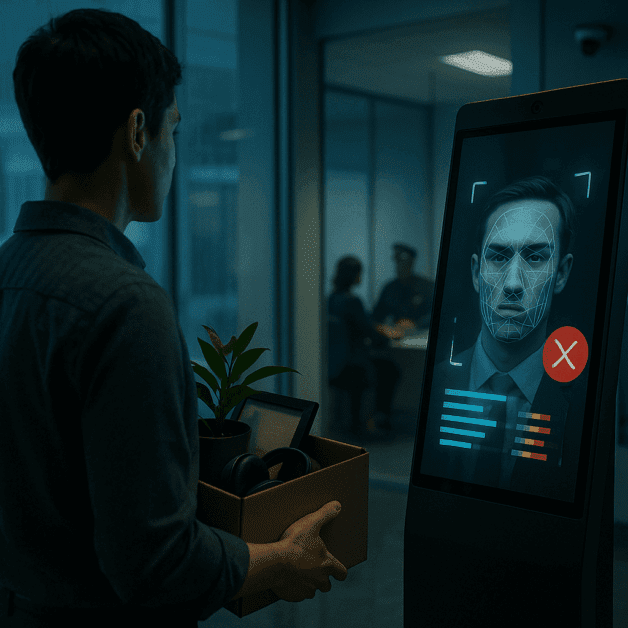
Facial recognition algorithm scanning a human face

Can You Be Fired Because an Algorithm Didn’t Like Your Face?

Yes—facial recognition and AI scoring can factor into termination decisions, and at least 20 U.S. states plus D.C. have biometric privacy laws that may limit such use. If an algorithm triggers firing, employers still must comply with anti-discrimination and privacy rules, and flawed tools can create liability. This article explains when AI-based firing may be

Can You Be Fired Because an Algorithm Didn’t Like Your Face? Read More »

EEOC logo and equal employment opportunity concepts

What is the EEOC?

The EEOC (Equal Employment Opportunity Commission) is the U.S. federal agency that enforces workplace anti-discrimination laws and has operated since 1965. It investigates charges, mediates disputes, and may sue employers for discrimination based on race, color, religion, sex, national origin, age, disability, or genetic information. This article explains what the EEOC does and how the

What is the EEOC? Read More »

Racial Bias Alleged in Seattle Hospital Discrimination Case

Seattle Hospital Discrimination Trial: Ex-Clinic Head Alleges Racial Bias

A December 2024 jury awarded Dr. Benjamin Danielson $21 million in the Seattle hospital discrimination trial against Seattle Children’s Hospital. Jurors found the hospital created a racially hostile work environment while he led Odessa Brown Children’s Clinic. This article summarizes the verdict, key allegations, and the case’s significance for workplace discrimination in healthcare. The recent

Seattle Hospital Discrimination Trial: Ex-Clinic Head Alleges Racial Bias Read More »

Labor Unions Defending Worker Rights Effectively

How Do Labor Unions Protect Employment Rights?

Labor unions protect employment rights through collective bargaining and contract enforcement, and union workers earn about 18% more on average than comparable nonunion workers. They provide grievance representation, negotiate wages and benefits, and push for safer conditions and anti-retaliation protections. This article explains key union tools, limits, and worker options in 2025. Labor unions serve

How Do Labor Unions Protect Employment Rights? Read More »

Supreme Court Decisions Shape Health and Equality Now

How Do Supreme Court Decisions Affect Health Care and Discrimination Laws?

Supreme Court health care decisions can expand or narrow discrimination protections under laws like the ACA and reshape federal agency authority nationwide. These rulings directly affect coverage rules, employer benefit plans, and hospital compliance obligations in every state. This article explains the biggest recent decisions and what they mean for patients, providers, insurers, and employers.

How Do Supreme Court Decisions Affect Health Care and Discrimination Laws? Read More »

Scroll to Top